Context
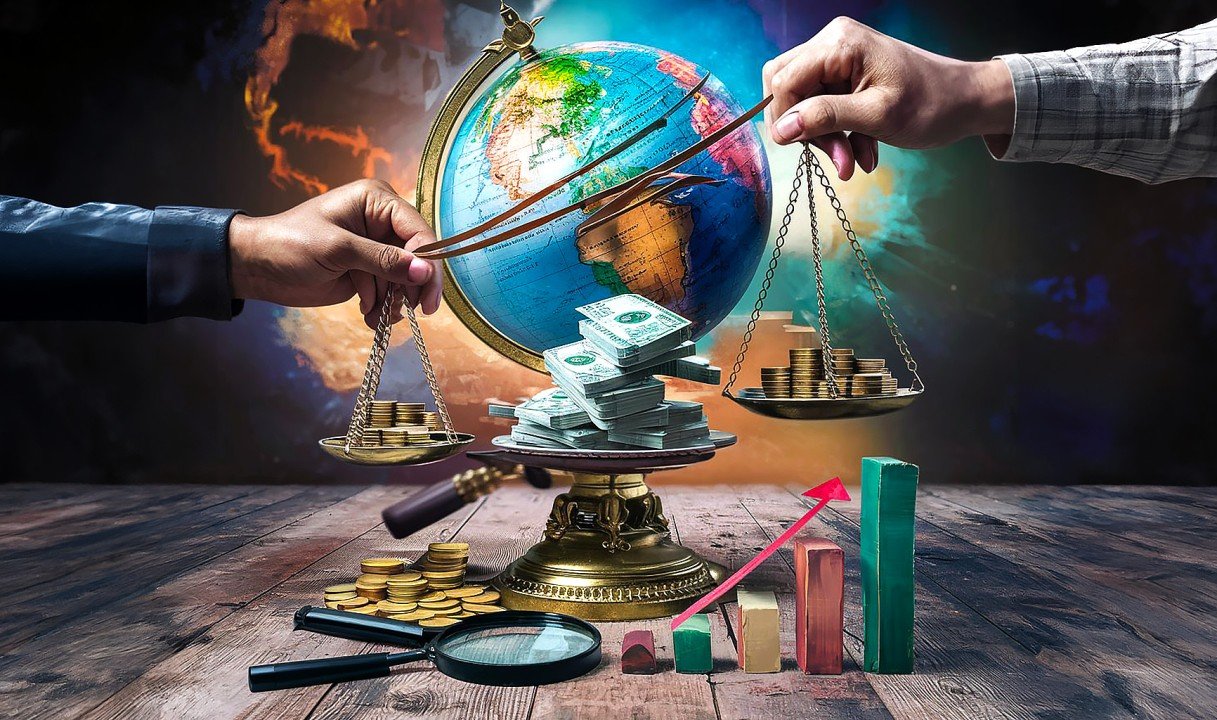
The World Inequality Report (WIR) 2026 shows that India continues to have one of the highest income and wealth inequalities in the world. The top 10% earners capture 58% of national income, while the bottom 50% receive only 15%. Wealth inequality is deeper: the top 1% holds 40% of national wealth. The report provides new data on income distribution, wealth concentration, gender gaps, global inequality patterns, and the link between inequality and climate emissions.
What Is the World Inequality Report?
- The WIR is produced by the World Inequality Lab, involving 200+ scholars (including Thomas Piketty).
- It analyses income, wealth, gender inequality, regional inequality, and carbon inequality using global comparable data.
- The 2026 edition is the third report, after the 2018 and 2022 editions.
- It highlights both national trends (India included) and global patterns in inequality.
What the Report Shows About India?
- Income Inequality in India
- The top 10% earn 58% of India’s national income (2024).
- The bottom 50% earn only 15%.
- The top 1% alone earns 6% of all income.
- Average annual income per person is €6,224 (PPP).
- Trend:
- The income share of the top 10% has risen steadily since the 1980s.
- The income share of the bottom 50% has fallen over time.
- India now ranks among the most unequal countries globally.
- Wealth Inequality in India
- The top 10% hold 65% of national wealth.
- The top 1% holds 40% – almost as much as the bottom 50%.
- The bottom 50% owns only 4% of India’s wealth.
- Average household wealth:
- National average: €28,141
- Bottom 50%: €1,801
- Top 10%: €182,913
- Top 1%: €1.1 million
- Income gap (Top 10% to Bottom 50%) remains very high:
- 2014: 38.0
- 2024: 38.2 (almost unchanged)
- Gender Inequality in India
- Female labour participation remains at 15.7%, unchanged for a decade.
- Shows persistent gender barriers in work, income, and economic opportunities.
What the Report Shows About Global Inequality?
- Income and Wealth Distribution
- Globally, inequality is extreme:
- The bottom 50% of the world earns 8% of income, owns 2% of wealth.
- The top 10% earns 53% of global income, and owns 75% of global wealth.
- Globally, inequality is extreme:
- The top 1% owns 37% of wealth, 18 times more than the bottom 50%.
- Ultra-rich concentration:
- The top 0.001% (≈60,000 people) own 3x the wealth of half of humanity.
- The top one-in-100 million (56 individuals) have €53 billion each on average.
- Their wealth exceeds the annual GDP of several African countries.
- Regional Inequality
- Monthly average incomes (PPP):
- Sub-Saharan Africa: €300
- South & Southeast Asia: €600
- Monthly average incomes (PPP):
- Latin America: €1,100
- World average: €1,200
- Europe: €2,900
- North America & Oceania: €3,800
- Insight: The richest region earns 12-13 times more than the poorest.
- Global Mobility in Income Distribution
- 1980 vs 2025:
- China has moved from the bottom to the middle 40% globally, with some entering the upper-middle.
- India has moved downward:
- In 1980, many were in the middle 40%.
- By 2025, most Indians are now in the bottom 50%
- 1980 vs 2025:
- Sub-Saharan Africa remains in the lowest percentiles.
- Gender Inequality Worldwide
- Women earn 61% of male earnings (paid work only).
- When unpaid labour is included, women earn only 32% of men’s income.
- Women’s share of total labour income:
- Middle East & North Africa: 16%
- South & Southeast Asia: 20%
- Sub-Saharan Africa: 28%
- East Asia: 34%
- Europe & North America: ~40%
- Insight: The gender gap has barely improved since 1990.
- Climate Inequality
- Carbon emissions linked to private capital ownership:
- Bottom 50%: 3% of emissions
- Top 10%: 77% of emissions
- Carbon emissions linked to private capital ownership:
- Top 1%: 41% of emissions
- Implication: The rich contribute disproportionately to climate damage, while the poor bear the consequences.
Why Do These Findings Matter?
- Inequality in India is deep, persistent, and multi-dimensional—in income, wealth, gender, and global position.
- High concentration of wealth at the top limits social mobility and equal opportunity.
- India’s fall in global income distribution shows slow relative progress compared to China.
- Gender inequality blocks utilisation of half the population’s talent.
- Carbon inequality shows that the top global elite drive the climate crisis, highlighting the need for equitable climate policies.
Challenges and Way Forward
| Challenges | Way Forward |
| Extreme concentration of income & wealth at the top | Implement progressive taxation on billionaires and ultra-rich |
| Persistent low incomes for bottom 50% | Expand public investment in education, health, childcare, nutrition |
| Weak redistributive systems | Strengthen pensions, unemployment benefits, and targeted cash transfers |
| Gender gap in labour income and participation | Improve childcare support, provide safe workplaces, expand skill training |
| Regressive taxation patterns | Ensure high-income groups contribute fairly; close loopholes used by ultra-rich |
| Climate inequality driven by rich | Impose carbon taxes on luxury emissions and high-wealth individuals |
Conclusion
The World Inequality Report 2026 shows that inequality in India—and globally—is deep and persistent. Addressing it requires progressive taxation, strong public investment, redistributive programmes, and gender-inclusive policies. Without these steps, both economic justice and climate sustainability will remain out of reach.
| Ensure IAS Mains Question
Q. “Inequality in India is structural, multi-dimensional, and persistent.” Using recent data from the World Inequality Report 2026, analyse the major forms of inequality and suggest policy measures to address them. (250 words) |
| Ensure IAS Prelims Question
Q. Consider the following statements based on the World Inequality Report 2026: 1. In India, the top 10% earn more than half of the national income, while the bottom 50% earn less than one-fifth. 2. Globally, the top 10% own about three-quarters of all personal wealth. 3. Women worldwide earn nearly the same labour income as men when unpaid work is included. Which of the statements are correct? a) 1 and 2 only b) 2 and 3 only c) 1 and 3 only d) 1, 2 and 3 Answer: a) 1 and 2 only Explanation Statement 1 is correct: India’s top 10% capture 58% of income while the bottom 50% receive only 15%, reflecting one of the highest income inequalities globally. Statement 2 is correct: Globally, the top 10% own around 75% of total personal wealth, while the bottom 50% own only about 2%, illustrating extreme wealth concentration. Statement 3 is incorrect: Women’s total labour income remains far below men’s. When unpaid work is included, women earn only around 32% of men’s income, showing a persistent global gender gap. |