Context
- A community-driven initiative is being undertaken in the Ujani Dam reservoir area of Maharashtra to remove invasive fish species and restore native fish populations.
- The initiative aims to protect aquatic biodiversity and improve the livelihoods of fishermen.
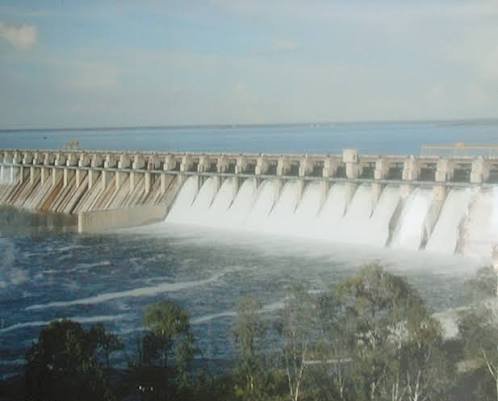
About Ujani Dam
- Location: Near Ujjani village in Solapur district, Maharashtra.
- River: Bhima River, a major tributary of the Krishna River.
- Other Names: Bhima Dam and Bhima Irrigation Project.
- Type: Composite dam consisting of earth-fill sections and masonry gravity sections.
- A composite dam is a dam designed and built using a combination of two or more distinct structural types.
- Construction: Completed in 1980.
- Length: Approximately 2,534 metres.
- Spillway: The central spillway section is about 602 metres long.
- Power Generation Capacity: 12 MW.
- Special Feature: It is the terminal dam among the 22 dams associated with the Bhima River system and is the largest dam in the Bhima Valley.
Purpose and Significance
- Irrigation: Supplies water to agricultural areas, particularly in Maharashtra’s Solapur region.
- Hydroelectricity: Supports electricity generation through a 12 MW hydroelectric installation.
- Water supply: The reservoir also serves drinking and other water requirements.
- Fisheries: Supports fishing activities and provides livelihoods to local communities.
Environmental Concerns
- Water pollution: Wastewater and pollutants entering the Bhima River from Pune and other urban areas have affected the reservoir’s water quality.
- Invasive fish species: Suckermouth catfish, tilapia and African catfish have threatened native fish populations.
- Loss of biodiversity: According to conservation reports, several native fish species have disappeared locally, while many others face declining populations.
- Impact on livelihoods: The decline of native fish affects fish diversity, catches and the incomes of local fishermen.
Conservation Initiative
- Removal of invasive fish: Fishermen are encouraged to catch and hand over invasive fish for appropriate processing and disposal.
- Restoration of native species: Conservationists are working to reintroduce indigenous fish, including the Deccan Mahseer and other native freshwater species.
- Community participation: Involving local fishermen helps combine ecological restoration with livelihood opportunities.
- Long-term objective: Restore the reservoir’s ecological balance, protect native aquatic biodiversity and support sustainable fisheries.
Frequently Asked Questions (FAQs)
Q1. Where is Ujani Dam located, and on which river is it built?
Ujani Dam is located near Ujjani village in Solapur district, Maharashtra, on the Bhima River, a major tributary of the Krishna River.
Q2. What are the other names and key features of Ujani Dam?
It is also known as Bhima Dam and the Bhima Irrigation Project. It is a composite dam with earth-fill and masonry gravity sections, completed in 1980, with a hydroelectric capacity of 12 MW.
Q3. What are the major purposes of Ujani Dam?
It supports irrigation, drinking-water supply, hydroelectricity generation and fisheries, providing important livelihoods for local communities.