About Kedarnath Wildlife Sanctuary
- Location: Rudraprayag and Chamoli districts of Uttarakhand.
- Other Name: Kedarnath Musk Deer Sanctuary, as it was established mainly to protect the endangered Himalayan musk deer.
- Established: 1972.
- Area: 975.20 sq. km.
- Significance: One of the largest protected areas in the Western Himalayas.
- Biogeographical Location: West Himalayan Zone of the Palearctic realm.
- River Systems: Lies in the upper catchment of the Alaknanda and Mandakini rivers.
- Name: Named after the famous Kedarnath Temple, which lies near its northern boundary.
Geographical Features
- Altitude: Ranges from 1,160 metres to 7,068 metres above sea level.
- Major Peaks: Chaukhamba (7,068 m), Kedarnath (6,940 m) and Mandani (6,193 m).
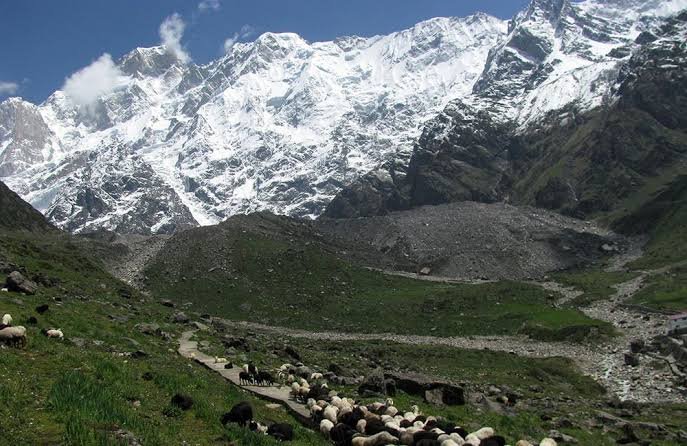
- Landscape: Includes mountain peaks, valleys, temperate forests, alpine forests and high-altitude meadows.
Vegetation and Flora
- Vegetation: Mainly temperate forests, with sub-alpine and alpine forests at higher elevations.
- Alpine Meadows: High-altitude grasslands support diverse Himalayan plants and wildlife.
- Major Flora: Oak, rhododendron, Chir Pine and various Himalayan flowering plants.
Fauna
- Mammals: Important mammals found in the sanctuary include Himalayan musk deer, Himalayan tahr, Himalayan black bear, Snow leopard, Himalayan leopard and Red fox.
- Birds: Important bird species include Himalayan Monal — the state bird of Uttarakhand, Kalij Pheasant, Koklass Pheasant, Nepal Tree-creeper, Little Pied Flycatcher and Grey-cheeked Warbler.
Ecological Significance
- Wildlife Conservation: Provides important habitat for the endangered Himalayan musk deer and other mountain species.
- Water Security: Its location in the upper catchment of major Himalayan rivers makes it important for regional water systems.
- Biodiversity: Its wide altitudinal range supports diverse forest types, alpine vegetation & wildlife.
Frequently Asked Questions (FAQs)
Q1. Where is Kedarnath Wildlife Sanctuary located?
It is located in the Rudraprayag and Chamoli districts of Uttarakhand, in the Western Himalayas.
Q2. Why is it also called Kedarnath Musk Deer Sanctuary?
It is also known as Kedarnath Musk Deer Sanctuary because it was established mainly to protect the endangered Himalayan musk deer.
Q3. Which major rivers and peaks are associated with the sanctuary?
It lies in the upper catchment of the Alaknanda and Mandakini rivers. Major peaks include Chaukhamba (7,068 m), Kedarnath (6,940 m) and Mandani (6,193 m).
Q4. What types of vegetation and flora are found in the sanctuary?
It has temperate, sub-alpine and alpine forests, along with high-altitude meadows. Major flora includes oak, rhododendron, Chir Pine and Himalayan flowering plants.