1. Netherlands
Context
India and the Netherlands held bilateral talks on agricultural cooperation, focusing on Centres of Excellence, seed-sector collaboration and agricultural innovation.
Key Geographical Features
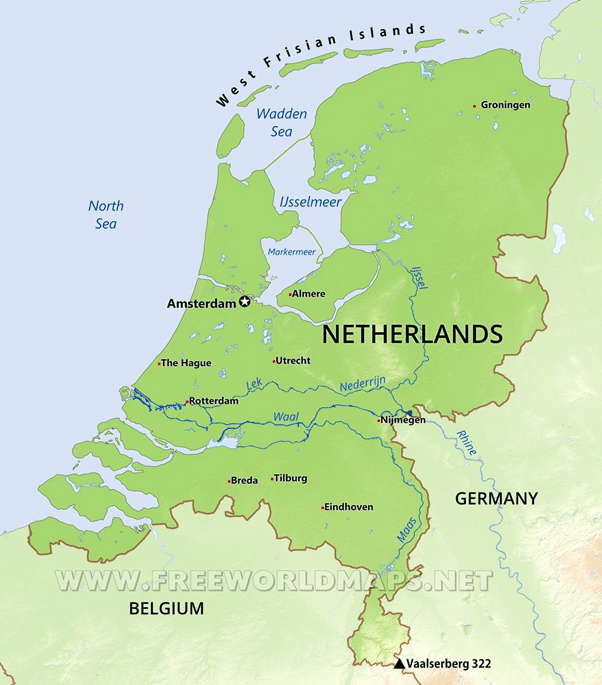
- Location: Northwestern Europe.
- Land borders: Germany to the east and Belgium to the south.
- Water body: The North Sea lies to the north and west.
- Capital: Amsterdam.
- Climate: Temperate maritime climate, with mild winters, cool summers and rainfall throughout the year.
- Relief: The country is largely characterised by low-lying plains and reclaimed land, with hills in the southeast.
- Major rivers: Rhine, Meuse (Maas) and Scheldt.
- Major lake: IJsselmeer, a major freshwater lake.
- Highest point: Vaalserberg, approximately 322 metres above sea level, in the European part of the Netherlands.
- Natural resources: Natural gas has historically been an important resource, alongside petroleum and agricultural land
Ghana
Context
Ghana’s Cabinet has approved a proposal to formally seek BRICS membership to diversify international partnerships and expand economic cooperation.
About Ghana
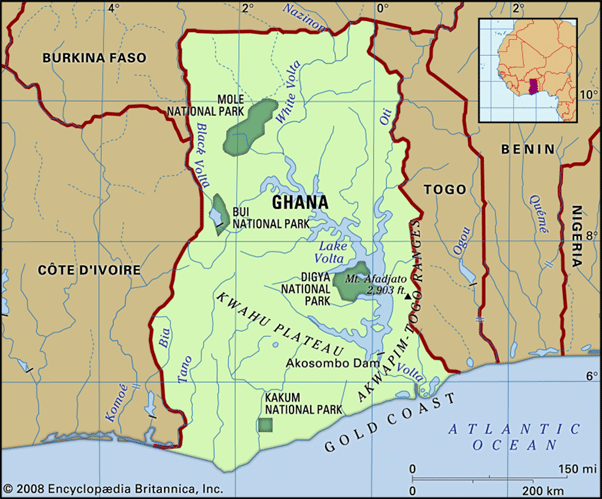
- Location: West Africa, along the Gulf of Guinea and the Atlantic Ocean.
- Capital: Accra.
- Land borders: Côte d’Ivoire (west), Burkina Faso (north) and Togo (east).
- The Prime Meridian (0° longitude) passes through Ghana.
Key Geographical Features
- Relief: The Kwahu Plateau and Gambaga Scarp are notable landforms.
- Highest point: Mount Afadja (Afadjato), near the Togo border.
- Drainage: The Volta River system includes the Black Volta, White Volta and Oti rivers.
- Lake Volta: A major artificial reservoir formed by the Akosombo Dam.
- Climate: Tropical, with regional variations in rainfall.
Significance
- Gold, cocoa and petroleum are important sectors of Ghana’s economy.
- Ghana also seeks to promote industrialisation, job creation and value addition to its natural resources.