Context
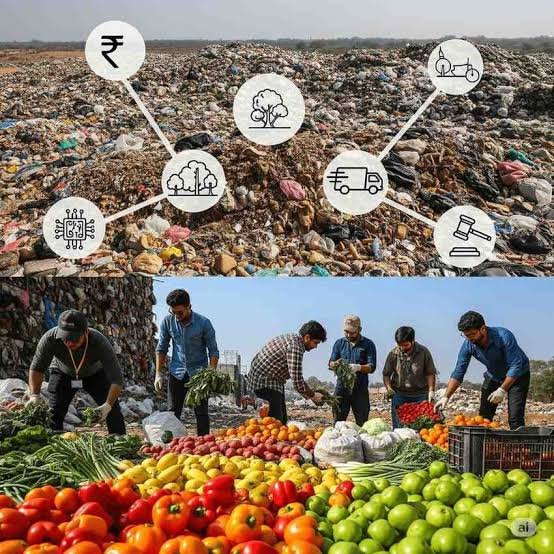
Reducing food loss and waste is vital for food security, farmers’ incomes and climate action. The Food and Agriculture Organization (FAO) highlights wholesale agricultural markets as key sites for converting organic waste into useful resources.
Food Loss vs Food Waste
| Basis | Food Loss | Food Waste |
| Meaning | Reduction in food quantity or quality during production, harvesting, post-harvest handling, storage, transportation and processing, before retail. | Food discarded at retail, restaurants and households. |
| Main causes | Poor harvesting, inadequate storage, transport and processing facilities. | Over-purchasing, excessive serving, poor stock management and spoilage. |
| Examples | Grains damaged during storage; fruits spoiled during transportation. | Edible food discarded by shops, restaurants or households. |
| Key indicator | Food Loss Index (FLI) — measures food losses from production up to, but excluding, retail. | Food Waste Index (FWI) — measures food waste at retail, food-service and household levels. |
Major Causes of Food Loss and Waste
- Harvesting and Handling: Improper harvesting and poor post-harvest practices damage crops.
- Storage and Transportation: Inadequate warehouses, cold chains, refrigerated transport, and packaging cause spoilage, especially of perishable food.
- Processing Gaps: Limited food-processing facilities reduce the utilisation of surplus produce.
- Wholesale Markets: Poor handling, spoilage, and inadequate waste collection generate large amounts of organic waste.
- Retail and Households: Over-purchasing, poor inventory management, and excessive food serving lead to avoidable waste.
Wholesale Agricultural Markets: An Opportunity
- Scale: India has over 7,000 regulated agricultural markets, including around 500 dealing exclusively in fruits and vegetables, according to the FAO.
- Waste Utilisation: Segregated organic waste can be converted into compost, biogas, and bio-CNG instead of being dumped in landfills.
- Surat Model: A 50-tonne-per-day compressed biogas plant at Surat Wholesale Market converts organic waste into renewable energy and biofertiliser.
- Private Investment: Public-private partnerships can support waste collection, processing, and digital tracking, improving efficiency and financial viability.
Significance of Reducing Food Loss and Waste
- Food Security: Reduces avoidable losses of edible food and supports efforts to address hunger, undernutrition, and malnutrition.
- Farmers’ Income: Preserves marketable produce and reduces the loss of investments in seeds, fertilisers, water, labour, and energy.
- Resource Conservation: Prevents the wastage of agricultural land, soil nutrients, water, and energy used in food production.
- Climate Change Mitigation: Decreases methane emissions from decomposing organic waste in landfills. Food loss and waste account for an estimated 8–10% of global greenhouse gas emissions.
- Circular Economy: Enables organic waste to be converted into compost, biogas, and bio-compressed natural gas (bio-CNG).
- SDG 12.3: Aims to halve per-capita global food waste at retail and consumer levels and reduce food losses along production and supply chains by 2030.
Challenges
- Infrastructure Gaps: Inadequate cold storage, warehouses, and processing facilities hinder efficient food preservation.
- Limited Finance and Technology: Small farmers, FPOs, and MSMEs lack affordable credit, modern equipment, and technical skills.
- Data Gaps: Limited reliable data on the scale and location of food losses weakens evidence-based policymaking.
- Fragmented Coordination: Poor coordination among farmers, markets, municipalities, and waste processors disrupts collection and recovery.
- Weak Waste Segregation: Mixing organic waste with non-biodegradable materials complicates recycling and resource recovery.
- Consumer Behaviour: Over-purchasing and excessive food preparation contribute to avoidable waste.
- Inefficient Redistribution: Logistical barriers, food-safety requirements, and weak coordination restrict the transfer of surplus edible food to food-insecure communities.
Way Forward
- Strengthen Infrastructure: Expand scientific storage, cold chains, food processing, and refrigerated transport, especially for perishable produce.
- Improve Data and Traceability: Collect crop- and region-specific data and use digital tracking to identify hotspots and monitor progress.
- Promote Waste-to-Value Solutions: Establish decentralised composting, biogas, and bio-CNG facilities, supported by source segregation and private investment.
- Support Small Producers: Provide affordable credit, technology, and technical assistance to FPOs, cooperatives, SHGs, and MSMEs.
- Improve Redistribution and Coordination: Redirect safe surplus food to food-insecure communities and integrate agriculture, food processing, urban waste management, and climate policies.
FAQs
Q1. What is the difference between food loss and food waste?
Ans. Food loss occurs before retail, while food waste occurs at retail, food-service and consumer levels.
Q2. What is SDG 12.3?
Ans. It targets halving per-capita food waste and reducing food losses by 2030.
Q3. How can wholesale markets help reduce food waste?
Ans. They can redistribute edible surplus and convert organic waste into compost, biogas and bio-CNG.
Q4. Why do small farmers and MSMEs need special support?
Ans. They often lack affordable finance, storage, processing facilities and technology to prevent losses.