Context
The Forest Rights Act, 2006 recognises forest rights, but sustainable livelihoods, agricultural support and market access are essential to improve the economic security of forest-dwelling communities.
About the Forest Rights Act, 2006
(The Scheduled Tribes and Other Traditional Forest Dwellers (Recognition of Forest Rights) Act, 2006)
- Core Mandate & Governance: Rectifies historical injustices by vesting forest rights in traditional communities. Administered by MoTA (Ministry of Tribal Affairs).
- Eligible Groups:
- FDSTs (Forest-Dwelling Scheduled Tribes): Scheduled Tribes residing in and depending on forests for bona fide livelihood needs.
- OTFDs (Other Traditional Forest Dwellers): Non-ST members residing in and depending on forests for at least 3 generations (75 years) prior to December 13, 2005.
- Types of Recognized Rights:
- IFRs (Individual Forest Rights): Ownership rights over self-occupied forest land (capped at maximum 4 hectares; heritable but non-transferable; issued jointly to both spouses).
- CRs (Community Rights): Common access to grazing areas, water bodies, and ownership/collection of MFP (Minor Forest Produce) like bamboo and tendu leaves.
- CFR (Community Forest Resource) Rights: Authority to protect, conserve, regenerate, and manage traditional community forest resources within village boundaries.
- Adjudication Process & Safeguards:
- 3-Tier Hierarchy: Gram Sabha (initiates/verifies claims) SDLC (Sub-Divisional Level Committee) (screens) DLC (District Level Committee) chaired by the District Collector (final approving authority).
- Eviction Protection: No eligible occupant can be evicted until the entire multi-stage verification process is completed.
Challenges in Transitioning from Forest Rights to Sustainable Livelihoods
- Agro-Ecological Risks: Soil erosion, declining fertility, and water scarcity limit yields; improper crop choices and monocropping endanger long-term sustainability.
- Input & Knowledge Deficits: Restricted access to certified seeds, farm machinery, agricultural extension guidance, and soil health diagnostics restricts farm output.
- Infrastructure & Market Deficits: Lack of cold storage, processing units, and transport causes high post-harvest losses, while price volatility depresses incomes.
- Financial Vulnerabilities: Inadequate institutional credit and crop insurance expose farmers to severe climate and market shocks.
- Institutional Gaps: Poor inter-departmental coordination and weak grassroots bodies—such as FPOs (Farmer Producer Organizations) and SHGs (Self-Help Groups)—hinder collective market scale.
Way Forward
- Scientific Agro-Planning: Deploy GIS (Geographical Information System) mapping and soil diagnostics for district-specific cropping plans.
- Farm Inputs & Extension: Supply certified seeds, micro-irrigation, and machinery supported by KVKs (Krishi Vigyan Kendras).
- Credit & Risk Mitigation: Expand credit via KCC (Kisan Credit Card) and crop insurance via PMFBY (Pradhan Mantri Fasal Bima Yojana).
- NTFP & Market Linkages: Empower FPOs (Farmer Producer Organizations) and scale PM-VDVY (Pradhan Mantri Van Dhan Vikas Yojana) via TRIFED (Tribal Cooperative Marketing Development Federation of India) for NTFP (Non-Timber Forest Produce)
- Institutional Convergence: Synchronize tribal welfare, agriculture, rural development, and forest departments under district administrations.
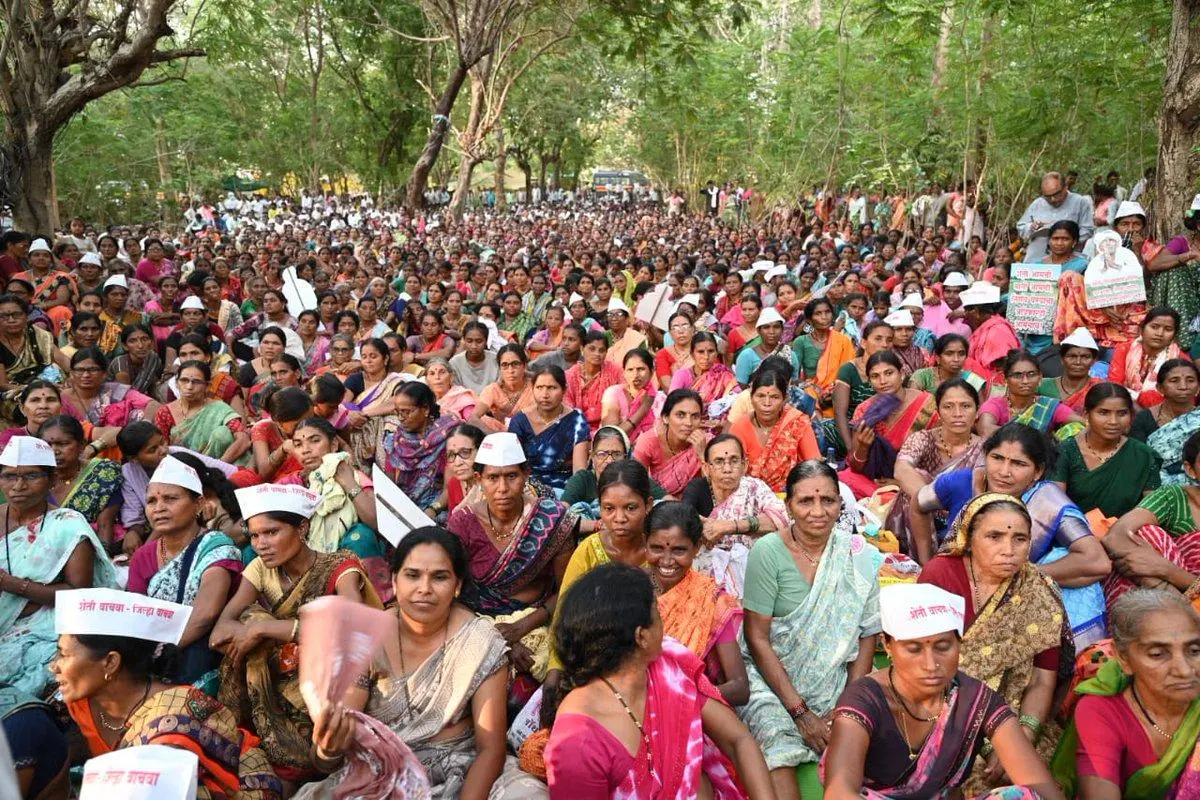
- Grassroots Governance & Gender: Position Gram Sabhas to lead local planning while ensuring active participation of tribal women in SHGs (Self-Help Groups).
- PVTG Targeted Focus: Deliver dedicated infrastructure and welfare via PM-JANMAN (Pradhan Mantri Janjati Adivasi Nyaya Maha Abhiyan) for PVTGs (Particularly Vulnerable Tribal Groups).
FAQs
Q1. What are Community Forest Resource Rights under the Act?
Ans. They empower eligible communities to protect, conserve, regenerate and manage community forest resources.
Q2. What is the role of Gram Sabhas under the Forest Rights Act?
Ans. Gram Sabhas initiate and verify forest-rights claims and play a key role in recognising rights and managing community forest resources.
Q3. How can GIS support sustainable agriculture in tribal regions?
Ans. GIS mapping helps select suitable crops based on soil, rainfall, water availability and local agro-climatic conditions.
Q4. How can Farmer Producer Organisations help tribal farmers?
Ans. FPOs improve farmers’ bargaining power, access to inputs and markets, and opportunities for collective marketing.