Context
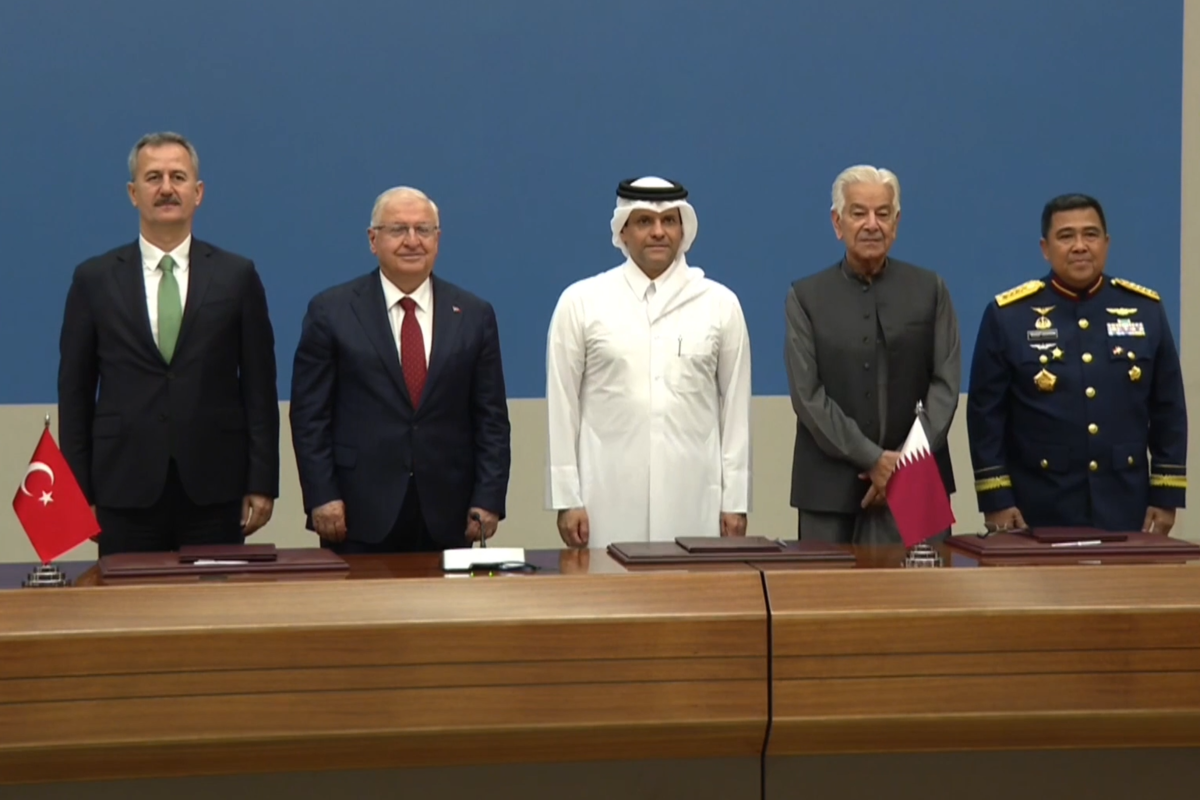
Pakistan, Turkiye, Qatar and Indonesia signed the Badr Memorandum of Understanding (MoU) in Doha on 21 October 2026 to cooperate on defence manufacturing, technical training, and research and development.
About the Badr MoU
- Meaning of Badr: The name means full moon, and the MoU was signed by the Pakistan, Turkiye and Qatar and Indonesia’s.
- Aims of the MoU: It focuses on joint military production, stronger military capabilities, technical training, and research and development.
- It is not a collective military alliance and does not require any member to support Pakistan in a conflict with India whereas Makkah Joint Defence Agreement (August 2026) signed between Pakistan, Saudi Arabia and Turkiye agreed that an attack on one is an attack on all three.
- Turkiye’s role: Turkiye has NATO’s second-largest army and a strong defence industry, and it has been helping Gulf states, including Qatar, strengthen their defences amid the Iran war.
- Pakistan’s supply base: Pakistan depends heavily on China for defence equipment, and new partners could help it diversify.
- India–Indonesia ties: India has reportedly discussed supplying BrahMos and Astra missiles to Indonesia in a deal of about USD 630 million which might get impacted by this agreement.
Challenges posed by Badr MoU
- Wider access to arms: Cooperation with three new partners could give Pakistan more options for weapons and military technology.
- Less dependence of Pakistan on China: Pakistan may no longer rely on a single supplier, which gives it more bargaining room.
- Overlapping pacts: The Makkah pact and the Badr MoU together create a growing network of defence links around Pakistan that India must track.
- Partners in two camps: Qatar and Indonesia have good ties with India, so New Delhi must keep both relationships steady while responding to the pact.
- Pressure on Indian exports: Turkiye’s model of joint production and technology sharing competes with India’s own pitch to buyers like Indonesia.
- Strained India–Turkiye ties: Turkiye’s close ties with Pakistan add to existing friction with India.
- Unsettled West Asia: The Iran war already makes the region unstable, so new groupings add to the uncertainty that India must manage.
- Hedging by partners: Indonesia and Qatar may be spreading their bets, which shows that middle powers are building many partnerships at once.
- Higher defence planning cost: India may need to invest more in air defence, counter-drone systems and intelligence to stay ahead.
India’s initiatives to safeguard its interests
- Strategic autonomy: India keeps independent ties with all major powers and regions instead of joining any bloc.
- Defence exports push: India has been promoting exports of systems like BrahMos, and talks with Indonesia are part of this effort.
- Atmanirbhar Bharat in defence: Greater domestic production of defence equipment reduces dependence on imports and builds a base for co-development.
- Gulf outreach: India has strong trade, energy and people-to-people ties with Gulf states, including Qatar and Saudi Arabia.
Way Forward for India
- Seek clarity: Use diplomatic channels with Qatar and Indonesia to understand what the MoU covers and what it does not.
- Close the Indonesia deal: Move quickly on the BrahMos and Astra talks and add training and joint production to make India a stronger partner.
- Strengthen Gulf ties: Keep deepening trade, energy and investment links with Qatar, Saudi Arabia and the UAE so that they see India as a reliable partner.
- Offer co-development: Pitch joint production and technology sharing to friendly countries, as these are the very things they want from defence partners.
- Upgrade defences: Invest in air defence, anti-drone systems and surveillance to manage any gradual rise in Pakistan’s capabilities.
- Build wider partnerships: Work with partners such as France, the United States and others on defence technology and joint exercises.
- Clear communication: Present clear and measured messaging, and avoid portraying the MoU as a military alliance when it is not one.
Conclusion
The Badr MoU highlights evolving regional defence partnerships. India must respond through strategic diplomacy, stronger defence manufacturing, and deeper partnerships to safeguard national security and strategic autonomy.
FAQs
Q1. What is the Badr MoU?
Ans: It is a multilateral defence cooperation agreement signed in Doha on 21 October 2026 by Pakistan, Turkiye, Qatar and Indonesia.
Q2. How is an MoU different from a treaty?
Ans: An MoU is a statement of shared intent and is usually not legally binding. A treaty creates legal obligations that the signing countries must follow.
Q3. What is the Makkah Joint Defence Agreement?
Ans: It is an August 2026 pact between Pakistan, Saudi Arabia and Turkiye that treats an attack on any one of them as an attack on all three.
Q4. What is strategic autonomy?
Ans: It is India’s policy of taking foreign and defence decisions independently, without depending on or joining any single power bloc.