Context
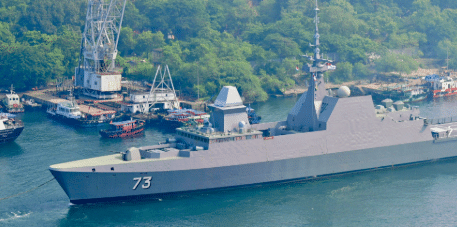
The 33rd edition of the Singapore–India Maritime Bilateral Exercise (SIMBEX) began in Visakhapatnam on 21 October 2026 and will run until 26 October. The Republic of Singapore Navy ship RSS Supreme is taking part with Indian Navy units, with a harbour and a sea phase in the Bay of Bengal.
Background: SIMBEX and India-Singapore Maritime Relations
- Origins: It began in 1994 as Exercise Lion King and has since grown into a major bilateral maritime activity.
- Two phases: The harbour phase includes expert exchanges, cross-deck visits, sports and planning, while the sea phase includes tactical drills.
- Drills in 2026: They include anti-submarine warfare, anti-surface and anti-air exercises, seamanship and tactical manoeuvres.
- Opening ceremony: It was held aboard INS Nilgiri and INS Kamorta, and senior officers from both navies attended.
- Diplomatic base: The two countries marked 60 years of diplomatic ties in 2025, and their relationship was upgraded to a Comprehensive Strategic Partnership in 2024.
- Other exercises: India and Singapore also hold Exercise Agni Warrior (Army) and Joint Military Training (Air Force).
- ASEAN link: Singapore co-hosted the first ASEAN–India Maritime Exercise in 2023.
Significance of SIMBEX
- Maritime partnership: It strengthens India’s ties with Singapore, a key partner on the Strait of Malacca, through which a large share of world trade passes.
- Interoperability: Joint drills help the two navies work together smoothly in an actual operation.
- Act East policy: It supports India’s Act East and Southeast Asia outreach, along with its vision for regional maritime security.
- Skills and training: Drills on anti-submarine, anti-surface and anti-air warfare allow the Indian Navy to test its tactics.
- Long-running trust: It is the longest continuous bilateral naval exercise India has held with any country, according to Singapore’s defence ministry.
- Indo-Pacific stability: It shows shared support for open sea lanes and a rules-based order in the region.
Challenges in India -Singapore maritime cooperation
- Growing Chinese presence: Increased Chinese naval activity in the Indian Ocean makes regional maritime security more complex.
- Different capacities: The two navies differ widely in size and needs, so exercises must be designed to suit both.
- Singapore’s balance: Singapore keeps good ties with all major powers, so cooperation has limits on how far it can go.
- Limited scale: SIMBEX is bilateral and smaller than multilateral drills like Malabar, so its strategic impact is narrower.
- Operational strain: Both navies must balance exercises with real patrol and security duties.
- Non-traditional threats: Piracy, smuggling and illegal fishing need continuous attention beyond one annual drill.
Initiatives Strengthening India -Singapore Maritime Cooperation
- Navy cooperation agreement: A 2018 agreement gives Indian ships logistics support at Singapore’s Changi Naval Base.
- Comprehensive Strategic Partnership: It broadens defence, economic and technology ties between the two countries.
- Joint exercises: Besides SIMBEX, the armies and air forces train together under Agni Warrior and Joint Military Training.
- ASEAN-India maritime drills: These regional exercises extend naval cooperation beyond bilateral ties.
- Vision for the region: India’s Vision SAGAR, now carried forward under MAHASAGAR, stresses cooperative maritime security.
Way Forward
- Expand scope: Add areas like cyber, unmanned systems and maritime domain awareness to the drill.
- Share maritime data: Strengthen information sharing on ship movements through the existing information fusion centres.
- Joint responses: Practise humanitarian assistance, disaster relief and search-and-rescue missions together.
- Defence industry cooperation: Explore joint work on shipbuilding, maintenance and technology.
- Include regional partners: Use the SIMBEX model to build wider drills with other ASEAN navies.
- Address non-traditional threats: Coordinate patrols against piracy, trafficking and illegal fishing.
- Regular high-level dialogue: Frequent naval staff talks can align training with changing threats.
FAQs
Q1. What is SIMBEX?
Ans: SIMBEX stands for Singapore–India Maritime Bilateral Exercise. It is an annual naval exercise between the Indian Navy and the Republic of Singapore Navy, which began in 1994 as Exercise Lion King.
Q2. What are the two phases of SIMBEX?
Ans: The harbour phase involves professional exchanges, cross-deck visits, sports and planning conferences in port. The sea phase involves tactical drills such as anti-submarine, anti-surface and anti-air warfare at sea.
Q3. What is interoperability?
Ans: It is the ability of two or more forces to operate together smoothly, using compatible procedures, communications and tactics. Joint exercises like SIMBEX help build it.
Q4. Why is the Strait of Malacca important?
Ans: It is a narrow sea lane between the Malay Peninsula and Sumatra that connects the Indian Ocean with the Pacific. A large share of global trade and India’s trade with East Asia passes through it.