Context
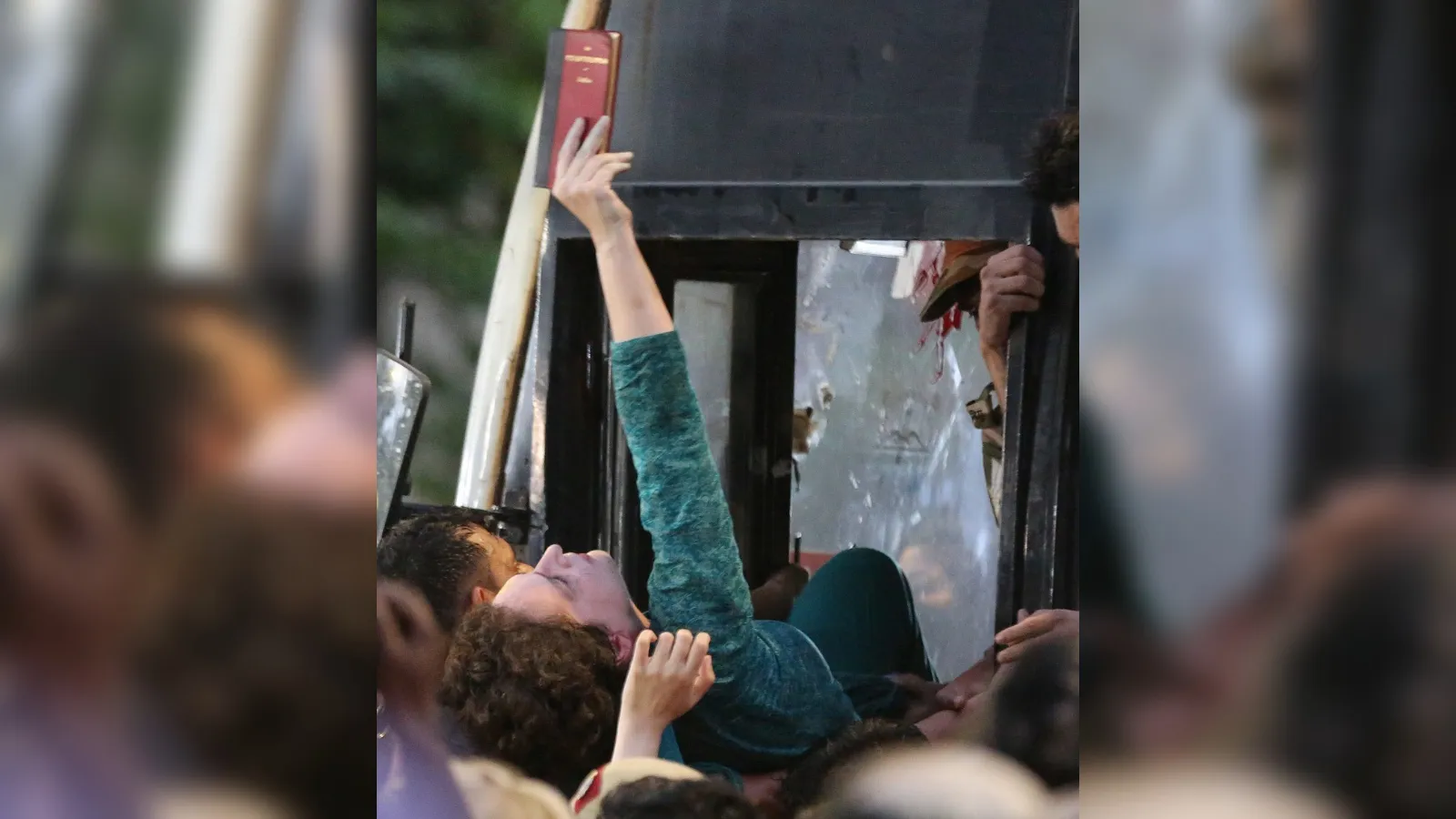
- In October 2026, Delhi Police detained opposition leaders during a protest demanding the resignation of Chief Election Commissioner Gyanesh Kumar.
- The Opposition alleged irregularities in the Election Commission’s Special Intensive Revision (SIR) of electoral rolls.
Detention and Arrest: Meaning
- Arrest involves taking a person into custody under legal authority and triggers specific procedural safeguards.
- Detention, in the context of protests, broadly describes a temporary restriction of movement. Its legal character depends on the authority under which it is imposed.
- The absence of a First Information Report (FIR) does not, by itself, establish whether a police action is lawful.
Legal Provisions Governing Police Powers
The Bharatiya Nagarik Suraksha Sanhita (BNSS), 2023, contains provisions relevant to preventive police action and compliance with police directions.
- Section 170 — Arrest to prevent commission of cognizable offences: A police officer who knows of a design to commit a cognizable offence may arrest the person without a warrant or Magistrate’s order if the offence cannot otherwise be prevented. Custody cannot exceed 24 hours unless further detention is required or authorised under another provision of the BNSS or another applicable law.
- Section 172 — Compliance with lawful police directions: Individuals must comply with lawful directions issued by police officers performing duties under Chapter XII. A person who resists, refuses, ignores or disregards such a direction may be detained or removed and taken before a Magistrate or, in petty cases, released as soon as possible within 24 hours.
- Section 163 — Urgent orders: A District Magistrate, Sub-Divisional Magistrate or another Executive Magistrate specially empowered for this purpose may issue written orders in urgent cases of nuisance or apprehended danger, subject to the statutory conditions.
These provisions confer specific powers subject to legal conditions; they do not authorise arbitrary restrictions on liberty.
Constitutional Position on Protests
- Article 19(1)(b) of the Constitution guarantees the right to assemble peaceably and without arms. Article 19(3) permits reasonable restrictions on this right in the interests of the sovereignty and integrity of India or public order.
- Disobedience of an order duly promulgated by a public servant may attract Section 223 of the Bharatiya Nyaya Sanhita (BNS), 2023, where its statutory requirements are fulfilled. Participation in a demonstration alone does not establish criminal liability.
Rights and Safeguards
The principal safeguards relevant to formal arrest include:
- Article 22 of the Constitution: An arrested person must be informed of the grounds of arrest, allowed to consult and be defended by a lawyer of their choice, and produced before the nearest Magistrate within 24 hours, excluding necessary journey time, subject to constitutional exceptions.
- Section 38 of the BNSS: An arrested person is entitled to meet an advocate of their choice during interrogation, though not throughout the interrogation.
- Section 43(5) of the BNSS: Arresting a woman between sunset and sunrise is prohibited except in exceptional circumstances. In such cases, a woman police officer must submit a written report and obtain prior permission from a Judicial Magistrate of the First Class.
- Legal aid: Eligible persons unable to afford legal representation may seek free legal services under the applicable legal-aid framework.
- D.K. Basu v. State of West Bengal (1997): The Supreme Court laid down safeguards against custodial abuse, including requirements concerning identification of arresting officers, preparation of an arrest memo and informing a nominated person about the arrest.
The safeguards applicable to temporary custody depend on the legal basis and circumstances of the action.
Key Concerns
- Accountability: The reasons, duration and legal basis of temporary custody must be capable of scrutiny.
- Proportionality: Coercive action should remain within the limits justified by the circumstances and applicable law.
- Democratic freedoms: Public-order measures must respect constitutional protections for peaceful political participation
Conclusion
Clear legal boundaries and effective judicial oversight are essential to prevent the misuse of police powers and uphold the rule of law.
FAQs
Q1. What principle did the Supreme Court establish in Joginder Kumar v. State of Uttar Pradesh (1994)?
The Court held that the existence of legal power to arrest does not automatically justify its exercise. Arrest must be justified by the circumstances and should not be routine or mechanical.
Q2. What did the Supreme Court direct in Arnesh Kumar v. State of Bihar (2014)?
The Court cautioned against automatic arrests and emphasised compliance with statutory conditions, particularly in cases involving offences punishable with imprisonment of up to seven years. The judgment arose under the former Code of Criminal Procedure; its application must be considered alongside the current BNSS framework.
Q3. What is the National Security Act, 1980, associated with?
It provides a legal framework for preventive detention, a distinct mechanism governed by its own statutory provisions and constitutional safeguards.