Context
- A five-day Elephant Festival and Rejuvenation Camp was held at Bandhavgarh Tiger Reserve in Umaria district, Madhya Pradesh, in September 2026.
- The camp provided working elephants with rest, veterinary check-ups and nutritious food. It also aimed to spread awareness about elephant care and wildlife conservation.
About Bandhavgarh Tiger Reserve
- Location: Umaria and Katni districts, Madhya Pradesh, in the eastern Satpura hills, between the Vindhyan and Satpura ranges.
- Protected area status: Declared a National Park in 1968 and subsequently included in the Project Tiger network in 1993.
- Area: The current official reserve profile lists a total area of approximately 1,537 sq. km, including core and buffer zones.
Historical and Cultural Significance
- Origin of name: According to Hindu tradition, Lord Rama gave the hill fort to his brother Lakshmana to keep watch over Lanka. Hence, Bandhavgarh means “Brother’s Fort”.
- Archaeological heritage: The reserve contains around 39 caves with ancient inscriptions and animal depictions, along with historical remains such as stupas and statues.
- Bandhavgarh Fort: Located on a prominent hill, it is an important historical landmark within the reserve.
Flora (Plant Life)
- Dominant vegetation: Tropical moist deciduous forests, with extensive Sal forests, grasslands and bamboo patches.
- Other important trees: Saja, Dhauda, Tendu, Arjun, Aonla, Palash, Salai, Bhirra, Khamer, Dhaman, Mango and Jamun.
Fauna (Animal Life)
- Mammals
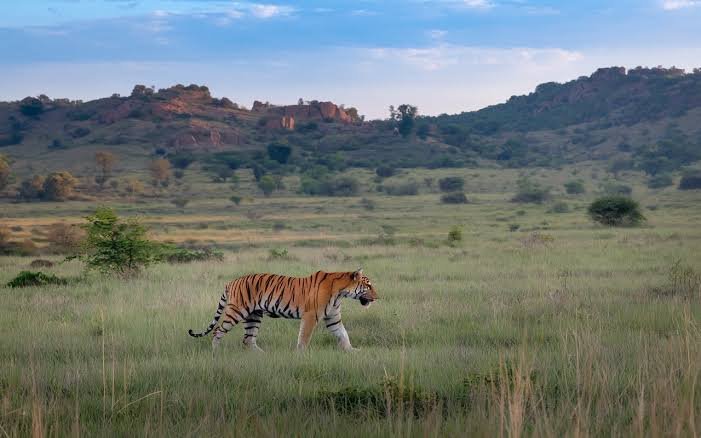
- Tiger: Bandhavgarh is known for its high tiger density and is an important tiger conservation area in central India.
- Other mammals: Leopard, gaur (Indian bison), Sambar deer, Spotted deer, Nilgai, Wild boar, Sloth bear, Indian wolf, Jackal, Langur and Rhesus macaque.
- White tiger connection: The reserve is associated with the history of white tigers, including the white tiger Mohan captured in the former Rewa region in 1951.
- Birds: The reserve supports more than 250 bird species, including:
- Crested serpent eagle
- Malabar pied hornbill
- White-rumped vulture
- Indian roller
Ecological Significance
- Tiger conservation: Supports an important population of tigers and helps maintain connectivity with surrounding forest landscapes.
- Biodiversity: Its mix of hills, valleys, forests and grasslands provides habitats for diverse plants and animals.
- Heritage conservation: Combines wildlife protection with the preservation of historical and archaeological remains.
Frequently Asked Questions (FAQs)
Q1. Where is Bandhavgarh Tiger Reserve located?
It is located in the Umaria and Katni districts of Madhya Pradesh, in the eastern Satpura hills.
Q2. When was Bandhavgarh declared a National Park?
It was declared a National Park in 1968 and included in the Project Tiger network in 1993.
Q3. What is the historical significance of Bandhavgarh?
It is associated with the legend of Lord Rama gifting the hill fort to Lakshmana. The reserve also contains Bandhavgarh Fort, ancient caves, inscriptions, stupas and statues.
Q4. Which types of vegetation and wildlife are found in the Bandhavgarh Tiger Reserve?
It has tropical moist deciduous forests, Sal forests, grasslands and bamboo patches. Major animals include tigers, leopards, gaur, sambar deer and sloth bears. It also supports over 250 bird species.
Q5. What was the purpose of the Elephant Festival and Rejuvenation Camp held in September 2026 in the Bandhavgarh Tiger Reserve?
The five-day camp provided working elephants with rest, veterinary check-ups and nutritious food. It also aimed to raise awareness about elephant care and wildlife conservation.