Context
Recent archaeological discoveries in Poland are providing new insights into the burial practices and social diversity of the Corded Ware Culture.
About Corded Ware Culture
- The Corded Ware Culture (CWC) existed around 3000–2350 BC across Northern, Central and Eastern Europe.
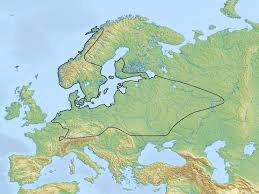
- Its distribution broadly stretched from the Rhine to the Volga and covered the transition from the Stone and Copper Ages to the early Bronze Age.
Origin and Cultural Development
- The CWC comprised diverse regional communities with different economic and cultural practices.
- It was linked to the Yamnaya culture of the Eurasian steppe through steppe migrations and interaction with local European groups.
- It is important in understanding the spread of Indo-European languages across Europe and parts of Asia.
Key Cultural Features
- Corded Pottery: Pottery was decorated by pressing twisted cords into wet clay, leaving rope-like patterns.
- Single Graves: People were often buried individually, sometimes under small mounds.
- Boat Axes: Boat-shaped stone axes are commonly found in some male graves.
- Wheeled Vehicles: Evidence suggests the use of ox-drawn wheeled vehicles.
Economy and Settlement Pattern
- Pastoralism: Limited settlement evidence initially suggested a mainly mobile pastoralist lifestyle.
- Agriculture: Finds of wheat and barley in Poland indicate that some communities also practised farming.
- Mixed Economy: The CWC economy combined pastoralism, agriculture and seasonal mobility.
Bell Beaker Culture
- A distinct prehistoric tradition of western and Central Europe, which overlapped with the Corded Ware Culture in time.
- Known for bell-shaped pottery and extensive riverine and maritime exchange networks.
FAQs
Q1. What was the Corded Ware Culture?
Ans. It was a widespread prehistoric cultural tradition of Europe dating broadly to 3000–2350 BC. It covered parts of Northern, Central and Eastern Europe.
Q2. Why is it called the Corded Ware Culture?
Ans. The name refers to its characteristic pottery decoration. Twisted cords were pressed into wet clay to create distinctive patterns.
Q3. What was the geographical extent of the Corded Ware Culture?
Ans. Its distribution broadly extended from the Rhine River in western Europe to the Volga River in eastern Europe.
Q4. What was the connection between the Yamnaya and Corded Ware cultures?
Ans. Archaeological and genetic evidence indicates significant links between steppe populations associated with the Yamnaya culture and the emergence of Corded Ware populations.