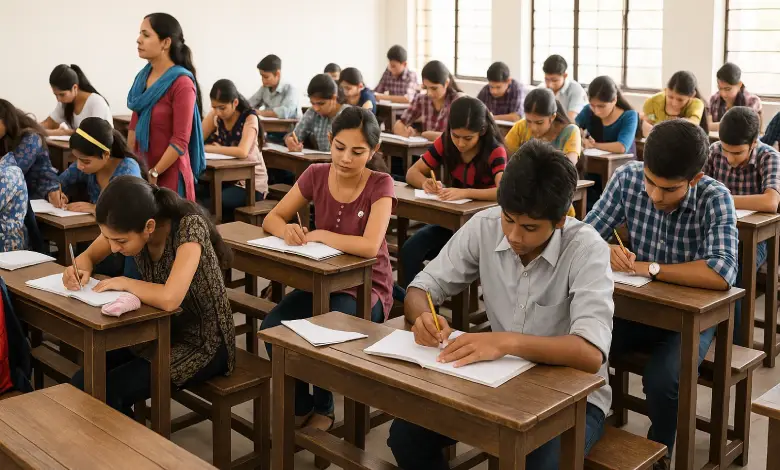
Graduation is one of the best stages to begin your UPSC Civil Services Examination (CSE) journey. You have completed your academic education, developed subject knowledge, and have enough time to prepare systematically before appearing for the exam.
However, many graduates face common questions:
- Where should I start?
- Which books should I read?
- Should I join coaching?
- How many hours should I study?
- Which optional subject should I choose?
If you also have these questions, this guide will help you understand everything from the basics to building a complete UPSC preparation strategy after graduation.
Why Start UPSC Preparation After Graduation?
Starting immediately after graduation provides several advantages.
1. Maximum Time for Preparation
Most successful candidates dedicate 1–2 years exclusively to UPSC preparation. Beginning after graduation gives you sufficient time to build strong fundamentals.
2. Better Learning Capacity
Students remain connected with academics after graduation, making it easier to understand subjects like History, Polity, Economics, Geography, and Science.
3. More Attempts Available
Preparing early allows multiple UPSC attempts while remaining within the age limit.
4. Opportunity to Build Strong Fundamentals
Rather than rushing through the syllabus, you can focus on conceptual clarity and answer-writing skills.
Understand the UPSC Civil Services Examination
Before starting preparation, understand the structure of the examination.
Stage 1: Preliminary Examination
- General Studies Paper I
- CSAT (Qualifying)
The Preliminary Examination acts as the screening stage.
Stage 2: Main Examination
The Main Examination includes:
- Essay
- General Studies I
- General Studies II
- General Studies III
- General Studies IV
- Optional Subject Paper I
- Optional Subject Paper II
- Two Qualifying Language Papers
Stage 3: Personality Test (Interview)
Candidates qualifying the Main Examination appear for the UPSC Interview, where personality, awareness, decision-making, communication skills, and administrative aptitude are evaluated.
Step 1: Understand the UPSC Syllabus Thoroughly
The UPSC syllabus should become your roadmap.
Many aspirants begin reading books without knowing what UPSC actually asks.
Print the syllabus and keep it with you.
Read it repeatedly until every topic becomes familiar.
Step 2: Analyze Previous Year Question Papers (PYQs)
Previous Year Questions reveal:
- UPSC’s question pattern
- Frequently asked themes
- Depth of questions
- Important subjects
- Conceptual approach
Analyze at least the last 10 years of Prelims and Mains papers.
Step 3: Build Strong NCERT Foundation
NCERT books create conceptual clarity.
Recommended classes:
- History (Class 6–12)
- Geography (Class 6–12)
- Polity (Class 9–12)
- Economics (Class 9–12)
- Science (Class 6–10)
- Sociology (Selective)
- Environment (Relevant chapters)
Complete NCERTs before advanced books.
Step 4: Read Standard Reference Books
After NCERTs, move to standard books.
| Subject | Recommended Book |
|---|---|
| Polity | M. Laxmikanth |
| Modern History | Spectrum |
| Geography | G.C. Leong + Atlas |
| Economy | Basic Economics Book + Current Affairs |
| Environment | Shankar IAS |
| Art & Culture | Nitin Singhania |
| Ethics | Lexicon / Ethics Notes |
Step 5: Read Newspaper Daily
A good newspaper develops analytical thinking.
Recommended:
- The Hindu
- Indian Express
Focus on:
- Government schemes
- Parliament
- Supreme Court judgments
- International Relations
- Economy
- Environment
- Science & Technology
- Editorial analysis
Avoid entertainment and political controversies.
Step 6: Make Short Notes
Avoid rewriting entire books.
Prepare concise notes covering:
- Definitions
- Committees
- Constitutional Articles
- Government schemes
- Reports
- International organizations
- Current Affairs
Use digital or handwritten notes.
Step 7: Select the Right Optional Subject
Optional contributes 500 marks in Mains.
Choose based on:
- Interest
- Graduation background
- Availability of guidance
- Study material
- Previous performance
- Overlap with GS
Never choose an optional solely because someone else scored high with it.
Step 8: Create a Realistic Study Timetable
Example Daily Schedule
| Time | Activity |
|---|---|
| 7–9 AM | NCERT / Standard Book |
| 9–10 AM | Newspaper |
| 10–1 PM | GS Subject |
| 2–4 PM | Optional Subject |
| 5–6 PM | Revision |
| 7–8 PM | Current Affairs |
| 8–9 PM | MCQs / Answer Writing |
Consistency matters more than study hours.
Step 9: Start Answer Writing Early
Many aspirants delay answer writing.
Instead:
- Practice one answer daily
- Improve structure
- Add examples
- Use diagrams wherever relevant
- Learn time management
Gradually increase to full-length tests.
Step 10: Practice MCQs Regularly
For Prelims:
- Daily MCQs
- Weekly subject tests
- Monthly revision tests
- Full-length mock tests
Practice helps identify mistakes and improve elimination techniques.
Step 11: Revise Multiple Times
UPSC preparation depends heavily on revision.
A common revision cycle:
- First Revision: Within 24 hours
- Second Revision: After one week
- Third Revision: After one month
- Final Revision: Before the exam
Step 12: Join a Test Series
Test series help you:
- Improve speed
- Identify weak areas
- Understand UPSC standards
- Enhance answer presentation
- Build exam confidence
Step 13: Stay Updated with Current Affairs
Current Affairs should include:
- PIB
- Budget
- Economic Survey
- Government Reports
- Yojana
- Kurukshetra
- International Organizations
- Environment
- Science & Technology
Integrate current affairs with the static syllabus.
Step 14: Develop Answer Presentation Skills
Good answers include:
- Introduction
- Body
- Conclusion
- Flowcharts
- Maps
- Diagrams
- Constitutional Articles
- Committee Recommendations
- Examples
Presentation improves scoring potential.
Common Mistakes Beginners Should Avoid
- Starting without reading the syllabus
- Ignoring Previous Year Questions
- Reading too many books
- Following multiple coaching notes
- Not revising regularly
- Delaying answer writing
- Ignoring CSAT
- Studying without a timetable
- Comparing preparation with others
- Depending only on current affairs
Should You Join Coaching After Graduation?
Coaching is helpful but not mandatory.
You may consider coaching if:
- You need structured guidance.
- You struggle with self-discipline.
- You want regular mentorship.
- You need test series and feedback.
Many successful candidates hav
How Many Hours Should a Graduate Study Daily?
Quality matters more than quantity.
A practical target is:
- Beginners: 5–6 focused hours
- Intermediate stage: 7–8 hours
- Full-time aspirants: 8–10 productive hours, including revision and practice
Avoid measuring success only by hours studied.
Can Working Professionals Prepare After Graduation?
Yes.
Working professionals should:
- Study before or after office hours.
- Utilize weekends for revision and mock tests.
- Focus on consistent daily study rather than irregular long sessions.
- Use digital resources for current affairs during commutes
One-Year UPSC Preparation Roadmap
Months 1–3
- Complete NCERTs
- Understand syllabus
- Read PYQs
- Start newspaper reading
Months 4–6
- Finish standard books
- Choose optional subject
- Begin answer writing
- Start topic-wise MCQs
Months 7–9
- Revise completed subjects
- Join a test series
- Improve answer presentation
- Cover current affairs comprehensively
Months 10–12
- Full-length mock tests
- Intensive revision
- Practice CSAT
- Focus on weak areas and exam strategy
Final Thoughts
Starting UPSC preparation immediately after graduation provides a strong foundation for success. The journey demands patience, discipline, consistent revision, and smart planning rather than simply studying for long hours.
Begin by understanding the syllabus, building concepts through NCERTs, reading standard books, following current affairs daily, practicing answer writing and MCQs, and revising regularly. With a structured approach and sustained effort, you can significantly improve your chances of clearing all three stages of the Civil Services Examination.
Frequently Asked Questions (FAQs)
1. Is graduation the best time to start UPSC preparation?
Yes. Starting after graduation gives you enough time to build concepts, prepare systematically, and attempt the examination multiple times within the eligibility limits.
2. Can I crack UPSC in one year after graduation?
Yes. With a well-planned strategy, disciplined study, regular revision, mock tests, and consistent answer writing practice, many candidates have successfully cleared UPSC within a year.
3. Which degree is best for UPSC preparation?
There is no “best” degree for UPSC. Candidates from Engineering, Humanities, Commerce, Science, Medicine, Law, and other backgrounds have consistently succeeded.
4. How many hours should I study daily after graduation?
Most beginners should aim for 5–6 focused hours initially, increasing to 8–10 productive hours as preparation advances, while maintaining regular revision and practice.
5. Should I complete NCERT books before standard reference books?
Yes. NCERTs provide the conceptual foundation required to understand advanced reference books and are strongly recommended for beginners.
6. Is coaching necessary after graduation for UPSC?
No. Coaching can provide structure and mentorship, but it is not compulsory. Many aspirants clear UPSC through disciplined self-study using the syllabus, standard books, PYQs, current affairs, and mock tests.
7. When should I start answer writing for UPSC?
Begin answer writing once you have basic conceptual clarity in a subject. Starting early helps improve analytical thinking, structure, presentation, and time management.
8. How important are Previous Year Question Papers (PYQs)?
PYQs are essential because they reveal the examination pattern, recurring themes, the depth of questions, and the level of analytical thinking expected by UPSC.
9. Which newspaper is recommended for UPSC preparation?
The Hindu and The Indian Express are widely recommended for developing analytical understanding of current affairs, governance, economy, international relations, and editorial perspectives.
10. Can working professionals prepare for UPSC after graduation?
Yes. Many working professionals successfully prepare by following a disciplined schedule, utilizing weekends effectively, focusing on revision, and taking regular mock tests.