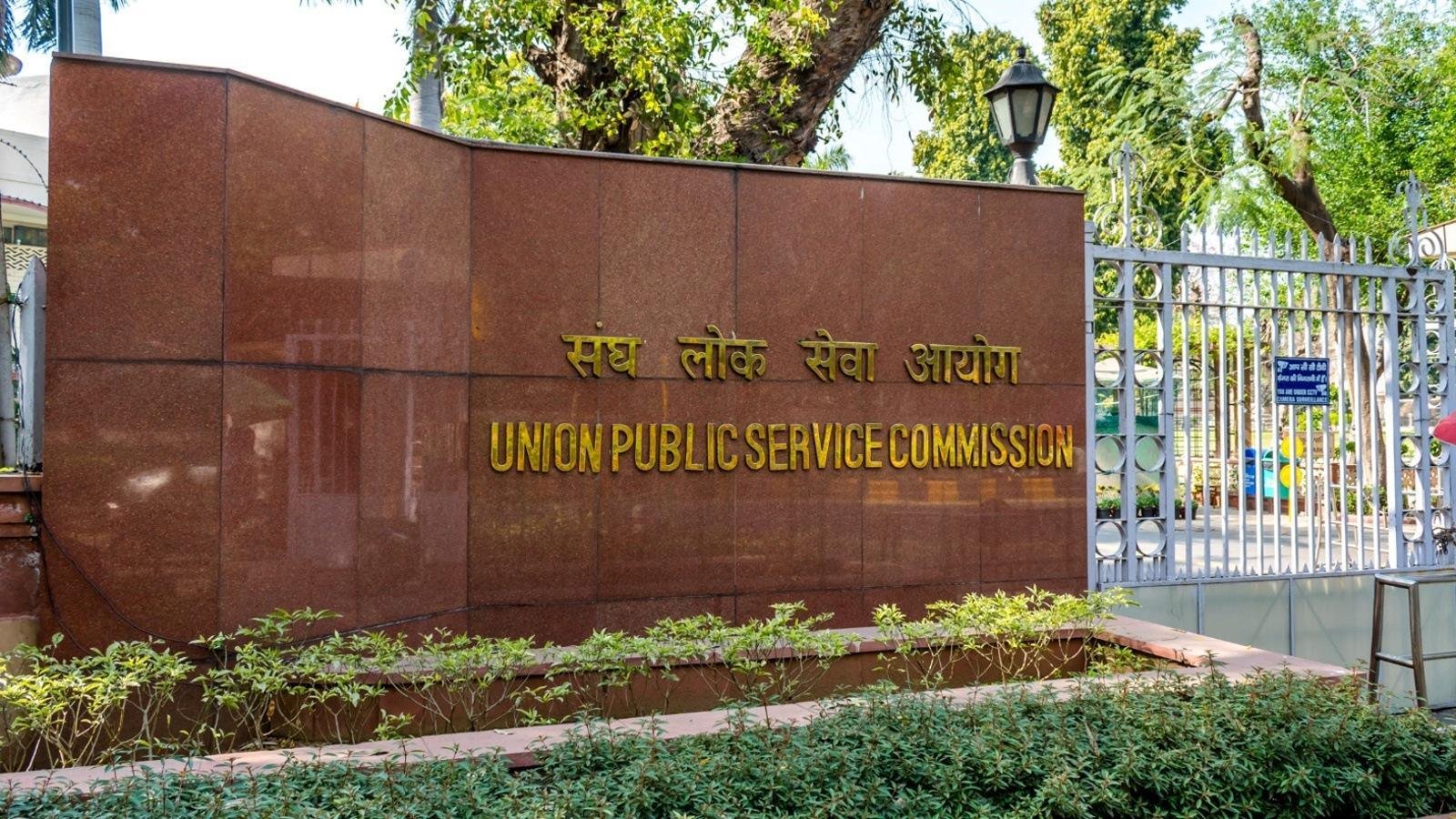
The Union Public Service Commission (UPSC) completed 100 years of its institutional journey in 2026, marking a significant milestone in the history of India’s civil services and public administration.
Established on 1 October 1926 as the Public Service Commission, the institution has evolved from an advisory recruitment body during British rule into an independent constitutional authority responsible for maintaining merit, fairness and transparency in public recruitment.
However, the completion of 100 years is not merely an occasion to celebrate the institution’s history. It also provides an opportunity to reflect on a fundamental question: What qualities should India’s future civil servants possess in an increasingly complex, technology-driven and rapidly changing society?
During the UPSC centenary celebrations, the Commission’s Chairman, Dr. Ajay Kumar, highlighted the importance of assessing candidates on their reasoning abilities, spontaneous thinking and judgement in situations involving ambiguity, rather than simply testing their ability to reproduce predictable or coached model answers.
This perspective reflects an important shift in the expectations from future civil servants. Administrative responsibilities today require much more than factual knowledge. They demand critical thinking, ethical reasoning, problem-solving abilities, emotional intelligence and the capacity to make informed decisions under pressure.
For UPSC aspirants, this development offers an important lesson: preparation should gradually move beyond memorising information towards developing the intellectual and practical abilities required for effective public administration.
In this article, we explore UPSC’s 100-year journey, the significance of the emerging examination philosophy, the limitations of rote learning and how aspirants can prepare for the changing demands of India’s civil services.
1. UPSC Completes 100 Years: A Journey of Merit, Fairness and Institutional Evolution
The history of the Union Public Service Commission is closely connected with the evolution of modern civil services in India.
Before the introduction of competitive examinations, recruitment to the civil services under the East India Company was largely based on nomination and patronage.
The introduction of merit-based recruitment gradually transformed this system.
Important Historical Milestones
| Year | Major Development |
|---|---|
| 1854 | Macaulay’s recommendations supported a merit-based civil service system |
| 1855 | Competitive examinations for the Indian Civil Service began in London |
| 1864 | Satyendranath Tagore became the first Indian to enter the Indian Civil Service |
| 1919 | Government of India Act provided for the establishment of a Public Service Commission |
| 1926 | India’s first Public Service Commission was established on 1 October |
| 1935 | Government of India Act provided for Federal and Provincial Public Service Commissions |
| 1937 | Public Service Commission was renamed the Federal Public Service Commission |
| 1947 | First examination after Independence was held; the Indian Civil Service gave way to the IAS |
| 1950 | Federal Public Service Commission became the Union Public Service Commission under the Constitution |
| 1979 | Three-stage Civil Services Examination structure was introduced |
| 2011 | Civil Services Aptitude Test (CSAT) was introduced |
| 2013 | Civil Services Mains examination was restructured, including four General Studies papers and Ethics |
| 2026 | UPSC completed 100 years of its institutional journey |
The constitutional provisions governing the UPSC are contained in Part XIV of the Indian Constitution, particularly Articles 315 to 323.
Article 315 provides for the Union Public Service Commission and State Public Service Commissions, while Article 320 outlines their functions and responsibilities.
The institution’s evolution demonstrates how recruitment to public services has gradually developed into a system based on competitive merit, institutional independence and constitutional principles.
2. UPSC’s 2026 Centenary Celebrations: Why the Future of Examination Matters
UPSC organised its centenary celebrations under the theme Manthan at Bharat Mandapam, New Delhi, in September–October 2026.
The discussions brought together senior public officials, policymakers, experts and representatives from different institutions to examine the changing role of civil services in India.
The discussions focused on several important areas:
- The future of civil services in a developing India.
- Innovation in public administration.
- Technology-driven governance.
- Merit, fairness and equal opportunity.
- Transparency in recruitment.
- Institutional accountability.
- The changing competencies required from civil servants.
One of the most significant observations came from UPSC Chairman Dr. Ajay Kumar, who emphasised the need to assess candidates for their reasoning, spontaneous thinking and judgement in ambiguous situations rather than their ability to reproduce predictable or coached answers.
He also highlighted three guiding principles for the Commission’s future journey:
- Trust
- Transparency
- Technology
These principles are important not only for strengthening the recruitment process but also for preparing the civil services to meet emerging administrative challenges.
The message is clear: future administrators must be capable of thinking independently, understanding complex situations and making responsible decisions.
3. From Rote Learning to Analytical Thinking: Understanding the Changing Approach
Rote learning refers to memorising information through repetition without necessarily understanding its meaning, context or practical application.
Traditional examination preparation often places considerable emphasis on remembering facts, dates, definitions, constitutional provisions and historical events.
Although factual knowledge remains essential for competitive examinations, it is not sufficient to develop effective administrators.
Consider the following example:
Question based on rote learning:
What is Article 21 of the Indian Constitution?
A candidate can answer this question by memorising the constitutional provision.
Question based on analytical thinking:
How should an administrator balance the Right to Privacy under Article 21 with the requirements of national security in the implementation of a public surveillance policy?
This question requires a much deeper understanding.
The candidate must consider:
- Constitutional provisions.
- Fundamental Rights.
- National security requirements.
- Individual liberty.
- Judicial interpretations.
- Administrative accountability.
- Proportionality and safeguards.
The difference between the two questions demonstrates why understanding, reasoning and application are important components of civil services preparation.
Rote Learning vs Analytical Thinking
| Rote Learning | Analytical Thinking |
|---|---|
| Focuses on memorisation | Focuses on understanding |
| Reproduces information | Interprets information |
| Depends heavily on repetition | Uses logic and reasoning |
| Provides limited contextual understanding | Connects multiple dimensions |
| Often struggles with unfamiliar questions | Adapts to new situations |
| Emphasises factual recall | Emphasises application and judgement |
A serious UPSC aspirant must develop both capabilities. Factual knowledge provides the foundation, while analytical thinking helps transform that knowledge into meaningful answers and administrative decisions.
4. Why Reasoning and Spontaneous Thinking Are Important for Future Civil Servants
A civil servant frequently encounters situations that cannot be resolved simply by referring to a textbook or following a standard procedure.
Administrative decisions involve competing interests, incomplete information, public expectations, legal restrictions and unpredictable circumstances.
In such situations, the ability to reason independently becomes extremely important.
A. Reasoning Ability
Reasoning refers to the ability to examine information, identify relationships, evaluate evidence and reach logical conclusions.
For civil servants, reasoning is essential in:
- Policy formulation.
- Public resource allocation.
- Disaster management.
- Conflict resolution.
- Law and order administration.
- Development planning.
- Evaluation of government schemes.
For example, if a district faces a shortage of drinking water, an administrator must examine rainfall patterns, groundwater levels, population requirements, existing infrastructure and available resources before deciding on an appropriate response.
Simply memorising water conservation schemes will not solve the problem. The administrator must analyse the actual situation.
B. Spontaneous Thinking
Spontaneous thinking refers to the ability to respond effectively to unexpected circumstances without depending entirely on pre-prepared solutions.
Consider a situation in which a major road accident occurs during peak traffic hours.
The district administration may need to:
- Coordinate emergency medical services.
- Ensure rapid transportation of injured people.
- Manage traffic diversion.
- Coordinate with police and hospitals.
- Communicate accurate information to the public.
- Prevent unnecessary panic.
Such situations require quick thinking, coordination and responsible action.
C. Judgement Under Ambiguity
Administrative decisions are not always based on complete information.
Sometimes, officers must make decisions when facts are uncertain, time is limited and multiple stakeholders have competing interests.
For example, during a natural disaster, an administrator may have to decide whether to evacuate an entire village based on an uncertain weather forecast.
The decision involves balancing public safety, economic disruption, available resources and the potential consequences of inaction.
Good judgement requires:
- Evaluating available evidence.
- Identifying possible risks.
- Understanding legal and ethical obligations.
- Considering alternative solutions.
- Prioritising public welfare.
- Accepting accountability for decisions.
These qualities are central to responsible public administration.
5. Does This Mean UPSC Will Move Away from Factual Knowledge?
No. It is important not to misunderstand the message of the UPSC centenary discussions.
Factual knowledge remains an essential part of the Civil Services Examination.
Candidates must still understand:
- Indian history and culture.
- Indian Constitution and polity.
- Geography.
- Economy.
- Environment and ecology.
- Science and technology.
- National and international current affairs.
- Ethics and governance.
The real emphasis is on the effective use of knowledge.
A candidate who memorises constitutional articles but cannot explain their significance may struggle with analytical questions.
Similarly, someone who understands economic concepts but cannot apply them to real-world policy problems may find it difficult to demonstrate administrative aptitude.
Therefore, the emerging approach should be understood as a movement from information-based preparation towards knowledge-based reasoning and application.
Important: The centenary discussions and Chairman’s observations do not, by themselves, constitute a formal change in the Civil Services Examination syllabus or examination pattern. Aspirants should continue following the latest official UPSC notification.
6. How the UPSC Examination Already Tests Analytical and Decision-Making Abilities
The existing Civil Services Examination has several components that assess candidates beyond factual recall.
A. Civil Services Preliminary Examination
The Preliminary Examination tests general awareness, conceptual understanding and aptitude.
General Studies Paper I includes:
- Current events.
- History.
- Geography.
- Indian Polity.
- Economy.
- Environment.
- General Science.
CSAT (General Studies Paper II) specifically assesses:
- Comprehension.
- Interpersonal and communication skills.
- Logical reasoning.
- Analytical ability.
- Decision-making.
- Problem-solving.
- General mental ability.
- Basic numeracy.
- Data interpretation.
CSAT is qualifying in nature, with a minimum qualifying requirement of 33%.
The presence of analytical reasoning and decision-making in the existing syllabus demonstrates that the examination already recognises the importance of aptitude beyond factual knowledge.
B. Civil Services Mains Examination
The Mains Examination is designed to assess the overall intellectual traits and depth of understanding of candidates rather than merely the range of their information and memory.
Its General Studies papers assess different dimensions of analytical ability.
General Studies Paper I
Tests understanding of history, culture, geography and society.
General Studies Paper II
Assesses constitutional understanding, governance, social justice and international relations.
General Studies Paper III
Tests analytical understanding of the economy, science and technology, environment, security and disaster management.
General Studies Paper IV
Focuses on ethics, integrity and aptitude, including case studies involving administrative and ethical dilemmas.
C. Personality Test (Interview)
The Personality Test evaluates a candidate’s suitability for a career in public service.
It assesses qualities such as:
- Mental alertness.
- Critical powers of assimilation.
- Clear and logical exposition.
- Balance of judgement.
- Variety and depth of interest.
- Social cohesion and leadership.
- Intellectual and moral integrity.
The interview is not simply a test of how much information a candidate has memorised.
It also examines how candidates think, communicate, respond to unfamiliar questions and demonstrate their understanding of real-world issues.
7. Technology and Artificial Intelligence: The Changing Landscape of Civil Services
The increasing use of technology is transforming governance and administrative responsibilities.
The UPSC centenary discussions also highlighted the importance of technological innovation in strengthening the recruitment process and preparing public institutions for future challenges.
Some important developments include:
A. AI-Based Facial Authentication
UPSC implemented AI-based facial authentication on a large scale during the Civil Services Preliminary Examination held on 24 May 2026.
According to the Press Information Bureau, the system covered approximately 5.50 lakh candidates, with facial authentication taking around six to eight seconds per candidate.
This initiative aims to strengthen candidate verification and examination integrity.
B. Universal Registration Number
The Universal Registration Number initiative, introduced in 2025, represents an effort towards streamlining candidate registration and examination-related processes.
C. Randomised Interview Boards
Randomisation of interview boards is among the measures highlighted during the centenary discussions to strengthen transparency and fairness in the selection process.
D. Digital Examination Infrastructure
UPSC has continued strengthening its digital systems, cybersecurity infrastructure, candidate support mechanisms and examination management processes.
E. Artificial Intelligence in Governance
Artificial Intelligence has the potential to transform several areas of public administration.
Important applications include:
- Predictive healthcare and disease surveillance.
- Smart traffic management.
- Agricultural advisory services.
- Disaster forecasting.
- Public grievance redressal.
- Fraud detection in welfare delivery.
- Data-driven policy formulation.
- Efficient public service delivery.
However, technology also introduces challenges involving data privacy, algorithmic bias, cybersecurity, accountability and the digital divide.
Future civil servants must therefore understand both the opportunities and limitations of emerging technologies.
8. What Qualities Will Future Civil Servants Need?
The changing nature of governance requires civil servants to possess a combination of intellectual, ethical and administrative competencies.
1. Critical Thinking
Officers must examine different perspectives, question assumptions and evaluate evidence before reaching conclusions.
2. Ethical Decision-Making
Administrative decisions must be guided by constitutional values, integrity, impartiality and public interest.
3. Emotional Intelligence
Understanding the concerns and emotions of citizens is important for effective public service delivery and conflict resolution.
4. Problem-Solving Ability
Officers should identify the root causes of problems and develop practical, sustainable solutions.
5. Adaptability
Rapid technological, economic and social changes require administrators to remain flexible and continuously update their knowledge.
6. Leadership and Accountability
Civil servants must coordinate teams, manage public resources and remain accountable for administrative outcomes.
7. Communication Skills
Clear communication is essential for explaining policies, managing stakeholders and building public trust.
8. Technological Awareness
Understanding AI, digital governance, data analytics and cybersecurity will increasingly contribute to administrative effectiveness.
9. How Should UPSC Aspirants Change Their Preparation Strategy?
The centenary discussions provide an opportunity for aspirants to evaluate their existing preparation methods.
Instead of relying entirely on memorisation, candidates should focus on understanding concepts, applying knowledge and developing independent thinking.
The following strategies can help.
A. Focus on Conceptual Clarity
Do not study subjects merely to remember facts.
For example, while studying inflation, understand:
- What causes inflation?
- How does it affect different sections of society?
- What role does the RBI play?
- How does inflation influence monetary policy?
- What are the consequences of prolonged inflation?
This approach helps candidates understand the subject from multiple perspectives.
B. Develop the Habit of Asking Questions
While studying any topic, ask yourself:
- Why is this important?
- What are its causes?
- What are its consequences?
- Who are the stakeholders?
- What are the associated challenges?
- What possible solutions exist?
This practice gradually develops analytical thinking.
C. Integrate Static Subjects with Current Affairs
Current affairs should not be studied as isolated information.
For example, while studying climate change, connect contemporary developments with:
- Greenhouse gases.
- International environmental agreements.
- India’s climate commitments.
- Renewable energy.
- Climate finance.
- Sustainable development.
Such integration improves conceptual understanding and answer-writing ability.
D. Practise Application-Based MCQs
Do not restrict preparation to direct factual questions.
Solve questions that require:
- Conceptual understanding.
- Statement-based analysis.
- Logical elimination.
- Application of constitutional provisions.
- Interpretation of data.
- Understanding of contemporary developments.
E. Improve Mains Answer Writing
Write answers that demonstrate understanding rather than merely reproducing information.
A good answer should include:
- A clear introduction.
- Relevant facts and concepts.
- Multiple dimensions of analysis.
- Examples wherever relevant.
- Practical and balanced suggestions.
- A concise conclusion.
F. Practise Ethics Case Studies
Ethics case studies are particularly useful for developing administrative judgement.
Consider situations involving:
- Political pressure.
- Conflict of interest.
- Corruption.
- Public safety.
- Environmental protection.
- Resource allocation.
- Transparency and accountability.
Identify stakeholders, ethical dilemmas, available options and the consequences of each decision before recommending a course of action.
10. Practical Examples: How to Develop Administrative Judgement
Aspirants should regularly practise real-world administrative situations.
The following examples can help develop a problem-solving approach.
Case Study 1: Flood Management
You are a District Magistrate in a flood-prone district. Heavy rainfall has damaged roads, displaced families and disrupted electricity supply.
How should you respond?
- Prioritise the evacuation of vulnerable populations.
- Coordinate with disaster response teams.
- Arrange temporary shelters and essential supplies.
- Ensure medical facilities and clean drinking water.
- Maintain communication with affected communities.
- Coordinate restoration of critical infrastructure.
The focus should be on public safety, coordination, transparency and timely decision-making.
Case Study 2: Public Welfare Scheme Implementation
You discover that eligible beneficiaries are not receiving benefits under a government welfare scheme because of documentation and technological difficulties.
What should you do?
- Identify the reasons for exclusion.
- Conduct local verification.
- Coordinate with relevant departments.
- Facilitate grievance redressal.
- Ensure accessible alternatives for beneficiaries.
- Monitor the delivery of benefits.
This situation tests empathy, administrative efficiency and inclusive governance.
Case Study 3: Ethical Dilemma
A senior official pressures you to favour a particular contractor in a government project despite concerns about the quality of work.
What should you do?
- Examine procurement rules.
- Evaluate the available evidence.
- Maintain impartiality.
- Document relevant communications.
- Follow transparent procurement procedures.
- Report any unlawful pressure through appropriate channels.
This example demonstrates the importance of integrity and constitutional morality in public administration.
11. UPSC Preparation: The Right Balance Between Knowledge and Thinking
One of the biggest mistakes aspirants make is assuming that analytical thinking can replace factual knowledge.
This is not correct.
Without a strong knowledge base, analytical reasoning becomes superficial. Similarly, without reasoning, factual knowledge may remain limited to memorisation.
Effective preparation requires the integration of both.
| Preparation Component | What Aspirants Should Develop |
|---|---|
| Static Subjects | Strong conceptual foundation |
| Current Affairs | Awareness and contextual understanding |
| Prelims MCQs | Accuracy and analytical elimination |
| CSAT | Logical reasoning and problem-solving |
| Mains Answer Writing | Critical analysis and structured expression |
| Ethics | Moral reasoning and administrative judgement |
| Interview | Spontaneity, balance and clarity |
The objective is to become an informed, analytical and responsible candidate rather than simply a person who can reproduce large amounts of information.
12. What Does UPSC’s 100-Year Journey Mean for Aspirants Preparing for 2027 and Beyond?
The completion of 100 years marks an important moment for the civil services ecosystem.
For aspirants preparing for CSE 2027 and subsequent examination cycles, the centenary discussions offer several important lessons.
First, build a strong foundation.
NCERTs, standard reference books and the official syllabus remain important starting points.
Second, understand before memorising.
Facts and information should be studied in their broader historical, constitutional, economic and social contexts.
Third, practise thinking independently.
Do not depend entirely on ready-made answers, model responses or coaching notes. Develop the ability to form your own reasoned opinions.
Fourth, strengthen communication skills.
The ability to explain complex issues clearly is important for Mains answer writing and the Personality Test.
Fifth, develop administrative awareness.
Understand how government institutions function and how policies affect citizens at the grassroots level.
Sixth, remain adaptable.
Technology, governance challenges and public expectations continue to evolve. Civil servants must be willing to learn throughout their careers.
Aspirants should also remember that the official examination pattern and syllabus remain the final authority. Any future formal changes should be followed through UPSC notifications.
13. The Role of Coaching and Mentorship in Developing Analytical Thinking
The changing expectations from civil servants also raise an important question about the role of coaching institutions.
Coaching should not be limited to delivering information or providing ready-made notes.
A meaningful preparation programme should help aspirants:
- Understand difficult concepts.
- Develop independent analytical abilities.
- Connect static subjects with current developments.
- Practise application-based questions.
- Improve answer-writing skills.
- Develop ethical reasoning.
- Learn from mistakes through regular evaluation.
- Build confidence for the Personality Test.
Mentorship also plays an important role in identifying individual weaknesses and helping aspirants improve their preparation strategies.
At ENSURE IAS, the emphasis should remain on conceptual clarity, structured preparation, regular practice and individual academic development.
The ultimate objective is not merely to prepare candidates for an examination, but to help them develop the knowledge, reasoning and judgement expected from future civil servants.
Conclusion: The Next 100 Years of UPSC Must Focus on Knowledge, Character and Judgement
UPSC’s completion of 100 years is a significant milestone in India’s administrative history.
From the establishment of the first Public Service Commission in 1926 to its evolution into an independent constitutional institution, the Commission has played an important role in strengthening merit-based recruitment and public administration.
However, the challenges facing India today are substantially different from those of the past.
Climate change, artificial intelligence, cybersecurity, urbanisation, economic inequality, public health challenges and increasing citizen expectations require administrators who can think critically and respond effectively.
The emphasis on reasoning, spontaneous thinking and judgement during the UPSC centenary celebrations reflects the growing importance of these capabilities.
For aspirants, the message is straightforward: Do not prepare only to remember information. Prepare to understand, analyse, question and apply it.
A successful civil servant must possess not only knowledge but also integrity, empathy, impartiality and the ability to make responsible decisions in difficult circumstances.
As UPSC enters its next century, the future of India’s civil services will depend on selecting and developing individuals who can combine knowledge with wisdom and administrative authority with public responsibility.
At ENSURE IAS, we believe that effective civil services preparation begins with conceptual clarity, develops through analytical thinking and reaches its purpose through responsible public service.
Prepare with understanding. Think independently. Serve with integrity.
Frequently Asked Questions (FAQs)
1. When was UPSC established?
The first Public Service Commission in India was established on 1 October 1926. It completed 100 years in 2026.
2. Why is UPSC’s 100-year milestone important?
It marks a century of institutional evolution in merit-based recruitment, transparency and constitutional public service administration in India.
3. What was the theme of UPSC’s centenary celebrations in 2026?
The centenary celebrations were titled Manthan and focused on the evolving role of civil services, innovation in governance and the future of public administration.
4. What did the UPSC Chairman say about future examination reforms?
UPSC Chairman Dr. Ajay Kumar emphasised assessing candidates for reasoning, spontaneous thinking and judgement under ambiguity rather than their ability to reproduce predictable or coached answers.
5. Does UPSC want to eliminate rote learning completely?
No. Factual knowledge remains essential. The emphasis is on combining knowledge with conceptual understanding, analytical reasoning and practical application.
6. What are the three guiding principles highlighted during UPSC’s centenary celebrations?
The three principles are Trust, Transparency and Technology.
7. What is the difference between rote learning and analytical thinking?
Rote learning focuses on memorising and reproducing information, whereas analytical thinking involves understanding, interpreting, evaluating and applying information to different situations.
8. How can UPSC aspirants improve analytical thinking?
Aspirants can improve analytical thinking through conceptual study, current affairs integration, PYQ analysis, application-based MCQs, Mains answer writing and Ethics case studies.
9. Does the UPSC Civil Services Examination already test decision-making abilities?
Yes. CSAT includes decision-making and problem-solving in its syllabus, while Mains GS Paper IV and the Personality Test assess ethical reasoning, judgement and other relevant abilities.
10. Has UPSC officially changed the Civil Services Examination pattern in 2026 because of its centenary celebrations?
The centenary discussions highlighted possible directions for examination reforms, but these discussions do not themselves constitute a formal change in the examination pattern. Candidates should follow official UPSC notifications for any changes.
11. What is the role of Artificial Intelligence in future civil services?
AI can support healthcare, public service delivery, predictive analysis, disaster management and policy implementation. Civil servants must also understand its challenges relating to privacy, bias, accountability and cybersecurity.
12. How can coaching institutions help aspirants develop independent thinking?
Coaching institutions can encourage conceptual learning, analytical discussions, application-based practice, answer-writing exercises, case studies and personalised mentorship rather than relying exclusively on memorisation.
About ENSURE IAS
ENSURE IAS focuses on structured UPSC preparation through conceptual clarity, comprehensive study material, regular assessments, answer-writing practice and mentorship.
Visit: https://www.ensureias.com/