Context
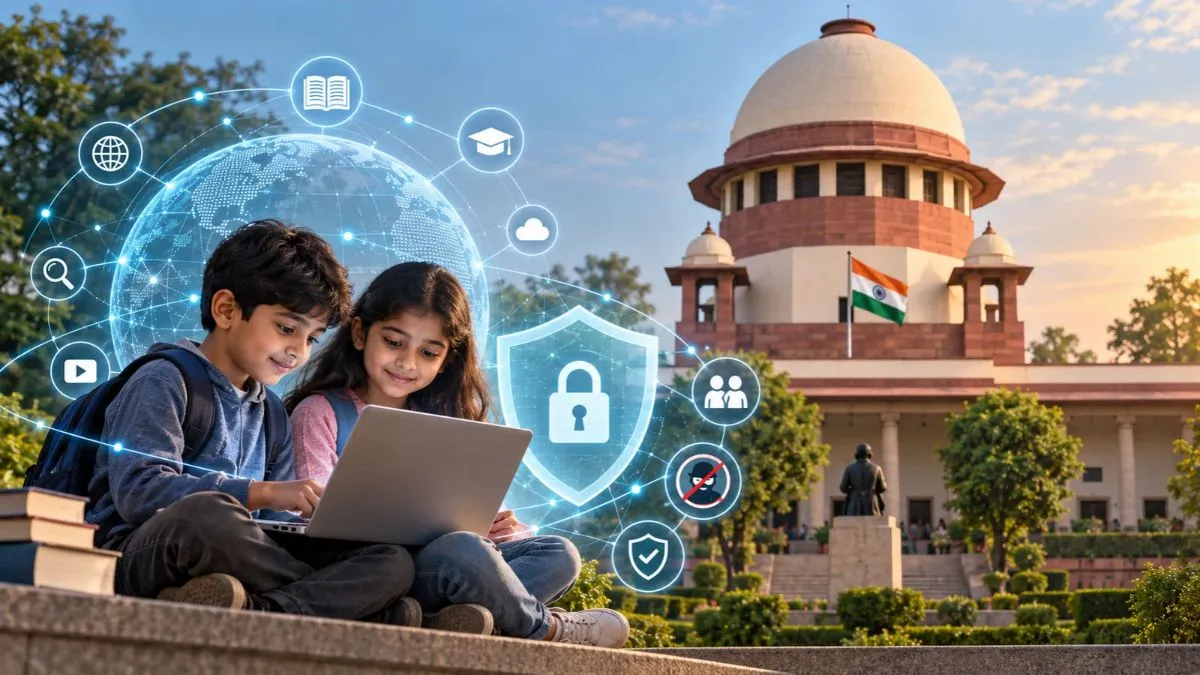
On 15 October 2026, the Supreme Court recognised internet access as a fundamental right, including for children, under Articles 19(1)(a) and 21, rejecting blanket restrictions. In Just Rights for Children Alliance v. S. Harish, it directed the Centre to establish a National Hash and URL Database to detect and remove Child Sexual Exploitation and Abuse Material (CSEAM).
Constitutional Basis of the Right to Internet Access
- Article 21: Protects the right to life, personal liberty, and human dignity, which now includes access to essential digital opportunities and services.
- Article 19(1)(a): Guarantees freedom of speech and expression, covering the right to receive and share information online.
- Article 19(1)(g): Protects the right to practise any profession or carry on trade and business using the internet.
- Supreme Court Ruling (2026): Explicitly recognised access to the internet as a fundamental right under Articles 19(1)(a) and 21, subject to reasonable and proportionate restrictions.
Important Judicial Developments
| Case / Ruling | Key Judicial Principle |
| Cricket Association of Bengal Case (1995) | Recognised the right to receive and impart information as part of Article 19(1)(a). |
| Faheema Shirin v. State of Kerala (2019) | Kerala High Court held that internet access is part of the right to education and right to privacy under Article 21. |
| Anuradha Bhasin v. Union of India (2020) | Protected online speech and trade under Articles 19(1)(a) and 19(1)(g); ruled that internet shutdowns must follow the doctrine of proportionality and are open to judicial review. |
| Pragya Prasun v. Union of India (2025) | Held that excluding PwDs (Persons with Disabilities) from digital KYC (Know Your Customer) violates Article 21, mandating digital accessibility and inclusion. |
Balancing Internet Freedom and Child Safety
1. Proportionality Test: Any online restriction must be reasonable, necessary, and proportionate, balancing individual rights with child and public safety.
2. Risk of Blanket Bans: Complete bans can harm children’s right to education, access to information, and digital learning.
3. Shared Responsibility Model:
- Government: Regulate harmful online content, safeguard child privacy, and enforce platform accountability.
- Parents: Guide age-appropriate internet use and build awareness at home.
- Schools: Integrate digital literacy and cyber safety education into learning.
- Digital Platforms: Ensure content moderation, strong privacy defaults, and easy grievance reporting tools.
4. Global Context: Countries like Australia have enacted social media age restrictions; India must tailor policies to balance child protection, digital inclusion, and fundamental rights.
Related Legal Framework
- POCSO (Protection of Children from Sexual Offences) Act, 2012: Protects children against all forms of sexual abuse and online exploitation.
- IT (Information Technology) Act, 2000: Penalises cyber offences, including publishing or transmitting CSAM (Child Sexual Abuse Material).
- DPDP (Digital Personal Data Protection) Act, 2023: Mandates verifiable parental consent before processing a child’s personal data and bans behavioural tracking or targeted advertising aimed at children, subject to statutory rules.
Challenges to Internet Access & Child Safety in India
- Digital Divide: Wide rural–urban, gender, and income gaps limit access to fast internet and smart devices.
- Frequent Internet Shutdowns: Prolonged internet suspensions disrupt online education, healthcare, and banking, even after Supreme Court safeguards.
- Age-Verification Dilemma: Strict age checks can force platforms to collect excessive personal IDs, risking user privacy.
- Online Risks for Children: Growing exposure to cyberbullying, online grooming, deepfakes, and addictive algorithms.
Way Forward
- Expand Digital Infrastructure: Speed up BharatNet (rural broadband network) and keep internet data affordable to bridge the digital divide.
- Follow Shutdown Rules Strictly: Ensure regular review, public transparency, and proportionality before blocking internet services.
- Privacy-Safe Age Checks: Use privacy-preserving age verification under the DPDP (Digital Personal Data Protection) Act, 2023 without over-collecting ID documents.
- Safety-by-Design on Platforms: Require child-safe default settings, safer algorithms, and quick complaint redressal on social media.
- Promote Digital Literacy: Teach cyber safety and online awareness in schools under NEP (National Education Policy) 2020.
FAQs
Q1. What did the Supreme Court hold in Just Rights for Children Alliance v. S. Harish (2026)?
Ans. Recognised internet access as a fundamental right under Articles 19(1)(a) and 21, including for children, while rejecting blanket bans.
Q2. What did Anuradha Bhasin v. Union of India (2020) establish?
Ans. Protected online speech and trade under Articles 19(1)(a) and 19(1)(g), requiring proportionate and judicially reviewable restrictions.
Q3. Why is Pragya Prasun v. Union of India (2025) significant?
Ans. Recognised digital accessibility for persons with disabilities under Article 21, including access to digital KYC.
Q4. Why are blanket restrictions on children’s internet use problematic?
Ans. They restrict education, information, self-expression and digital inclusion without necessarily ensuring children’s safety.