Context
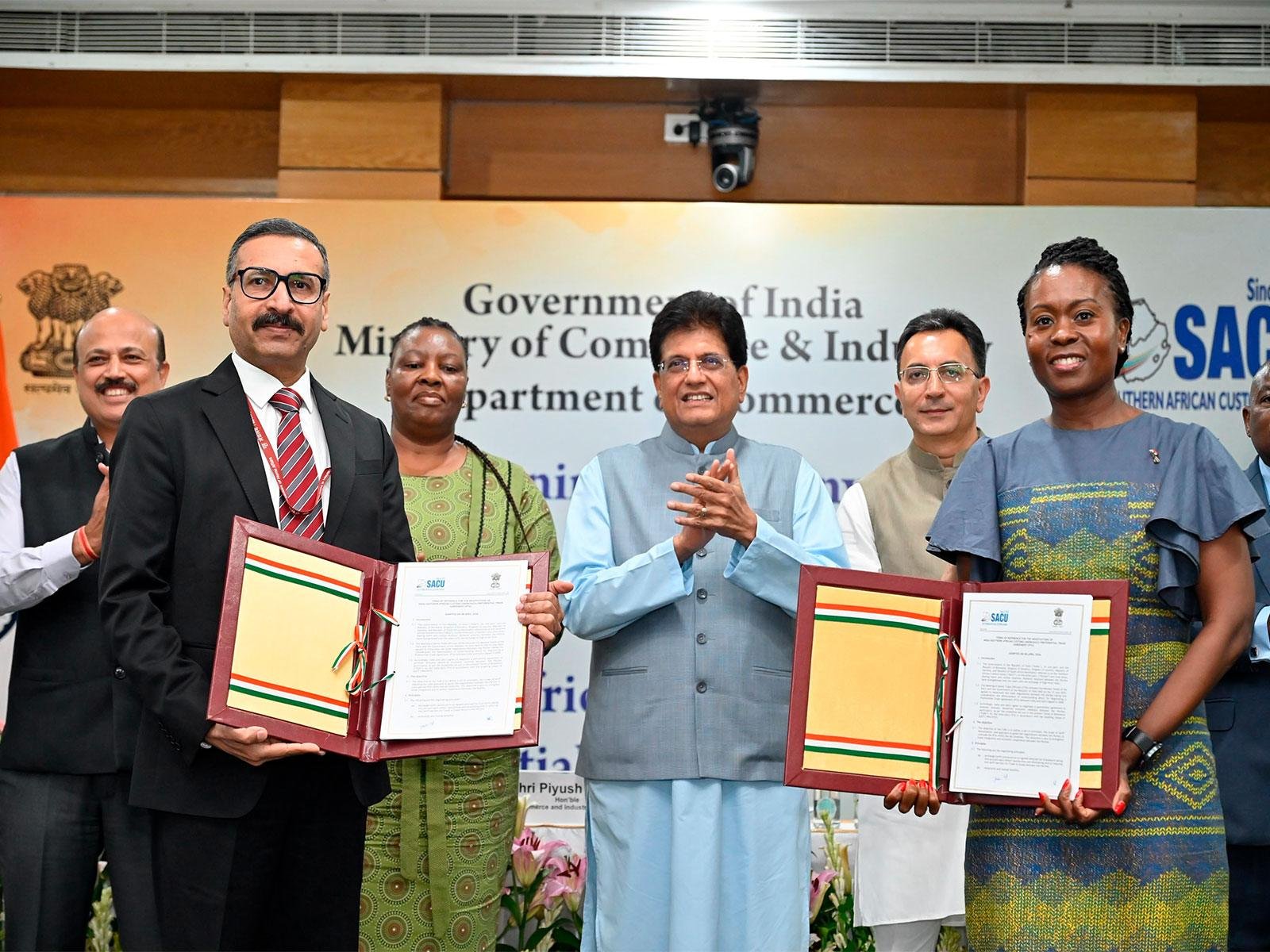
India and the Southern African Customs Union (SACU) signed the Terms of Reference (ToR) to begin negotiations for a Preferential Trade Agreement (PTA).
About Southern African Customs Union (SACU):
- SACU is a regional economic grouping and the world’s oldest functioning customs union, established in 1910.
- Members: Botswana, Eswatini, Lesotho, Namibia and South Africa.
- Secretariat: Windhoek, Namibia.
- Members operate as a single customs territory, with free movement of goods within the union and a Common External Tariff (CET) on imports from non-members.
- SACU members use a Common Negotiating Mechanism for trade agreements with third countries and negotiate collectively as a bloc.
India–SACU PTA
- The proposed PTA will cover trade in goods, market access, customs procedures, rules of origin, sanitary and phytosanitary measures, technical barriers to trade, trade remedies and dispute settlement.
- It could improve market access for Indian exports such as automobiles, pharmaceuticals, machinery and electrical equipment.
- The agreement could also strengthen India’s access to critical minerals from Southern Africa, supporting manufacturing and clean-energy supply chains.
FAQs
- What is SACU?
SACU is a customs union comprising Botswana, Eswatini, Lesotho, Namibia and South Africa.
- When was SACU established?
SACU was established in 1910 and is the world’s oldest functioning customs union.
- Where is the SACU Secretariat located?
The SACU Secretariat is headquartered in Windhoek, Namibia.
- What is the key feature of SACU?
SACU operates as a single customs territory with a Common External Tariff on imports from non-members.
- Why does SACU negotiate as a bloc?
Under Article 31 of the SACU Agreement, 2002, member states pursue a common approach to trade negotiations with third countries.
- What is the India–SACU PTA?
It is a proposed agreement aimed at providing preferential market access and reducing trade barriers between India and SACU members.
- Why is the PTA important for India?
It can expand India’s export markets in Southern Africa and strengthen access to critical minerals and strategic resources