Context
- The 2nd India–Italy Joint Working Group (JWG) on Tourism was held on 29 September 2026 to deepen bilateral cooperation in tourism.
- It was co-chaired by senior officials from the Ministry of Tourism, India and the Ministry of Tourism, Italy.
- Both sides agreed to create focused technical groups and designated points of contact for sustained institutional coordination.
Key Areas of Tourism Cooperation
- Tourism data exchange: Sharing tourism-related information and best practices to support better planning and destination management.
- Lesser-known destinations: Promoting destinations beyond established tourist circuits to broaden tourism flows.
- Cine-tourism: Using films and audiovisual content to showcase destinations and strengthen cultural visibility.
- Destination twinning: Building cooperation between selected destinations through exchange of tourism-management practices.
- Skilling and capacity building: Strengthening human resources in the tourism and hospitality sectors.
- B2B engagement: Expanding interaction among tourism operators, businesses and other industry stakeholders.
The proposed India–Italy Year of Culture and Tourism 2027 was also discussed as a platform for wider cultural and tourism exchanges.
About Italy
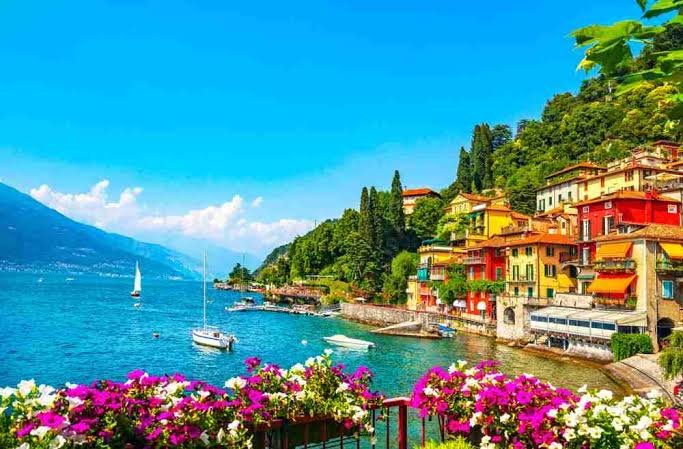
- Location: Italy lies in south-central Europe and extends into the Mediterranean through the Italian or Apennine Peninsula.
- Capital: Rome.
- Land borders: It shares boundaries with France, Switzerland, Austria and Slovenia.
- Enclaved states: Vatican City and San Marino are sovereign states entirely surrounded by Italy.
- Major islands: Sicily and Sardinia are the two largest Italian islands.
Major Geographical Features
- Mountain systems: The Alps form the northern mountainous frontier, while the Apennines run along much of the peninsula.
- Major plain: The Po Valley is Italy’s most extensive lowland and an important agricultural and industrial region.
- Rivers: The Po is Italy’s longest river; the Adige is another major river.
- Surrounding seas: Italy is bordered by the Adriatic, Ionian, Tyrrhenian and Ligurian Seas, all part of the Mediterranean system.
- Climate: Much of coastal and peninsular Italy experiences a Mediterranean climate, with hot, relatively dry summers and mild, wetter winters.
- Volcanism: Italy lies in a tectonically active region and hosts prominent active volcanoes such as Mount Etna and Stromboli.
Significance of India–Italy Tourism Cooperation
- Institutional continuity: Regular technical engagement can make tourism cooperation more structured and sustained.
- Tourism diversification: Promotion of lesser-known destinations can distribute visitors and economic benefits beyond major tourist centres.
- Economic linkages: Stronger B2B engagement can create opportunities for tour operators, hospitality firms and destination managers.
- Cultural diplomacy: Tourism and cultural exchanges can deepen people-to-people ties and complement broader India–Italy relations.
FAQs
Q1. Why is India–Italy tourism cooperation in the news?
The 2nd India–Italy JWG on Tourism was held on 29 September 2026 to strengthen bilateral cooperation.
Q2. Which countries share land borders with Italy?
Italy shares borders with France, Switzerland, Austria and Slovenia.
Q3. Which two sovereign states are enclaved within Italy?
They are Vatican City and San Marino.
Q4. Which is the longest river in Italy?
The Po River is the longest river in Italy.
Q5. Which major active volcanoes are found in Italy?
Mount Etna and Stromboli are prominent active volcanoes of Italy.