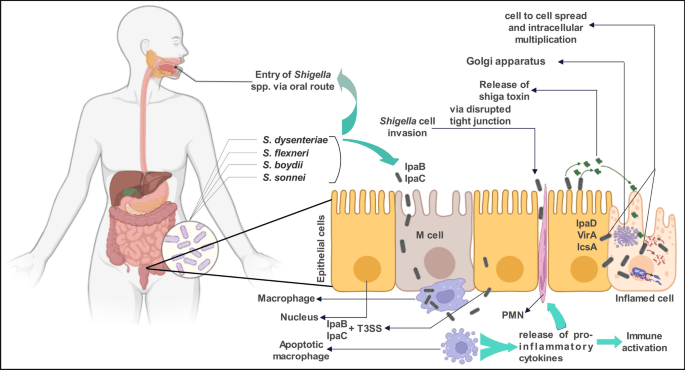
Context
A recent increase in cases of shigellosis (bacillary dysentery) in Keralam has drawn attention to this highly infectious bacterial disease and its public health implications.
About Shigellosis (Bacillary Dysentery)
- Shigellosis is a highly contagious diarrhoeal disease caused by Shigella
- It is one of the leading bacterial causes of diarrhoea worldwide.
- Humans are the only natural reservoir of Shigella.
- Although it can affect all age groups, children under five years are particularly vulnerable.
- Severe disease is more common among young children, older adults, malnourished individuals, and people with weakened immunity.
Transmission
- The disease spreads mainly through the faecal-oral route.
- It can spread through direct contact with infected persons, contaminated food or water, contact with infected faecal matter, and certain forms of close personal or sexual contact.
Symptoms
- The main symptom is diarrhoea, which may contain blood or mucus and can persist for several days.
- Other symptoms include abdominal cramps, fever, vomiting, and a frequent urge to pass stools.