Context
Japan’s space agency, JAXA, recently carried out the successful lift-off and landing of a prototype reusable rocket, marking a significant milestone in reusable launch technology. The achievement follows similar advances by the United States and China, highlighting the global shift towards cost-effective and sustainable access to space.
About Reusable Launch Vehicle (RLV)
- A launch vehicle is a rocket designed to place satellites, spacecraft, or other payloads into the desired orbit or space trajectory.
- A Reusable Launch Vehicle (RLV) is designed to recover and reuse major components—primarily the first-stage booster—instead of discarding them after every launch.
- Reusing launch vehicle components offers several advantages:
- Reduces launch costs by recovering high-value rocket components.
- Increases launch frequency by shortening the turnaround time between missions.
- Improves the sustainability of space missions by reducing material consumption and launch-related waste.
- SpaceX pioneered the operational deployment of reusable launch vehicles through Falcon 9, while China and Japan (JAXA) have also demonstrated significant progress in reusable rocket technology.
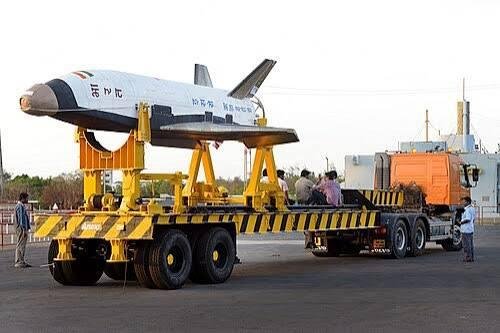
- ISRO’s Reusable Launch Vehicle (RLV) programme aims to develop a cost-effective, fully reusable launch vehicle to make future space missions more economical.
- As part of this programme, the RLV-LEX (Reusable Launch Vehicle–Landing Experiment) successfully demonstrated autonomous runway landing, representing a major technological milestone in the development of a fully reusable launch vehicle.