Context
Renewed geopolitical tensions in West Asia have once again exposed India’s vulnerability to disruptions in fossil fuel supplies. This has renewed interest in Compressed Biogas (CBG) as a domestically produced renewable fuel that can strengthen energy security, promote sustainable waste management, and accelerate India’s transition towards a low-carbon economy.
India’s Energy Security Challenge
- India imports nearly 85% of its crude oil requirement, making it highly vulnerable to external supply disruptions and international price volatility.
- Although India has diversified its crude oil import sources, nearly 90% of its LPG imports continue to transit through the Strait of Hormuz, exposing the country’s energy supply to geopolitical risks.
- These vulnerabilities highlight the need to diversify India’s energy basket through indigenous, renewable, and sustainable fuels, including Compressed Biogas (CBG).
Biogas and Compressed Biogas (CBG)
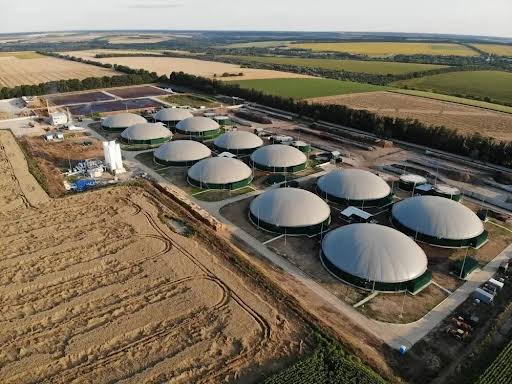
- Biogas is produced through the anaerobic decomposition of organic matter and primarily consists of methane (CH₄), carbon dioxide (CO₂), and trace gases.
- After purification and compression, it is converted into Compressed Biogas (CBG), which is chemically comparable to Compressed Natural Gas (CNG).
- CBG is a renewable and carbon-neutral fuel that can be used for:
- Transportation.
- Electricity generation.
- Cooking and heating.
- Wider adoption of CBG can:
- Reduce dependence on imported fossil fuels.
- Enable productive utilisation of agricultural residues, livestock waste, and municipal organic waste.
- Lower greenhouse gas emissions.
- Generate additional income opportunities for farmers through biomass utilisation.
- Support the circular economy, energy security, and India’s climate commitments.
Policy Initiatives
- SATAT (Sustainable Alternative Towards Affordable Transportation), 2018: Launched by the Ministry of Petroleum and Natural Gas (MoPNG) in collaboration with Public Sector Oil Marketing Companies (OMCs) to promote the commercial production and marketing of CBG by facilitating the establishment of CBG plants.
- GOBARdhan Scheme: Promotes the conversion of organic waste into biogas and bio-manure through financial assistance and infrastructure support under a ‘Waste to Wealth’ approach.
- CBG Blending Obligation (CBGO), 2023: Approved by the National Biofuels Coordination Committee, mandating phased blending of CBG in the City Gas Distribution (CGD) network from 1% in FY26 to 5% by FY29.
- Union Budget 2024–25: Announced phased mandatory blending of CBG in Compressed Natural Gas (CNG) for transport and Piped Natural Gas (PNG) for domestic use.
Global Lessons
- Germany: Avoid Excessive Dependence on Energy Crops
- Long-term financial incentives under the Renewable Energy Sources Act, 2000 significantly expanded biogas production.
- However, excessive dependence on maize as feedstock reduced crop diversity and increased competition with food production, prompting restrictions on the use of energy crops.
- Denmark: Prioritise Waste-Based Feedstock
- Denmark primarily relies on livestock manure and agricultural residues for biomethane production.
- The Danish experience demonstrates that renewable energy expansion can be achieved while safeguarding food security and agricultural sustainability.
Challenges and Way Forward
| Challenges | Way Forward |
| High capital costs and limited access to institutional finance reduce the commercial viability of CBG projects. | Strengthen fiscal incentives, concessional finance, tax benefits, and improve access to institutional credit. |
| Inadequate biomass collection, aggregation, storage, and transportation infrastructure affects reliable feedstock availability. | Develop efficient biomass supply chains, modern storage facilities, and integrated logistics infrastructure. |
| Slow expansion of gas-grid connectivity restricts market access for CBG producers. | Expand the gas-grid network and accelerate the commissioning of CBG plants. |
| Policy uncertainty, long project gestation periods, and limited private sector participation discourage investment. | Ensure stable policy support, simplify regulatory procedures, and encourage greater private sector participation. |
| Lack of assured long-term biomass supply and feedstock price volatility affect the sustainability of CBG projects. | Develop organised biomass markets and establish reliable long-term feedstock supply mechanisms. |
| Growing dependence on food crops such as maize for biofuel production may reduce crop diversity and threaten food security. | Prioritise agricultural residues, livestock manure, municipal waste, and other non-food biomass as feedstock. |
| Weak integration between waste management and bioenergy systems limits efficient resource utilisation. | Promote convergence between agriculture, urban local bodies, and the energy sector through a circular economy approach. |
| Limited technological adoption affects productivity and cost competitiveness. | Invest in research, innovation, advanced technologies, and capacity building to improve the efficiency, affordability, and adoption of CBG. |
Conclusion
Biogas can emerge as a strategic pillar of India’s clean energy transition by simultaneously enhancing energy security, promoting resource efficiency, and generating sustainable rural livelihoods. Unlocking its full potential will require a stable policy framework, efficient biomass supply chains, robust infrastructure, and greater reliance on waste-based feedstock, ensuring that the pursuit of energy security complements food security and environmental sustainability.