Context
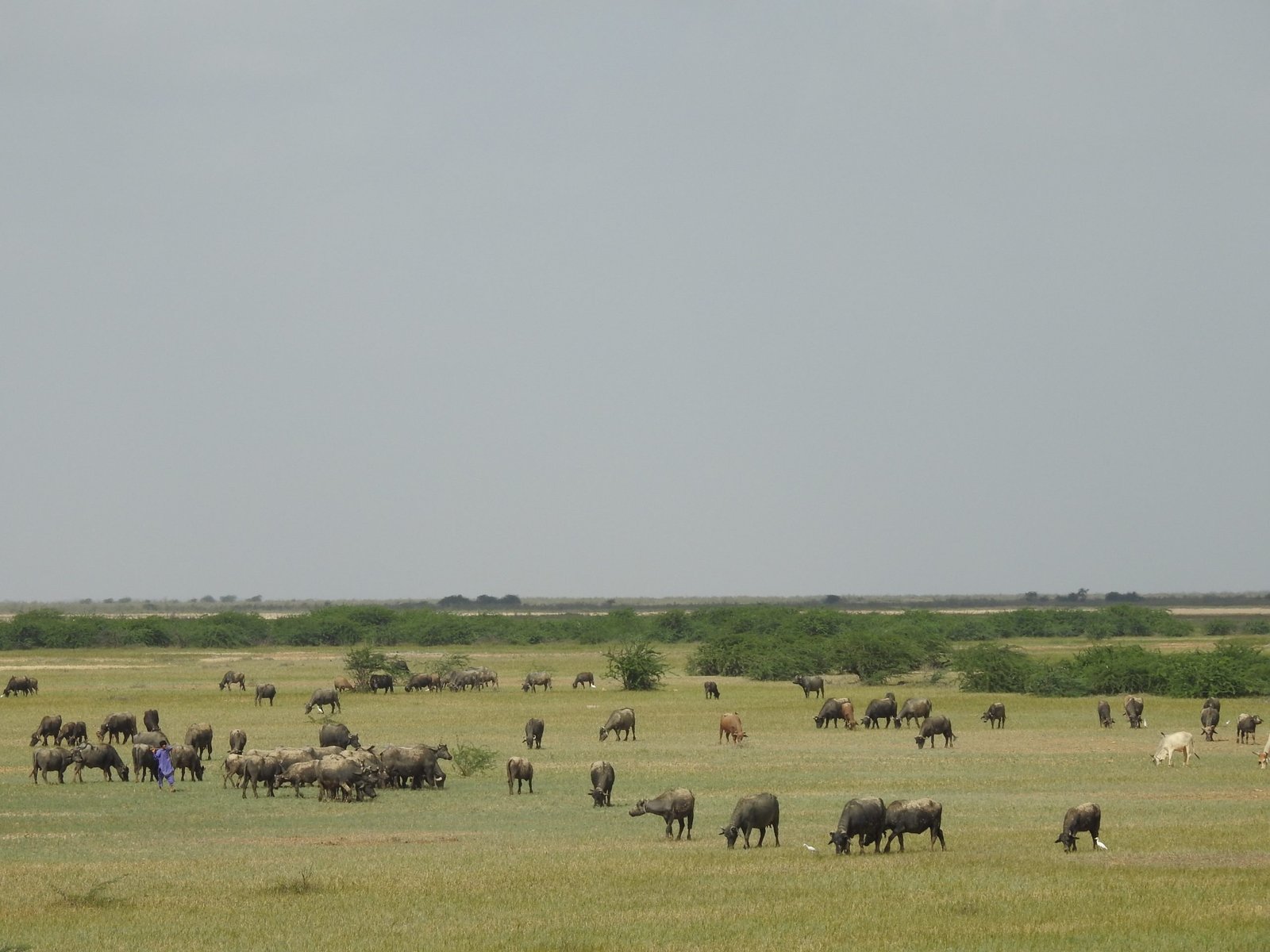
New studies from Maharashtra’s Solapur grasslands and Gujarat’s Banni grassland show that restoring native grasslands significantly increases soil organic carbon (SOC), strengthens biodiversity, and improves livelihoods. This has opened major discussions on climate mitigation, ecosystem services, and policy corrections.
What Are India’s Grasslands?
- Semi-arid savannahs dominated by grasses, not trees.
- Historically undervalued due to colonial classification as “wastelands.”
- Support pastoral economies, wildlife (e.g., Great Indian Bustard), and dryland ecology.
- Function mainly through deep, fibrous root systems
Key Features of Grasslands
- Colonial Legacy of “Wastelands”
- British prioritised timber forests; grasslands seen as unproductive.
- This thinking continued in independent India.
- National Wastelands Development Board (1985) wrongly grouped grasslands with barren lands, ravines, rocky areas, etc.
- Result – Negative policy bias, afforestation drives in grasslands, invasive species spread.
- Ecological Importance
- Productivity is below ground, unlike forests.
- Roots:
- Stabilise soil
- Improve infiltration
- Reduce erosion
- Store long-term carbon
- Grasslands support rich microbial and fungal diversity that maintains soil fertility.
- Climate Importance — Carbon Storage
- Research shows grasslands can store huge amounts of soil organic carbon (SOC), often more stable than forest carbon because it is underground.
- SOC remains stable even during fires and droughts.
Case Studies (Evidence-Based Analysis)
- Solapur, Maharashtra — CAMPA Grassland Restoration
- Forest department used CAMPA funds to restore degraded grasslands in Malshiras range.
- Native grasses are raised and replanted after monsoon (e.g., Dicanthium annulatum, Chrysopogon fulvus).
- An ATREE–Grasslands Trust study compared restored sites with untreated and natural grasslands.
- Results:
- 2-year restoration → 21% increase in SOC
- 3-year restoration → 50% increase in SOC
- Strong evidence that grassland restoration contributes to India’s climate goals.
- Banni Grassland, Kutch (Gujarat)
- Once Asia’s largest tropical grassland, degraded by invasive mesquite (Prosopis juliflora).
- Community-led restoration removed invasive trees and revived native grasses.
- Key Findings:
- Banni stores ~27 tonnes of carbon (top 30 cm soil)
- Average SOC density: ~120 tonnes/ha — among the world’s richest arid ecosystems
- Restored “wada” patches had the highest SOC
- Pastoralist Maldharis use rotational grazing & biomass harvesting which ultimately improves resilience
Lesson: Healthy grasslands, not invasive trees, provide true climate resilience in drylands.
Implications
- Climate Mitigation: Grasslands store massive, stable below-ground carbon.
- Biodiversity Conservation: Key habitat for endangered species.
- Livelihoods: Millions rely on pastoralism supported by grasslands.
- Policy Reform: Need to treat grasslands as distinct ecosystems, not wastelands.
- Land Management: Overemphasis on tree planting can damage savannah ecosystems.
- Adaptation to Climate Change: Grasslands withstand drought, fire, and extreme heat better than forests.
Challenges & Way Forward
| Challenges | Way Forward |
| Colonial-era “wasteland” classification persists in policy documents | Create a national grassland policy recognising savannahs as distinct ecosystems |
| Misguided afforestation in grasslands (tree planting where trees don’t belong) | Promote ecosystem-appropriate restoration, especially native grasses |
| Spread of invasive species (Prosopis, mesquite) | Launch large-scale removal programmes with community participation |
| Weak recognition of pastoralist rights | Include pastoralists in co-management and governance models |
| Lack of scientific monitoring of SOC and grassland health | Consortium of scientific agencies to monitor SOC, biodiversity, and grazing impacts |
| Fragmented land management between forest, revenue, and agriculture departments | Establish unified grassland management authority |
Conclusion
India’s grasslands are not wastelands but powerful climate allies. Restoring native grasses, empowering pastoral communities, and correcting policy misclassifications can transform drylands into resilient carbon sinks. The path to a climate-secure future lies not only in planting trees but in reviving the ecosystems beneath our feet.
| EnsureIAS Mains Question
Q. Grasslands in India have long been misclassified as “wastelands”. Discuss the ecological, economic, and climate significance of grasslands, and evaluate the need for a dedicated national grassland policy. (250 Words) |
| EnsureIAS Prelims Question
Q. Consider the following statements regarding Indian grasslands: 1. Grasslands store most of their carbon above ground in vegetation biomass. 2. Restoration of native grasslands can significantly increase soil organic carbon. 3. The Banni grassland is among the most carbon-rich arid ecosystems in the world. 4. Mesquite (Prosopis juliflora) plantation helps improve soil carbon in savannah ecosystems. Which of the above statements are correct? Answer: (a) 2 and 3 only Explanation: Statement 1 is Incorrect: Grasslands store most carbon underground in roots and soil, not above ground. Their productivity is below-ground. Statement 2 is Correct: Studies in Solapur show 21%–50% increase in SOC after restoration. This is well-established globally. Statement 3 is Correct: Banni grassland has SOC densities of ~120 tonnes per hectare, among the most carbon-rich arid ecosystems. Statement 4 is Incorrect: Mesquite (Prosopis juliflora) is an invasive species that degrades grasslands, reduces SOC, and harms biodiversity. Removing mesquite improves carbon storage. |