Introduction
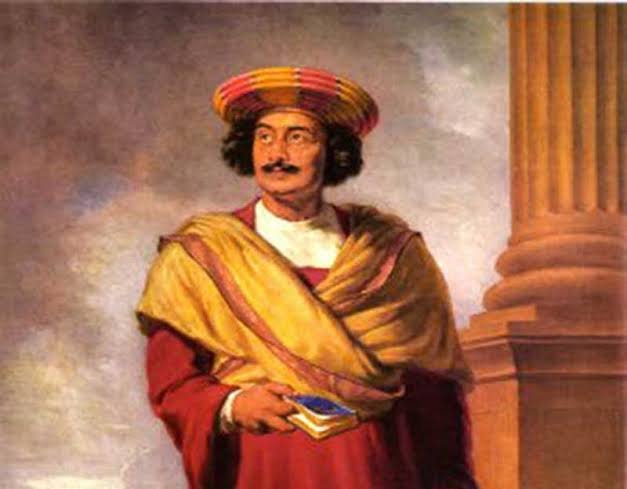
Raja Ram Mohan Roy (1772–1833) was the pioneer of socio-religious reform in modern India and is widely regarded as the Father of the Indian Renaissance. He sought to reconcile India’s philosophical heritage with the ideals of reason, equality, and modernity, thereby initiating an intellectual awakening that transformed nineteenth-century Indian society. His reformist vision laid the foundation for religious reform, social transformation, modern education, and liberal thought in India.
Early Life
Raja Ram Mohan Roy was born on 22 May 1772 at Radhanagar in present-day West Bengal into a conservative Brahmin family. He received education in Persian, Arabic, Sanskrit, and later English, which enabled him to study the Quran, Vedas, Upanishads, and Western philosophy. This diverse intellectual exposure shaped his belief in rational inquiry, monotheism, and religious tolerance.
From 1803 to 1814, he served in the East India Company’s administration, where his experience of colonial governance strengthened his commitment to social, educational, and administrative reform. In 1830, he travelled to England as the representative of the Mughal Emperor Akbar II to present the Emperor’s grievances before the British Crown. In recognition of his services, Akbar II conferred upon him the title “Raja”. He continued to advocate Indian interests in England until his death in 1833.
Ideological Foundations
Raja Ram Mohan Roy believed that India’s progress depended on reforming both religious beliefs and social institutions.
- Rationalism: He argued that religious practices and social customs should be guided by reason, morality, and ethical principles rather than superstition or unquestioning tradition. He therefore opposed practices that lacked moral or scriptural justification.
- Monotheism and Religious Universalism: Drawing inspiration from the Upanishads and Islamic monotheism, he advocated belief in one supreme God. He maintained that all religions embodied universal moral values and should promote harmony rather than sectarian divisions.
- Human Equality: He rejected caste discrimination and upheld the equal dignity of every individual. In his view, social hierarchy based on birth was inconsistent with justice and human progress.
- Modernity and Reform: He believed that modern education, scientific inquiry, and liberal ideas were essential for social transformation while preserving the ethical and spiritual foundations of Indian civilisation.
Contributions
- Religious Reforms: Raja Ram Mohan Roy sought to restore the ethical foundations of religion by eliminating practices that promoted superstition and social inequality.
- His first major work, Tuhfat-ul-Muwahhidin (also translated as “A Gift to Monotheists”), advocated monotheism and criticised irrational religious beliefs.
- In 1815, he established the Atmiya Sabha, which served as a forum for religious and social discussions.
- In 1828, he founded the Brahmo Sabha, later renamed the Brahmo Samaj, to promote ethical monotheism and religious reform.
- Through The Precepts of Jesus (1820), he appreciated the moral teachings of Christianity while rejecting dogmatism and supernatural interpretations.
- Social Reforms: Raja Ram Mohan Roy regarded social reform as indispensable for building a just and progressive society.
- He led the campaign against the Sati system, which culminated in its abolition through Regulation XVII of 1829 under Governor-General Lord William Bentinck.
- He opposed child marriage and supported widow remarriage.
- He advocated female education and demanded inheritance and property rights for women.
- He worked to create a society based on equality by challenging caste discrimination, untouchability, and other social prejudices.
- Educational Reforms: Raja Ram Mohan Roy viewed education as the foundation of national progress and intellectual awakening.
- He supported the establishment of Hindu College in Calcutta in 1817.
- In 1825, he founded the Vedanta College, where Indian philosophy was taught alongside Western science and literature.
- He promoted English education to facilitate access to modern science, rational thought, and contemporary knowledge.
- Economic and Political Reforms: Raja Ram Mohan Roy was among the earliest Indian thinkers to advocate constitutional governance and administrative reform. He supported representative institutions, civil liberties, and equality before law, believing that good governance should safeguard the rights and freedoms of all citizens.
- Freedom of the Press: He defended the freedom of the press and used newspapers to educate public opinion and encourage informed debate on social and political issues.
- Administrative Reforms: He advocated the Indianisation of higher civil services, the separation of the executive from the judiciary, and equal treatment of Indians in public administration.
- Economic Reforms: He criticised oppressive land revenue policies, favoured fair taxation, and supported measures that protected cultivators and encouraged Indian trade.
Brahmo Samaj
Founded in 1828, the Brahmo Samaj became the first organised socio-religious reform movement in modern India.
Principles
- Belief in one supreme God.
- Rejection of idol worship and ritualism.
- Acceptance of reason and conscience as guides in religious life.
- Opposition to caste discrimination and social inequalities.
- Promotion of ethical conduct and universal brotherhood.
Significance
- Institutionalised the socio-religious reform movement in modern India.
- Encouraged rationalism and scientific temper.
- Advanced women’s rights and social equality.
- Inspired subsequent reform movements across the country.
- Contributed to the intellectual awakening that strengthened Indian nationalism.
In 1866, the movement split into the Adi Brahmo Samaj under Debendranath Tagore and the Brahmo Samaj of India under Keshub Chandra Sen.
Major Literary Works
Raja Ram Mohan Roy used his writings to promote religious reform and social awakening. His notable works include The Precepts of Jesus: The Guide to Peace and Happiness, Vedanta Grantha, Vedanta Sara, The Precepts of Jesus, and A Defence of Hindu Theism. He also translated several Upanishads into Bengali and English, making Vedantic philosophy accessible to a wider audience and encouraging a rational understanding of India’s philosophical traditions.
Conclusion
Raja Ram Mohan Roy pioneered the Indian Renaissance by combining the ethical traditions of Indian civilisation with the ideals of reason, equality, and modernity. Through his leadership in religious, social, educational, and political reform, he reshaped nineteenth-century Indian society and laid the intellectual foundations of modern India. His vision continues to inspire India’s commitment to social justice, constitutional values, secularism, and democratic progress.