Context
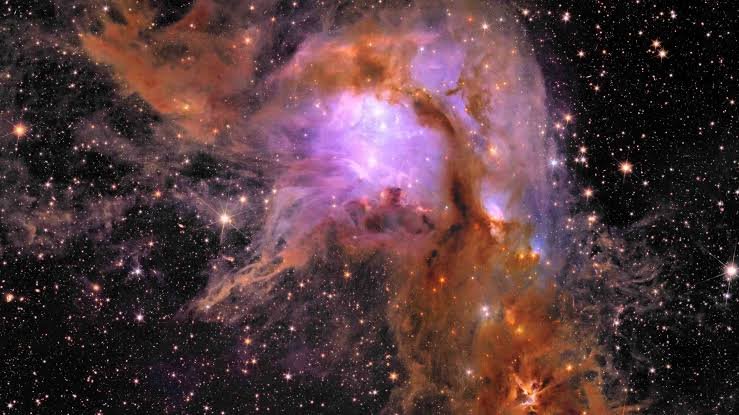
Bengaluru-born astronomer Dr. Ramya Anche will lead PUFFINS, a NASA-funded SmallSat selected under the Astrophysics Pioneers programme to study the smallest grains of interstellar dust using ultraviolet spectropolarimetry.
Mission and Scientific Objective
- PUFFINS stands for Polarimetry in the Ultraviolet to Find Features in INterStellar dust.
- It is a NASA Astrophysics Pioneers SmallSat mission led by Dr. Ramya Anche of the University of Arizona’s Steward Observatory.
- The mission will observe ultraviolet light from about 70 stars to study the smallest grains present in the interstellar medium.
- Its main objective is to understand how these grains form, evolve and interact with the Milky Way’s magnetic field.
- PUFFINS is currently targeted for launch around 2030.
How PUFFINS Will Study Interstellar Dust
- PUFFINS will carry a telescope with an aperture of about 25 cm (10 inches) and a spectropolarimeter.
- It will use ultraviolet spectropolarimetry, which measures how the polarization of starlight changes across ultraviolet wavelengths.
- Interstellar dust grains can align with the Galactic magnetic field and alter the polarization of starlight passing through them.
- These measurements can reveal the grains’ composition, size, alignment and interaction with magnetic fields.
- PUFFINS is designed to probe grains smaller than about 50 nanometres, which are difficult to study effectively using conventional optical and infrared observations.
Significance of the Mission
- Dust evolution: It can improve understanding of how the smallest interstellar grains form and change over time.
- Galactic magnetic fields: Polarization measurements can reveal how dust grains interact with the Milky Way’s magnetic environment.
- Star and planet formation: Understanding interstellar dust helps trace how material in the interstellar medium becomes incorporated into new stars and planetary systems.
- Observational gap: PUFFINS will restore space-based ultraviolet spectropolarimetry, a capability not deployed in space for nearly three decades.
FAQs
Q1. What does PUFFINS stand for?
PUFFINS stands for Polarimetry in the Ultraviolet to Find Features in INterStellar dust.
Q2. Which NASA programme selected PUFFINS?
It was selected under NASA’s Astrophysics Pioneers programme.
Q3. What will PUFFINS study?
It will study the smallest grains of interstellar dust using ultraviolet observations of about 70 stars.
Q4. What technique will PUFFINS use?
It will use ultraviolet spectropolarimetry to measure changes in the polarization of starlight.
Q5. Who is leading the PUFFINS mission?
The mission is led by Dr. Ramya Anche of the University of Arizona’s Steward Observatory.