Context
Pithora Painting, a traditional tribal art form of Gujarat, was awarded the Geographical Indication (GI) tag in 2026.
About Pithora Painting
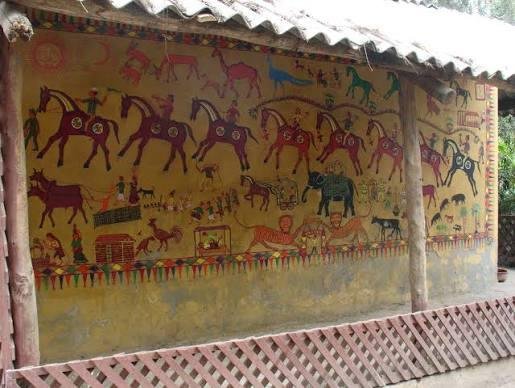
- Pithora Painting is a traditional ritual wall art that originated around the 13th century in the tribal regions of Panchmahal and Chhota Udaipur in Gujarat. It is practised mainly by the Rathwa, Bhil, and Bhilala tribes, who have a deep faith in nature, ancestral spirits, and divine powers.
- The art form is named after Pithora De, the tribal deity associated with marriage, prosperity, and the well-being of the community.
- Traditionally, the paintings are created on the walls of houses during important occasions such as marriages, childbirth, and festivals to invoke blessings and divine protection. They are executed by specialist ritual painters known as Lakharas, under the guidance of a priest called the Badwa.
- Walls are prepared using a mixture of cow dung and clay, while natural pigments derived from minerals, plants, and other organic materials are applied using bamboo sticks, cotton, and wooden stencils.
- The paintings depict tribal and Hindu deities, horses, animals, and scenes of farming, hunting, dancing, and everyday tribal life, reflecting the social, cultural, and religious traditions of the tribal communities.
- Although traditionally practised as wall art, Pithora paintings are now also created on paper and canvas for commercial purposes, helping preserve and promote the art form.
FAQs
Q1. Why is Pithora Painting in the news?
Ans: Pithora Painting received the Geographical Indication (GI) tag in 2026, recognising its unique geographical origin and cultural identity.
Q2. Which tribes traditionally practise Pithora Painting?
Ans: It is mainly practised by the Rathwa, Bhil, and Bhilala tribes of Gujarat, particularly in the Panchmahal and Chhota Udaipur regions.
Q3. Who are the Lakharas and the Badwa?
Ans: Lakharas are the traditional ritual painters who create Pithora paintings, while the Badwa is the priest who supervises the ritual and guides the painting process.
Q4. What materials are used in Pithora Painting?
Ans: The walls are prepared with a mixture of cow dung and clay, and the paintings are made using natural pigments applied with bamboo sticks, cotton, and wooden stencils.
Q5. What themes are commonly depicted in Pithora Painting?
Ans: The paintings portray tribal and Hindu deities, horses, animals, and scenes from farming, hunting, dancing, and everyday tribal life, reflecting the beliefs and traditions of tribal communities.
Q6. Why is Pithora Painting culturally significant?
Ans: It preserves the religious beliefs, folklore, customs, and artistic traditions of tribal communities while passing their cultural heritage to future generations.
Q7. What is the significance of the GI tag for Pithora Painting?
Ans: The GI tag recognises the art form’s geographical origin and authenticity, supports traditional artisans, and encourages the preservation and promotion of India’s intangible cultural heritage.