Context
The Prime Minister has called for a united and sustained campaign against illicit drug trafficking to achieve a drug-free India, highlighting the growing links between narcotics trafficking, organised crime and terrorism as threats to national security, public health and economic development.
About Drug Trafficking
- Definition: According to the UNODC (United Nations Office on Drugs and Crime), drug trafficking is the illegal cultivation, manufacture, distribution, and sale of banned substances.
- Narco-Terrorism: Use of illegal drug trade and its profits to fund terrorism, insurgency, and illegal arms buying.
- Nature of Threat: Threatens internal security, public health, economic stability, and governance.
Major Categories of Drugs
| Category | Description | Examples |
| Natural Drugs | Obtained directly from plants | Opium, cannabis, cocaine |
| Semi-Synthetic Drugs | Chemically modified natural substances | Heroin |
| Synthetic Drugs | Made completely through chemical processes | Methamphetamine (Yaba), MDMA (Methylenedioxymethamphetamine), fentanyl, nitazenes |
| Prescription Pharmaceuticals | Legal medicines misused or illegally diverted | Codeine, tramadol, diazepam |
India’s Vulnerability to Drug Trafficking
- Sandwich Location: India sits between two major global drug-producing hubs:
- Golden Crescent (West): Afghanistan, Pakistan, and Iran.
- Golden Triangle (East): Myanmar, Laos, and Thailand.
- Porous Borders: Difficult terrain and riverine stretches hinder border monitoring, especially in Punjab, Jammu & Kashmir, and the North-Eastern states.
- Long Coastline: India’s revised 11,098.81 km coastline and busy shipping lanes raise maritime smuggling risks.
- Regional Instability: Ongoing conflict in Myanmar (since the 2021 military coup) has sharply increased opium and synthetic drug production along the eastern border.
- Domestic Demand & Diversion: Rising substance abuse and illegal diversion of regulated medicines sustain local drug networks.
Emerging Trends in Drug Trafficking
- Rise of Synthetic Drugs: Rapid surge in laboratory-made drugs like methamphetamine (Yaba) and fentanyl, which are easier to hide and transport.
- Maritime Smuggling: Heavy use of Arabian Sea and Bay of Bengal routes using small fishing boats and cargo vessels.
- Digital Trafficking: Use of the darknet, cryptocurrencies, and encrypted messaging apps to hide buyer–seller identities and money trails.
- Courier & Postal Networks: Small-parcel smuggling through domestic and international courier and postal services.
- Drone Smuggling: Cross-border dropping of drugs and weapons using UAVs (Unmanned Aerial Vehicles), especially along the India–Pakistan border.
- Pharmaceutical Diversion: Illegal sale and trafficking of prescription painkillers and sedatives such as tramadol and codeine-based syrups.
Impact of Drug Trafficking on India
- Internal Security: Fuels the drug–arms–terrorism nexus by financing cross-border terrorism, insurgency, and organised crime.
- Economic Impact: Drives money laundering, illicit financial flows, and the shadow (black) economy.
- Demographic Dividend Loss: Addiction among youth lowers work productivity, employability, and human capital.
- Governance & Law Enforcement: Breeds corruption, cartel violence, and law-and-order challenges.
- Public Health Burden: Increases drug dependence, overdoses, and mental and physical illnesses, straining public hospitals.
- Social Impact: Causes family breakdown, domestic violence, unemployment, and social stigma.
Measures Taken by India to Combat Drug Trafficking
- Legal and Institutional Framework
- NDPS (Narcotic Drugs and Psychotropic Substances) Act, 1985: Main drug law banning illegal cultivation, manufacture, possession, trafficking, and use of drugs, while allowing medical and scientific use.
- PITNDPS (Prevention of Illicit Traffic in Narcotic Drugs and Psychotropic Substances) Act, 1988: Allows preventive detention of repeat offenders to stop illegal drug trafficking.
- NCB (Narcotics Control Bureau): Set up in 1986 under the NDPS Act; works under the MHA (Ministry of Home Affairs) to coordinate drug law enforcement and intelligence-sharing.
- Inter-Agency Coordination
- NCORD (Narco Coordination Centre): A four-tier coordination system working at the Apex, Executive, State, and District levels to unite central and state agencies.
- JCC (Joint Coordination Committee): Helps agencies conduct joint investigations and coordinate operations.
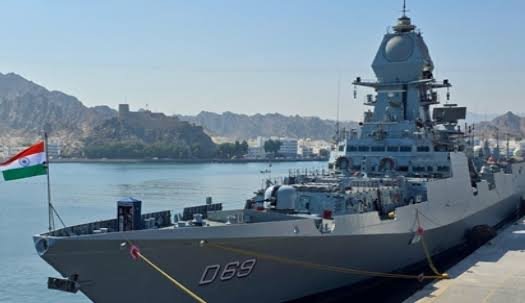
- Operation Sagar Manthan (2024): Joint operation by the NCB, Indian Navy, and ICG (Indian Coast Guard) to stop sea-based drug smuggling.
- Technology-Based Initiatives
| Initiative | Key Features |
| NIDAAN (National Integrated Database on Arrested Narco-Offenders) | Central database of arrested drug offenders for quick intelligence-sharing and investigation |
| SIMS (Seizure Information Management System) | Digital portal that collects and studies drug seizure data across India |
| MAPDRUGS Portal | Uses satellite images and mapping tools to spot and destroy illegal drug crops |
- Demand Reduction and Rehabilitation
- NMBA (Nasha Mukt Bharat Abhiyaan): Launched on 15 August 2020 by the MoSJE (Ministry of Social Justice and Empowerment) to prevent youth drug abuse through awareness, counselling, and rehabilitation.
- NAPDDR (National Action Plan for Drug Demand Reduction): Funds preventive education, treatment centres, rehabilitation, and social reintegration of recovering addicts.
- International Legal Framework
India is a party to three major UN (United Nations) drug control conventions:
| Convention | Core Objective |
| Single Convention on Narcotic Drugs, 1961 | Limits narcotic drugs strictly to medical and scientific uses |
| Convention on Psychotropic Substances, 1971 | Regulates synthetic and mind-altering drugs worldwide |
| UN Convention Against Illicit Traffic in Narcotic Drugs and Psychotropic Substances, 1988 | Boosts global cooperation against drug trafficking, money laundering, and illegal financial networks |
Challenges in Combating Drug Trafficking
- Geographical Barriers: Tough terrain, porous borders, and a long coastline make continuous monitoring hard.
- Judicial & Forensic Delays: Heavy case backlog, shortage of forensic labs, and procedural gaps weaken convictions.
- Hidden Financial Trails: Use of the darknet, cryptocurrencies, and hawala networks makes tracking drug money difficult.
- Inadequate Rehabilitation: Shortage of treatment centres and trained counsellors limits long-term recovery.
- Coordination Gaps: Delays in intelligence-sharing between agencies reduce enforcement impact.
- Cross-Border Cartels: International organised crime networks require stronger cooperation with other countries.
Way Forward
- Smart Border Management: Upgrade CIBMS (Comprehensive Integrated Border Management System) with smart fencing, thermal imaging, and anti-drone systems.
- Maritime Surveillance: Strengthen coastal security through the IFC-IOR (Information Fusion Centre–Indian Ocean Region), Indian Navy, and ICG (Indian Coast Guard).
- Follow-the-Money Approach: Track illicit drug money through joint action by NCB, ED (Enforcement Directorate), and FIU-IND (Financial Intelligence Unit–India).
- Precursor Chemical Control: Strictly monitor industrial chemicals diverted to make synthetic drugs.
- International Cooperation: Expand intelligence-sharing and joint investigations with neighbouring countries and the UNODC (United Nations Office on Drugs and Crime).
- Judicial & Forensic Reforms: Upgrade forensic labs, improve investigations, and speed up NDPS trials.
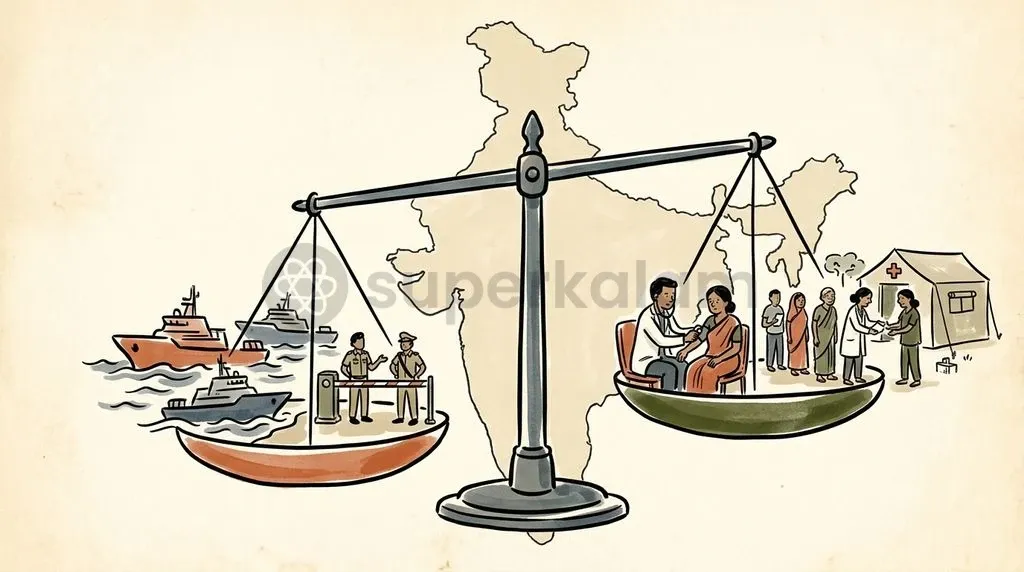
- Balanced Strategy & Human-Centric Care: Combine strict supply reduction with demand reduction, focusing on medical care, counselling, skill training, and social reintegration rather than treating addicts only as criminals.
FAQs
Q1. What is narco-terrorism?
Ans: Use of illicit drug trafficking and its proceeds to finance terrorism, insurgency and illegal arms procurement.
Q2. Which countries constitute the Golden Crescent and Golden Triangle?
Ans: Golden Crescent: Afghanistan, Pakistan and Iran; Golden Triangle: Myanmar, Laos and Thailand.
Q3. What is the NCORD mechanism?
Ans: The Narco Coordination Centre (NCORD) is a four-tier coordination mechanism operating at the Apex, Executive, State and District levels to strengthen cooperation against drug trafficking.
Q4. What is Operation Sagar Manthan?
Ans: A 2024 joint initiative of NCB, Indian Navy and Indian Coast Guard to combat maritime drug trafficking.
Q5. Which ministry implements Nasha Mukt Bharat Abhiyaan?
Ans: Ministry of Social Justice and Empowerment, which launched the campaign on 15 August 2020.