Context
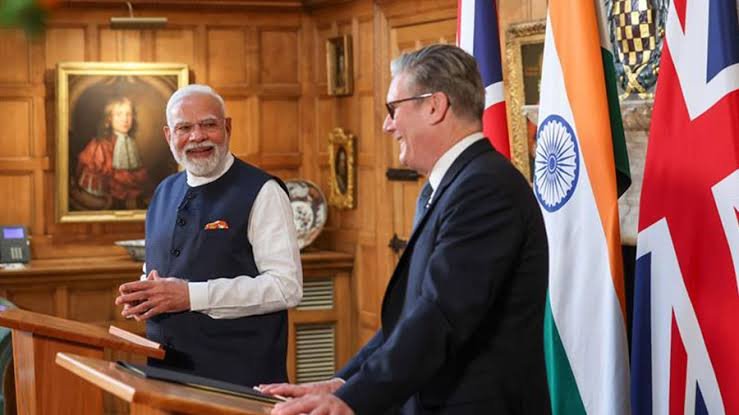
The Prime Minister met Prince William and Princess Catherine to strengthen the India–UK Comprehensive Strategic Partnership, with a focus on environmental sustainability and climate action, alongside the Earthshot Prize 2026.
Evolution of India–UK Relations
- Colonial Legacy: Shared British colonial history shaped early diplomatic, legal, and institutional ties.
- Cold War Phase: India’s Non-Alignment Policy and Britain’s Western alliance limited close strategic ties.
- Post-Brexit Shift: The UK’s exit from the EU (European Union) opened new room for a direct bilateral trade deal.
- Comprehensive Strategic Partnership (2021): Upgraded ties and launched Roadmap 2030.
- India–UK Vision 2035 (2025): Adopted in July 2025 as a 10-year plan for deeper strategic, economic, and tech cooperation.
India–UK Vision 2035 (Adopted July 2025)
A 10-year roadmap built around five main pillars:
- Trade, investment, and economic growth
- Defence and security cooperation
- Technology, research, and innovation
- Climate action and clean energy
- Education, healthcare, and people-to-people ties
Major Areas of India–UK Cooperation
- Defence and Strategic Cooperation
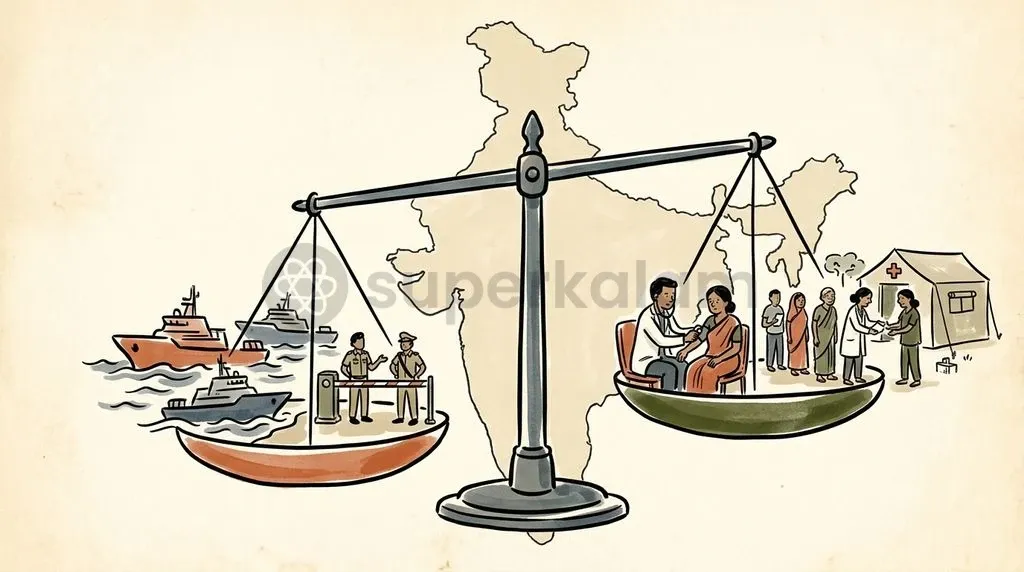
- Indo-Pacific Security: Joint support for maritime safety and a free, open, and rules-based Indo-Pacific.
- Defence and International Security Partnership (2015): Boosts defence tech co-development, military ties, and security talks.
- Joint Military Exercises:
| Exercise | Nature |
| Konkan | Bilateral Navy exercise |
| Ajeya Warrior | Bilateral Army exercise |
| Indradhanush | Bilateral Air Force exercise |
| Cobra Warrior | UK-hosted multilateral Air Force exercise |
1. Science, Technology, and Innovation
2. India–UK Science and Innovation Council: Guides joint research and tech development.
3. TSI (Technology Security Initiative), 2024: Expands cooperation in AI (Artificial Intelligence), semiconductors, telecom, quantum tech, and critical minerals.
4. Healthcare: Joint research in medicines, vaccines, and medical devices.
5. Climate, Clean Energy, and Global Initiatives
- India–UK Net Zero Innovation Virtual Centre: Supports clean industrial production and green hydrogen.
- Climate Action: Aids India’s Net-Zero 2070 goal through green finance and clean technology.
- Sustainable Development: Joint work in renewable energy and climate-resilient infrastructure.
- Earthshot Prize (Mumbai, 2026):
- Started by Prince William in 2020, giving £1 million each to five annual winners across five goals: Protect and Restore Nature, Clean Our Air, Revive Our Oceans, Build a Waste-Free World, and Fix Our Climate.
- 2026 Highlight: Hosted in Mumbai (November 2026), where India’s Mahindra Last Mile Mobility won in Clean Our Air for scaling electric three-wheelers.
6. Diaspora and People-to-People Relations
- Indian Diaspora: Over 1.8 million strong, strengthening business, cultural, and political links.
- Migration and Mobility Partnership (2021): Supports legal migration and student/worker mobility while checking illegal migration.
- Education: Expands student exchanges, mutual degree recognition, and UK university campuses in India.
India–UK CETA (Comprehensive Economic and Trade Agreement), 2025
- Signed: 24 July 2025 to cut trade barriers, open markets, and boost bilateral trade.
- Key Provisions of CETA
| Sector | Key Provisions |
| Indian Exports | Duty-free access to nearly 99% of UK tariff lines |
| British Exports | India to cut or remove duties on about 90% of tariff lines |
| Textiles, Gems & Jewellery | Better export competitiveness via zero-duty access |
| Engineering Goods | Improved preferential market access |
| Automobiles | Lower duties on eligible UK vehicles under import quotas |
| Alcoholic Beverages | Whisky and gin duties cut from 150% to 75%, and gradually to 40% |
| Medical Devices | Duty concessions on eligible British medical products |
| Services & Customs | Easier worker mobility, simpler customs paperwork, and clearer rules of origin |
- DCC (Double Contribution Convention)
- Goal: Stops double social security payments for workers posted temporarily abroad.
- Benefit: Grants exemption for up to three years, cutting costs for Indian IT (Information Technology), consultancy, and service workers and boosting services trade.
Significance of CETA for India
- Export & Job Growth: Boosts labour-heavy exports like textiles, footwear, leather, engineering goods, and gems & jewellery.
- MSME (Micro, Small and Medium Enterprises) Growth: Helps smaller firms enter global markets and UK government contracts.
- Services Expansion: Opens doors in IT, finance, consultancy, and healthcare by removing select ENTs (Economic Needs Tests) for eligible professionals.
- Investment & Diversification: Attracts FDI (Foreign Direct Investment), brings new tech, and reduces dependence on a few export markets.
Challenges in India–UK Relations
- Domestic Competition: Tariff cuts under CETA may create price pressure for Indian factories and some farm sectors.
- Competitiveness Gaps: High logistics costs, lower productivity, and quality gaps can limit export gains.
- NTBs (Non-Tariff Barriers): Strict UK product standards, safety rules, and green norms can block market entry.
- Visa & Immigration Rules: Tight UK visa policies affect Indian students and skilled workers.
- Public Health Concerns: Cheaper imported liquor raises domestic health debates.
- Carbon Border Tax — UK CBAM (Carbon Border Adjustment Mechanism):
- Rollout: Starts 1 January 2027 (separate from the EU CBAM).
- Goal & Coverage: Prevents carbon leakage by taxing carbon emissions on imported aluminium, cement, fertilisers, hydrogen, iron, and steel.
- Impact on India: Raises compliance and export costs for carbon-heavy Indian industries.
Way Forward
- Boost Manufacturing: Link PLI (Production Linked Incentive) schemes with CETA opportunities to improve scale and quality.
- Strengthen Supply Chains: Use clusters like PM MITRA (PM Mega Integrated Textile Region and Apparel) Parks to lower logistics costs.
- Support MSMEs: Provide cheap credit, tech upgrades, and global quality certifications.
- Invest in Emerging Tech: Build capacity in semiconductors, EVs (Electric Vehicles), and green hydrogen.
- Ease Worker Mobility: Speed up Mutual Recognition Agreements for professional degrees and simplify visa rules.
- Prepare for UK CBAM: Adopt clean energy, green manufacturing, and carbon tracking to protect Indian exports.
- Smooth Implementation: Use JETCO (Joint Economic and Trade Committee) to track CETA progress and deepen defence, maritime, and tech ties under India–UK Vision 2035.
FAQs
Q1. What is India–UK Vision 2035?
Ans. A 10-year strategic roadmap adopted in 2025 covering trade, defence, technology, climate action, education and healthcare.
Q2. When was the India–UK Comprehensive Economic and Trade Agreement signed?
Ans. 24 July 2025, to reduce trade barriers and strengthen bilateral economic cooperation.
Q3. What is the Double Contribution Convention between India and the UK?
Ans. An agreement preventing duplicate social security contributions for eligible temporarily posted workers for up to three years.
Q4. How can the UK’s Carbon Border Adjustment Mechanism affect Indian exports?
Ans. May increase export costs for carbon-intensive goods, requiring cleaner production and reduced emissions.