Context
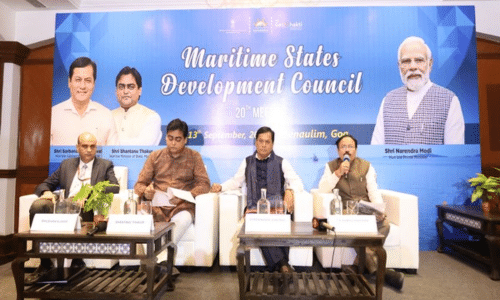
The 21st Maritime State Development Council (MSDC) meeting concluded in Mumbai, focusing on the coordinated development of India’s maritime sector.
About MSDC
- Established: May 1997 as an advisory body for maritime sector development.
- Legal status: The Indian Ports Act, 2025 provides statutory recognition to the Council.
- Chairperson: Union Minister for Ports, Shipping and Waterways.
- Composition: Includes State ministers in charge of ports, Union Territory administrators, Major Port chairpersons, and representatives of the Indian Navy, Indian Coast Guard and other relevant agencies.
- Objective: To coordinate the development of Major and Non-Major Ports in consultation with State governments.
Recent Developments
- One Nation One Port Process (ONOP): The Council set March 2027 as the deadline for implementing uniform port procedures.
- Digital Integration: It aims to strengthen digital coordination and standardise port processes.
- Long-term Planning: The Council adopted targets aligned with Maritime India Vision 2030 and Maritime Amrit Kaal Vision 2047.
Key Functions
- Port Development: Coordinates the development of minor, captive, and private ports with Major Ports.
- Infrastructure: Identifies connectivity needs related to roads, railways, and Inland Water Transport (IWT).
- Policy Advice: Recommends reforms to improve port efficiency and maritime planning.
- Data Sharing: Promotes port-related data collection, sharing, and transparency.
FAQs
Q1. Which law grants statutory status to MSDC?
Ans. The Indian Ports Act, 2025 gives MSDC statutory recognition
Q2. Who chairs the MSDC?
Ans. The Council is chaired by the Union Minister for Ports, Shipping and Waterways
Q3. What is the difference between Major and Non-Major Ports?
Ans. Major Ports fall under the Union government’s maritime administration, while Non-Major Ports are generally administered by State governments or State Maritime Boards.