Context
Australia has confirmed H5 high-pathogenicity avian influenza on Macquarie Island, with the virus detected in samples from a southern elephant seal and a kelp gull, raising concern over wildlife in the remote sub-Antarctic territory.
Geographic and Geological Profile
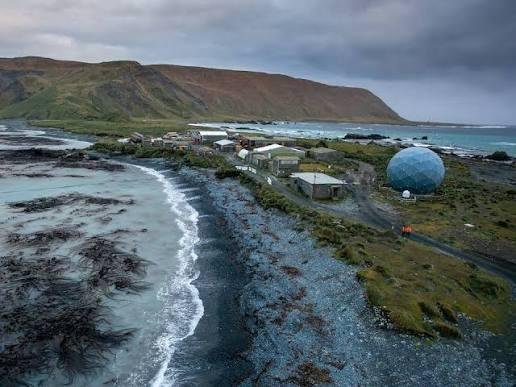
- Macquarie Island is a sub-Antarctic island in the Southern Ocean, about 1,500 km southeast of Tasmania, and is politically part of the Australian state of Tasmania.
- The island is about 34 km long, around 5.5 km wide, and covers nearly 128 sq km.
- It is the exposed crest of the undersea Macquarie Ridge, located along the boundary between the Indo-Australian and Pacific tectonic plates.
- Macquarie Island is the only place on Earth where rocks from the oceanic crust and upper mantle are being actively exposed above sea level.
- Its geological evolution began around 10 million years ago, and the island remains seismically active and continues to uplift.
- It was inscribed as a UNESCO World Heritage Site in 1997 because of its exceptional geological significance.
Ecological Importance
- The island is treeless and supports sub-Antarctic vegetation such as grasses, mosses and other cold-adapted plant communities.
- It is an important breeding ground for royal, king, gentoo and southern rockhopper penguins.
- The royal penguin is endemic to the Macquarie Island region, including the nearby Bishop and Clerk Islets.
- Large colonies of southern elephant seals and several fur seal species also breed on the island.
- Dense seasonal breeding colonies can facilitate rapid disease transmission, exposing large numbers of animals simultaneously during outbreaks.
Conservation and Scientific Significance
- Geological value: Surface exposure of oceanic crust and upper-mantle rocks provides rare evidence of plate tectonics, sea-floor processes and oceanic lithosphere.
- Biodiversity value: The island supports globally important breeding populations of penguins, seals and seabirds.
- Research importance: Its remote Southern Ocean location makes it valuable for studying climate, oceans, geology and sub-Antarctic ecosystems.
- Disease vulnerability: Detection of high-pathogenicity avian influenza highlights the threat posed by emerging pathogens to densely concentrated wildlife populations.
- Conservation priority: Its UNESCO status and ecological sensitivity make biosecurity, disease surveillance and ecosystem monitoring especially important.
FAQs
Q1. Where is Macquarie Island located?
It lies in the Southern Ocean, about 1,500 km southeast of Tasmania.
Q2. Macquarie Island belongs to which Australian state?
It is part of Tasmania.
Q3. What makes Macquarie Island geologically unique?
It is the only place where oceanic crust and upper-mantle rocks are being actively exposed above sea level.
Q4. Macquarie Island is part of which undersea geological feature?
It is the exposed crest of the Macquarie Ridge.
Q5. Which penguin is endemic to the Macquarie Island region?
The royal penguin.