Context
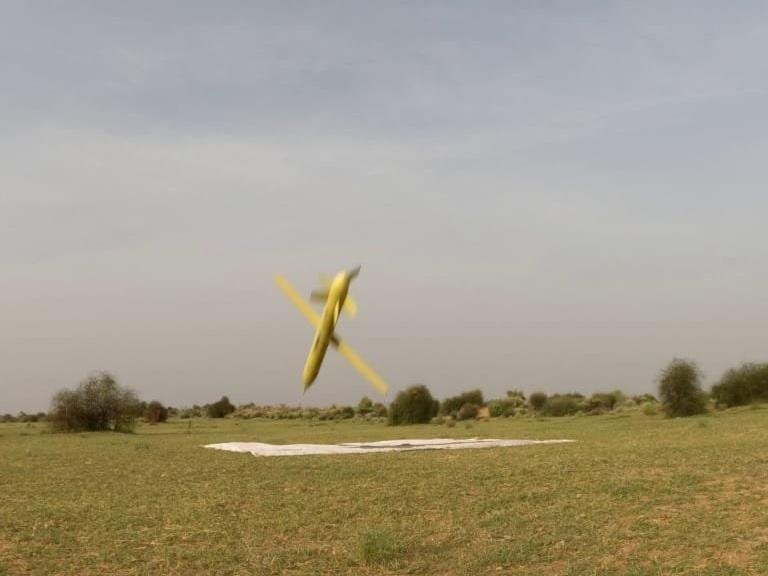
The Indian Air Force (IAF) has successfully conducted a drop trial of Khagantak-243, an indigenously designed and developed Long Range Glide Bomb (LRGB).
About Khagantak-243
- Khagantak-243 is a 300-kg-class precision-guided aerial weapon designed to engage targets from a considerable distance.
- It has been jointly developed by Bharat Electronics Limited (BEL) and JSR Dynamics.
Key Features
- Air-launched: The weapon is released from a fighter aircraft and uses aerodynamic lift to glide towards its target.
- Range: It can cover 144–180 km when released from an altitude of 12 km at Mach 0.8.
- Design: It has a cylindrical body, swivel-type mid-body glide wings and five aft control surfaces.
- Stand-off capability: It allows the launching aircraft to release the weapon without flying directly over the target area.
FAQs
Q1. What does LRGB stand for?
LRGB stands for Long Range Glide Bomb, an air-launched weapon that uses aerodynamic lift to extend its flight after release.
Q2. How is a glide bomb different from a free-fall bomb?
A free-fall bomb primarily descends under gravity, whereas a glide bomb uses wings and control surfaces to extend and control its flight path.
Q3. What is stand-off warfare?
Stand-off warfare involves attacking a target from a distance, allowing the launching platform to remain away from the immediate target area.
Q4. Why are control surfaces important in a glide bomb?
They help control the weapon’s flight direction and trajectory after release, supporting accurate movement towards the intended target.
Q5. What is the significance of indigenous development in this case?
It strengthens domestic expertise in weapon design, guidance, electronics and aerospace technologies, while supporting India’s defence manufacturing capabilities.