Context
On World Iodine Deficiency Day 2026, the Ministry of Health and Family Welfare advised people to choose iodised salt and consume salt in moderation, highlighting iodine’s role in thyroid function, brain development and growth.
Properties and Occurrence
- Iodine is a chemical element with atomic number 53 and belongs to Group 17 (halogens) of the periodic table.
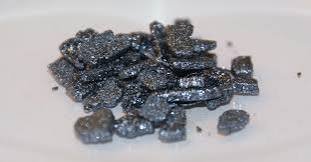
- It is a dark, lustrous crystalline non-metal that forms a characteristic violet vapour when heated.
- In nature, iodine occurs mainly as iodide and iodate compounds, rather than in its free elemental form.
- It occurs naturally in seawater, soils, brines and certain mineral deposits, and enters the food chain through marine and other iodine-rich foods.
Biological Role and Deficiency
- Thyroid hormones: Iodine is required to produce thyroxine (T4) and triiodothyronine (T3), which regulate metabolism and several biochemical processes.
- Brain development: Thyroid hormones are essential for normal brain and nervous-system development, making adequate iodine especially important during pregnancy and infancy.
- Goitre and hypothyroidism: Inadequate iodine reduces thyroid-hormone production; prolonged deficiency can cause goitre and hypothyroidism.
- Developmental impact: Severe deficiency during pregnancy and early childhood can cause irreversible impairment of growth and cognitive development.
- Excess also matters: Very high iodine intake can disturb thyroid function in susceptible individuals, so adequate—not excessive—intake is important.
Public-Health and Other Uses
- Salt iodisation: WHO recommends iodisation of food-grade salt as a safe and effective strategy to prevent iodine-deficiency disorders.
- Salt moderation: Adequate iodine intake does not require higher salt consumption; iodised salt should still be used in moderation.
- Medical use: Iodine compounds are used in antiseptics, while radioactive iodine is used in diagnosis and treatment of certain thyroid disorders.
- Industrial use: Iodine compounds also have applications in pharmaceuticals, chemicals and specialised industrial processes.
FAQs
Q1. Which group of the periodic table contains iodine?
Group 17, the halogen group.
Q2. What is iodine’s atomic number?
53.
Q3. Which thyroid hormones contain iodine?
Thyroxine (T4) and triiodothyronine (T3).
Q4. What is a common visible sign of iodine deficiency?
Goitre, or enlargement of the thyroid gland.
Q5. What is the main public-health strategy against iodine deficiency?
Iodisation of food-grade salt.