Context
India has largely avoided a major fertiliser shortage during the 2026 kharif season despite disruptions in global energy and fertiliser supply chains following the West Asia conflict. While urea availability remains relatively comfortable, DAP (Di-Ammonium Phosphate) and other phosphate-based fertilisers face greater cost and supply pressures.
Urea Supply and Government Response
- India’s urea production fell to 17.5 lakh tonnes (lt) in March 2026, from 24.7 lt a year earlier, mainly because of disruptions in LNG (Liquefied Natural Gas) supplies. Natural gas is the main feedstock used to manufacture urea.
- The government responded by diversifying LNG procurement, including supplies from the US, Oman, Nigeria, Angola, Indonesia, Trinidad and Norway, as West Asian supplies were disrupted.
- Domestic urea production recovered to 21 lt in April, 25.2 lt in May and 25.4 lt in June. Output during April–June 2026 reached 71.5 lt, about 5.4% higher than the corresponding period a year earlier.
- Urea imports during April–June 2026 rose to 25.1 lt, compared with 8.4 lt during the same period in 2025.
- The government has absorbed higher import costs to protect farmers from the full impact of global price increases.
Pressure on Phosphate Fertilisers
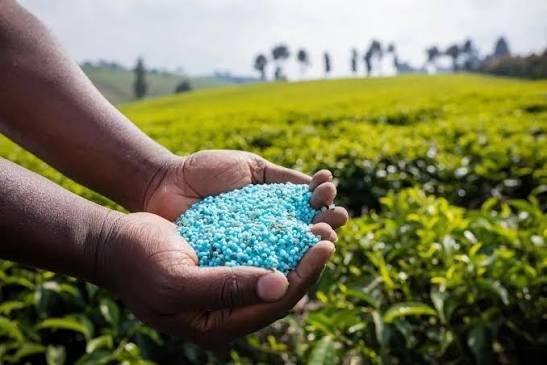
- DAP (Di-Ammonium Phosphate) is a widely used fertiliser supplying nitrogen and phosphorus. SSP (Single Super Phosphate) mainly supplies phosphorus and sulphur, while complex fertilisers contain two or more major nutrients such as nitrogen, phosphorus, potassium and sulphur.
- These fertilisers face greater pressure because India depends substantially on imported phosphoric acid, ammonia, sulphur and other raw materials.
- Phosphoric acid prices have risen sharply, increasing the cost of manufacturing DAP and related fertilisers.
- Sulphur is another critical input because it is used to produce sulphuric acid, which is required in the processing of phosphate rock into phosphoric acid.
- An April 2026 tender secured 13.5 lt of DAP at about $930–935 per tonne, significantly above the previous year’s level.
Demand-Side Relief
- Lower fertiliser demand has also helped contain supply pressure during the kharif season.
- June–July rainfall was reported to be below normal, while the kharif sowing area declined from the previous year.
- Lower sowing and fertiliser offtake reduced the immediate demand-supply gap.
- This provided additional relief alongside higher imports and government intervention.
Challenges and Way Forward
| Challenges | Way Forward | ||
| Dependence on imported phosphoric acid, ammonia and sulphur exposes fertiliser production to global shocks. | Diversify import sources and establish reliable long-term supply arrangements for critical inputs. | ||
| High input prices are increasing the cost of DAP and other phosphate fertilisers. | Strengthen domestic manufacturing capacity and secure timely imports | ||
| Geopolitical tensions can disrupt energy, shipping and fertiliser supply chains | Maintain diversified procurement channels and adequate stocks before peak agricultural seasons. | ||
| Higher import costs can increase the fertiliser subsidy burden. |
|
||
| Fertiliser requirements may rise during the rabi season. | Undertake advance demand assessment and build adequate pre-season inventories |
Conclusion
India’s diversified sourcing, recovery in urea production and timely imports have strengthened fertiliser availability during the current disruption. However, DAP and other phosphate-based fertilisers remain vulnerable to global raw-material and supply-chain shocks, making diversified sourcing and stronger domestic capacity essential for long-term fertiliser security.
Frequently Asked Questions
Q1. What is Judicial Review?
Ans: Judicial Review is the power of the Supreme Court and High Courts to examine the constitutional validity of laws and executive actions and invalidate measures that violate the Constitution.
Q2. Is Judicial Review expressly mentioned in the Indian Constitution?
Ans: No. The expression is not expressly mentioned, but the power is derived from several provisions, including Articles 13, 32 and 226.
Q3. Which case established the Basic Structure Doctrine?
Ans: Kesavananda Bharati v. State of Kerala (1973) established the Basic Structure Doctrine and limited Parliament’s power to alter the Constitution’s basic structure.
Q4. On what grounds can Judicial Review be exercised?
Ans: A measure may be reviewed if it violates Fundamental Rights, exceeds constitutional authority, or conflicts with another constitutional provision.
Q5. Which constitutional provisions are important for Judicial Review?
Ans: Important provisions include Articles 13, 32, 226, 245, 246, 251, 254 and 372, along with the Supreme Court’s jurisdiction under Articles 131–136.
Q6. How does Judicial Review in India differ from that in the United States?
Ans: India follows Procedure Established by Law, while the United States follows Due Process of Law. Judicial Review is therefore comparatively narrower in India.