Context
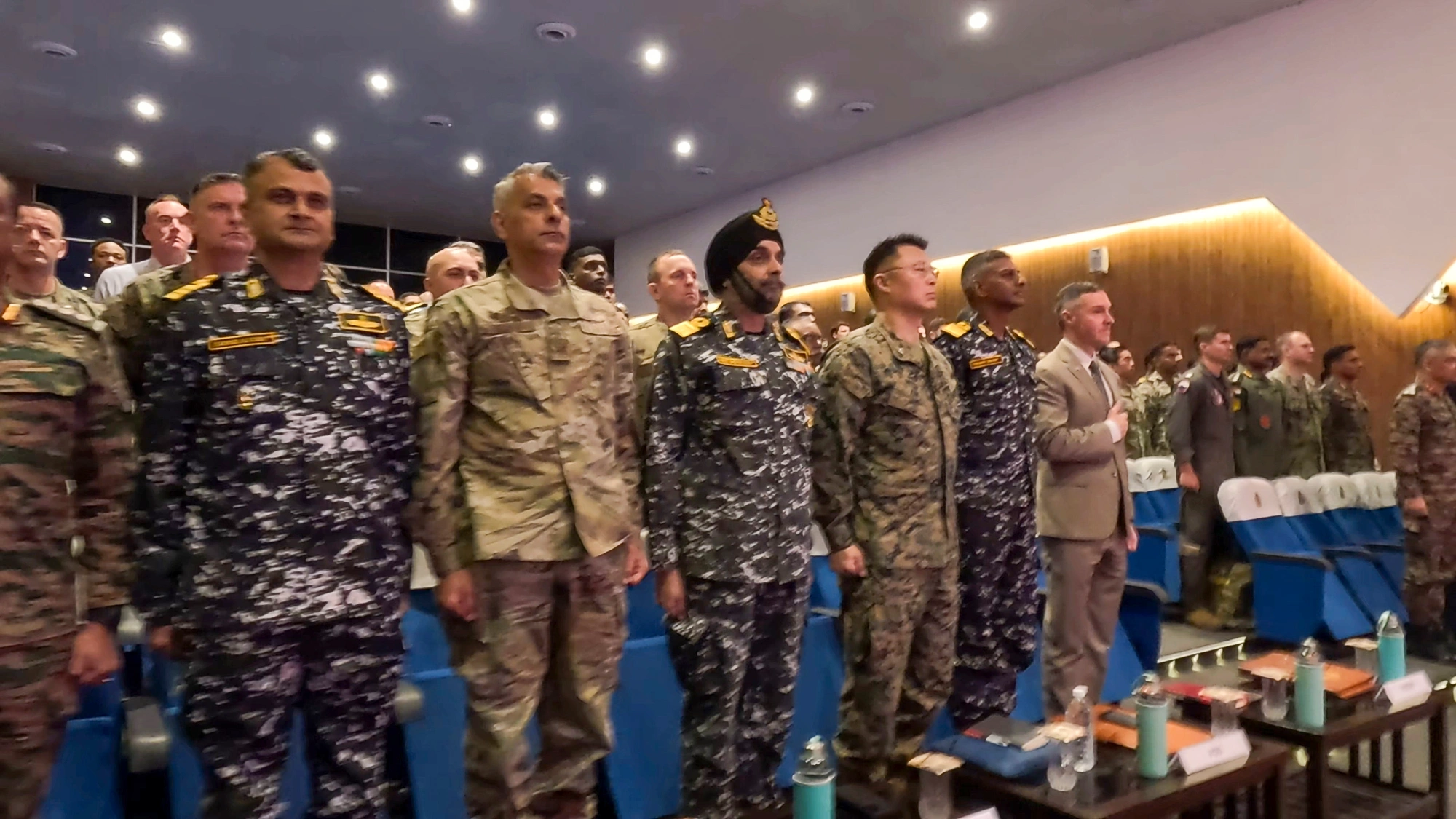
The 5th edition of Exercise Tiger Triumph, the India–United States bilateral Tri-Service Humanitarian Assistance and Disaster Relief (HADR) exercise, commenced on 2 November 2026 at the Maritime Warfare Centre, Visakhapatnam.
This edition is being conducted as a Tabletop Exercise (TTX) to improve joint planning, coordination and cooperation between the armed forces of both countries during large-scale disaster relief operations.
About Exercise Tiger Triumph
- It is a bilateral tri-service exercise between India and the United States, involving their Army, Navy and Air Force.
- First Edition: The exercise was first conducted in 2019.
- Objective: To improve interoperability and coordination between the two countries during Humanitarian Assistance and Disaster Relief operations.
- Focus Areas: Joint planning, disaster response, amphibious operations, medical assistance and coordination during humanitarian emergencies.
- The fifth edition is being conducted as a Tabletop Exercise at Visakhapatnam.
Key Features of Tiger Triumph 2026
- Venue: Maritime Warfare Centre, Visakhapatnam, Andhra Pradesh.
- It is a Tabletop Exercise, involving discussion-based planning and simulation rather than actual deployment of troops and equipment.
- Indian Participation: Includes personnel from the Indian Army, Navy and Air Force, along with Special Forces personnel from all three services.
- NDRF Participation: A team from the National Disaster Response Force (NDRF) is participating for the first time.
- US Participation: Includes specialists from the US Army, Navy, Air Force and Marine Corps, along with experts in space, cyber, medical services and Explosive Ordnance Disposal.
- Multi-domain Coordination: The exercise aims to improve planning for Combined Joint All-Domain Operations during large-scale HADR missions.
Tabletop Exercise (TTX)
- A Tabletop Exercise is a discussion-based simulation in which participants discuss and respond to a hypothetical emergency or disaster scenario.
- It helps test plans, clarify responsibilities, identify coordination gaps and improve decision-making.
- Unlike field exercises, it does not require the actual movement or deployment of troops, ships and aircraft.
Significance for India
- Strengthening Defence Cooperation: Deepens military cooperation and strategic partnership between India and the United States.
- Improving Disaster Response: Enhances the ability of both countries to coordinate relief operations during cyclones, earthquakes, floods and other disasters.
- Tri-Service Coordination: Improves cooperation among the Army, Navy and Air Force during complex humanitarian missions.
- Civil-Military Cooperation: NDRF participation strengthens coordination between the armed forces and civilian disaster-response agencies.
- Multi-domain Preparedness: Encourages the integration of land, maritime, air, space and cyber capabilities during emergency operations.
- Regional Stability: Strengthens the capacity of both countries to contribute to humanitarian assistance and disaster relief in the Indo-Pacific region.
FAQs
Q1. What is Exercise Tiger Triumph?
Ans: It is a bilateral Tri-Service Humanitarian Assistance and Disaster Relief exercise between India and the United States.
Q2. Which countries participate in the exercise?
Ans: India and the United States.
Q3. Which services participate in Tiger Triumph?
Ans: The Army, Navy and Air Force of both countries.
Q4. Where was the 5th edition of Tiger Triumph held?
Ans: At the Maritime Warfare Centre, Visakhapatnam, Andhra Pradesh.
Q5. What is the main focus of the 2026 edition?
Ans: Improving joint planning, coordination and interoperability for large-scale humanitarian assistance and disaster relief operations.
Q6. Which Indian organisation participated for the first time in 2026?
Ans: The National Disaster Response Force (NDRF).
Q7. What is a Tabletop Exercise?
Ans: A discussion-based simulation in which participants practise responding to hypothetical emergency situations without actual deployment of forces.