Context
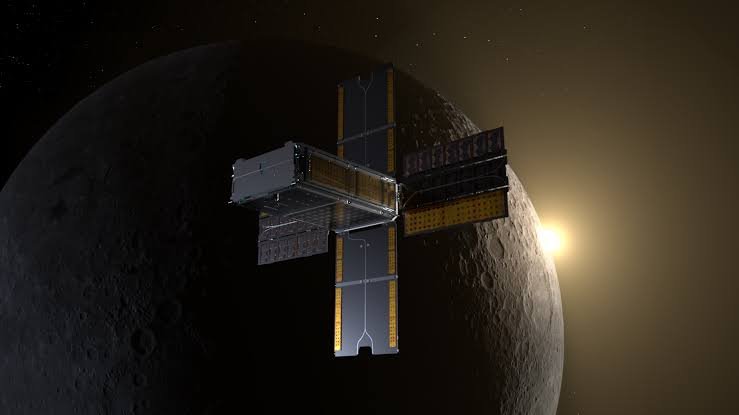
NASA’s BioSentinel probe, which travelled past the Moon carrying yeast cells, was designed to study the effects of deep-space radiation on living organisms. However, the yeast cells failed to grow during the experiments, likely because they had lost viability before launch. The spacecraft’s radiation detector continued collecting valuable data.
BioSentinel Mission
- BioSentinel is a six-unit (6U) CubeSat developed by NASA’s Ames Research Center, California, USA.
- It was launched on 16 November 2022 aboard NASA’s Artemis I mission.
- It was the first biological CubeSat designed to conduct a biological experiment beyond Low Earth Orbit (LEO).
- To study the effects of deep-space radiation on living organisms and improve understanding of radiation-related risks for future human space exploration.
Objectives of the Mission
- Study Space Radiation: Characterise the deep-space radiation environment beyond Earth’s protective magnetic field.
- Biological Research: Examine how living organisms respond to prolonged exposure to space radiation.
- Human Space Exploration: Generate scientific information to understand radiation-related health risks during future Moon and Mars missions.
- Technology Development: Demonstrate the use of compact biological instruments for conducting experiments in deep space.
Major Components of BioSentinel
BioSentinel consists of two major sections:
- Spacecraft Bus: Contains solar panels, batteries, a micropropulsion system, navigation equipment, antennas and communication systems.
- Scientific Payload: Contains two major instruments:
- BioSensor Instrument: A miniature laboratory using microfluidic technology to study the biological response of yeast cells to radiation.
- Radiation Detector: Measures the type and intensity of radiation encountered by the spacecraft.
Role of Yeast in the Mission
- BioSentinel carried a budding yeast called Saccharomyces cerevisiae.
- Yeast is used because it is a well-studied model organism whose cellular mechanisms, particularly DNA damage and repair processes, provide useful insights into biological responses to radiation.
- The experiment included a normal yeast strain and a genetically modified strain with impaired DNA-repair capability.
- Comparing the two strains was intended to help researchers understand how radiation-induced DNA damage affects cell growth and survival.
Factors inhibiting yeast proliferation
- Failed activation: NASA successfully operated the BioSensor instrument but did not observe yeast-cell growth during four experiments.
- Probable reason: Investigations indicated that the yeast cells had likely lost viability during prolonged storage before the spacecraft’s launch.
- NASA concluded that deep-space radiation was not responsible for the failure of the yeast cells to grow.
- Despite the unsuccessful biological experiment, the onboard radiation detector continued collecting data about the deep-space radiation environment.
Significance of the BioSentinel Mission
- Human Space Exploration: Helps understand radiation-related risks for astronauts travelling beyond Earth’s protective magnetic environment.
- DNA Damage Research: Provides a research framework to study radiation-induced DNA damage and cellular repair mechanisms.
- Moon and Mars Missions: Scientific insights can support the planning of long-duration human missions to the Moon and Mars.
- Space Biology: Demonstrates the potential of compact biological laboratories for conducting experiments beyond Earth.
- Radiation Monitoring: Its radiation detector provides valuable information about the type and intensity of particles encountered in deep space.
Conclusion
The BioSentinel mission highlights the importance of space biology in preparing for long-duration human space exploration. Although its yeast experiment did not produce the intended biological observations, its continuing radiation measurements contribute to understanding the space environment and associated risks for future astronauts.
FAQs
Q1. What is the objective of the BioSentinel Mission?
Ans: To study the effects of deep-space radiation on living organisms and understand biological risks associated with long-duration space exploration.
Q2. Which organisation developed BioSentinel?
Ans: NASA’s Ames Research Center, California, USA.
Q3. What is a CubeSat?
Ans: A miniaturised satellite built using standardised units. One CubeSat unit (1U) measures approximately 10 × 10 × 10 centimetres.
Q4. Why was yeast selected for the mission?
Ans: Yeast is a well-studied model organism that helps researchers investigate cellular responses to radiation-induced DNA damage.
Q5. Why did the yeast cells fail to grow?
Ans: They likely lost viability during prolonged storage before launch, rather than being damaged by deep-space radiation.
Q6. What is the role of the radiation detector?
Ans: It measures the type and intensity of radiation encountered by the spacecraft