Context
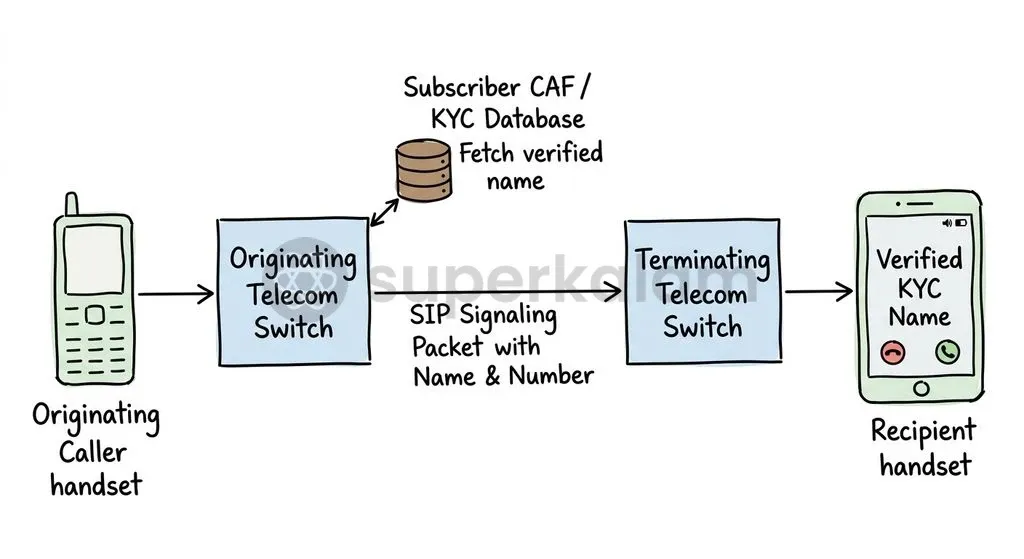
From 1 November 2026, telecom operators must introduce Calling Name Presentation (CNAP) on 4G and higher mobile networks, allowing users to see the caller’s telecom-registered name along with the phone number for unsaved domestic calls.
Network-Based Caller Identification
- CNAP is a telecom-network service that displays the caller’s name using the Subscriber Data Record (SDR) maintained by the originating operator.
- Unlike crowd-sourced caller-ID applications, CNAP relies on operator-held subscriber information.
- For saved contacts, the user’s stored contact name takes precedence; for unsaved domestic calls, the telecom-recorded name is displayed.
- Unsaved international calls are identified as “International Call”.
- The initial rollout covers 4G and higher mobile networks, while 2G, 3G and landline implementation will be considered separately.
Privacy and Identity Safeguards
- CNAP follows a security-by-design approach, with caller-name information not retained after completion of the call.
- Subscribers using Calling Line Identification Restriction (CLIR) are exempt from name display.
- Telecom operators must maintain secure subscriber databases, name-number mapping and grievance-redressal mechanisms.
- Business and bulk users may display a preferred name backed by a registered trademark or GST-registered trade name.
- Operators must verify supporting documents before assigning such preferred identities.
Consumer Protection and Regulatory Significance
- Fraud deterrence: Network-based identification can make impersonation and some “digital arrest” scams harder to execute.
- Consumer empowerment: Users receive more information before deciding whether to answer an unfamiliar call.
- Business transparency: Verified business identities can help distinguish legitimate organisations from suspicious callers.
- Systemic shift: Caller identification moves from dependence on third-party apps towards telecom-network-level infrastructure.
- Key limitation: CNAP improves identification but does not authenticate the caller or eliminate spoofing and fraud risks.
FAQs
Q1. What is CNAP?
CNAP is a network-based service that displays a caller’s telecom-registered name along with the phone number.
Q2. When will CNAP be implemented?
It is scheduled for rollout from 1 November 2026 on 4G and higher mobile networks.
Q3. What happens when an unsaved domestic number calls?
The caller name recorded in the originating operator’s Subscriber Data Record is displayed.
Q4. What privacy safeguard applies under CNAP?
Caller-name information is not retained after the call, and CLIR users are exempt from name display.
Q5. Can businesses display a preferred name?
Yes, if it is backed by a registered trademark or GST-registered trade name and verified by the telecom operator.