Context
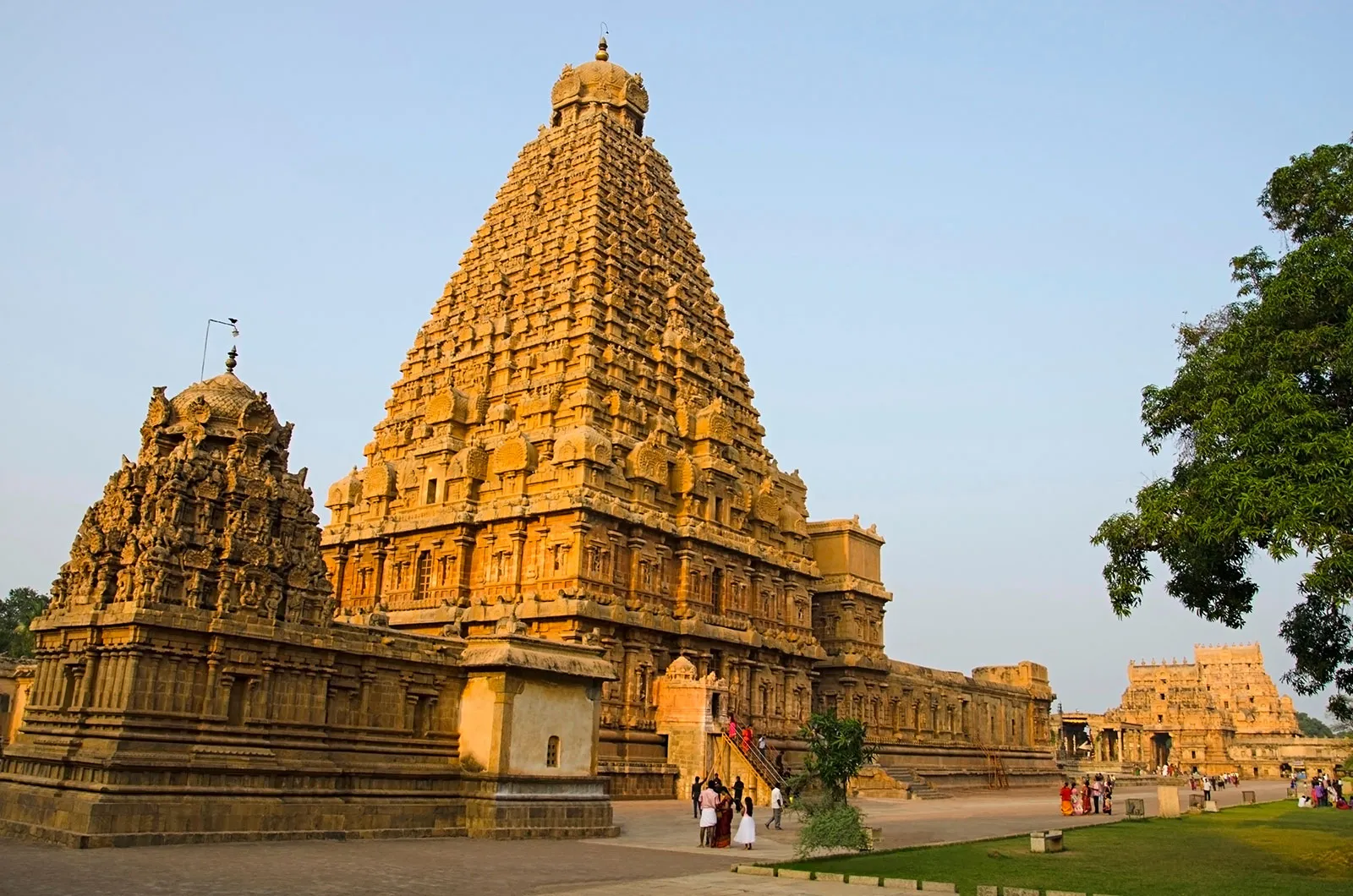
The Archaeological Survey of India (ASI) has begun conservation work on the upper rampart of the Brihadisvara Temple at Thanjavur, bringing renewed attention to one of the finest surviving monuments of Chola architecture.
Historical and Cultural Background
- Brihadisvara Temple, also known historically as Rajarajesvaram and popularly as Periya Kovil, is a major Shiva temple located at Thanjavur in Tamil Nadu.
- It was built under Chola emperor Rajaraja I, with construction beginning around 1003–04 CE and the temple consecrated in 1009–10 CE.
- The temple reflects the political power, religious patronage and artistic achievements of the imperial Cholas.
- Inscriptions associate the temple with Dakshina Meru, symbolising the cosmic mountain and the sacred abode of Shiva.
Architectural Features
- Brihadisvara is an outstanding example of the Dravida style of temple architecture, characterised by a monumental sanctum, pyramidal vimana, gateways and enclosed courtyards.
- The 13-tiered vimana rises to about 60 metres and dominates the temple complex.
- Unlike many later South Indian temple complexes, the vimana remains the dominant vertical element at Brihadisvara.
- The temple complex is built mainly from granite blocks and contains rich sculpture, inscriptions and mural paintings.
- Its walls contain carvings of 81 of the 108 karanas associated with Bharatanatyam, highlighting the close link between temple architecture and performing arts.
Great Living Chola Temples
- Brihadisvara Temple at Thanjavur forms part of the UNESCO World Heritage Site “Great Living Chola Temples.”
- The other two monuments are the Brihadisvara Temple at Gangaikondacholapuram, built by Rajendra I, and the Airavatesvara Temple at Darasuram, built by Rajaraja II.
- Together, they illustrate the development of Chola architecture, sculpture, painting and bronze traditions.
- These monuments remain living temples, where religious worship and ritual traditions continue even after more than a millennium.
Significance of the Temple
- Architectural milestone: It represents the mature monumental phase of Chola-Dravida architecture.
- Imperial symbolism: Its scale and design reflected the political and cultural authority of the Chola state.
- Cultural synthesis: The temple integrates religion, sculpture, painting, inscriptions and dance traditions within a single sacred complex.
- Living heritage: Continued worship and conservation make it both an archaeological monument and an active cultural institution.
FAQs
Q1. Where is Brihadisvara Temple located?
It is located in Thanjavur, Tamil Nadu.
Q2. Who built Brihadisvara Temple?
It was built under the patronage of Chola emperor Rajaraja I.
Q3. Which architectural style does it represent?
It is an outstanding example of Dravida temple architecture.
Q4. What is distinctive about its vimana?
Its 13-tiered vimana rises to about 60 metres and remains the dominant vertical element of the temple complex.
Q5. Brihadisvara Temple is part of which UNESCO World Heritage Site?
It is part of the Great Living Chola Temples.