Context
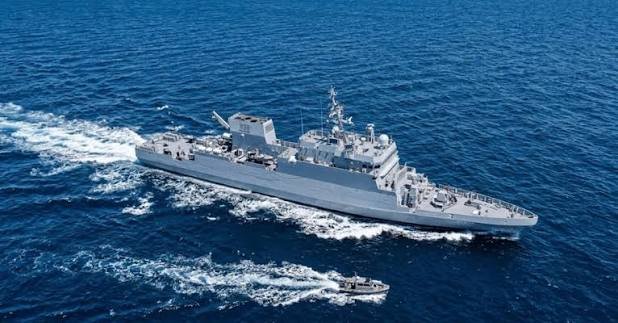
On 5 November 2026, Garden Reach Shipbuilders & Engineers (GRSE) delivered INS Amini, the fifth of eight Anti-Submarine Warfare Shallow Water Craft (ASW-SWC), to the Indian Navy at Kattupalli, Tamil Nadu.
Project Background
- Builder: Constructed by GRSE (Garden Reach Shipbuilders & Engineers), Kolkata, a Navratna Defence PSU (Public Sector Undertaking) under the Ministry of Defence (delivered to the Indian Navy on 5 November 2026).
- Contract Details: Signed on 29 April 2019 for 16 ASW-SWC (Anti-Submarine Warfare Shallow Water Craft) vessels — 8 built by GRSE and 8 built by CSL (Cochin Shipyard Limited).
- Ship Classes: Categorised into the Arnala class (built by GRSE) and the Mahe class (built by CSL).
- Purpose: Designed to replace the Indian Navy’s ageing Abhay-class anti-submarine corvettes.
- Lead Ship: INS Arnala, the first ship of the class, was commissioned on 18 June 2025.
- Naming Legacy: Named after Amini Island in Lakshadweep, reviving the name of an earlier naval corvette decommissioned in 2002.
- Indigenisation: Built with over 80% indigenous content, directly advancing Aatmanirbhar Bharat (Self-Reliant India) in defence manufacturing.
Key Features
- Dimensions: Measures about 77.6 metres in length, with a 900-tonne displacement and a shallow 2.7-metre draught (depth below waterline), enabling operations in shallow coastal waters.
- Propulsion: Powered by diesel engines with waterjet propulsion, ensuring high speed and rapid manoeuvrability.
- Speed and Range: Achieves a maximum speed of 25 knots and an endurance (range) of around 1,800 nautical miles.
- Weapons Suite: Armed with lightweight torpedoes, anti-submarine rockets, torpedo decoys, and a 30 mm naval gun.
- Sensor & Combat Tech: Fitted with an advanced CMS (Combat Management System) and indigenous sonars (developed by DRDO — Defence Research and Development Organisation) for underwater target detection and engagement.
- Operational Roles: Built for ASW (Anti-Submarine Warfare), underwater surveillance, coastal patrol, mine-laying, and coordinated operations with naval aircraft.
Strategic Significance
- Coastal & Littoral Security: Strengthens India’s ability to detect and neutralise enemy submarines in shallow coastal (littoral) waters near ports and sea lanes.
- Naval Fleet Modernisation: Replaces older Soviet-origin platforms with modern, stealthier indigenous warships.
- Defence Self-Reliance: Boosts domestic shipbuilding ecosystems, MSME (Micro, Small and Medium Enterprises) participation, and maritime self-reliance.
- Historical Milestone: Continues GRSE’s legacy, which also built INS Ajay (1961) — India’s first indigenously built warship after Independence.
FAQs
Q1. Which shipyard built INS Amini, and what is its status?
Ans. GRSE, Kolkata, a Navratna defence PSU under the Ministry of Defence.
Q2. What is the primary role of INS Amini?
Ans. Anti-submarine warfare and underwater surveillance in coastal waters.
Q3. Why are waterjets significant for this class?
Ans. Provide high manoeuvrability in shallow waters, making them the Navy’s largest waterjet-propelled warships.
Q4. What is the Mahe class?
Ans. A CSL-built ASW-SWC class, developed alongside GRSE’s Arnala class.