Context
Elections were recently held for 28 Legislative Council (MLC) seats in different parts of the country. These elections are conducted through ballot papers and not EVMs, which has brought the two voting methods back into public discussion.
Background
- A ballot paper is a printed sheet that carries the names and symbols of candidates, and the voter marks it with a stamp next to their choice before dropping it into a sealed ballot box.
- India used ballot papers from its first general election in 1951-52, and this method continued for several decades until electronic machines slowly replaced it.
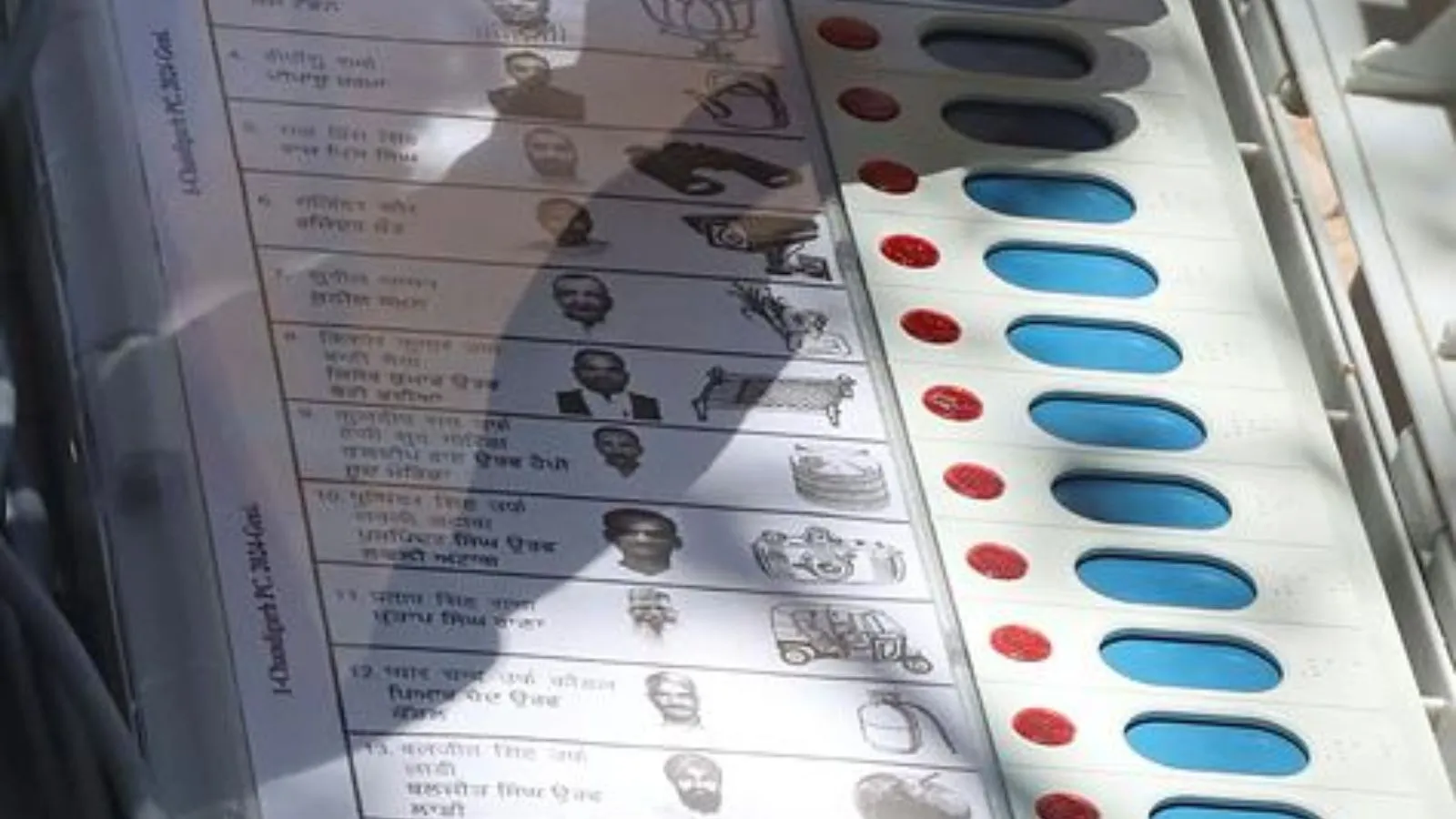
- Arrival of EVMs and VVPAT: Electronic Voting Machines (EVMs) were first tried in Kerala in 1982 and were used across the whole country from 2004, while VVPAT, a machine that prints a paper slip so the voter can check their choice, was added in stages from 2013.
- Some political parties and citizens still doubt whether EVMs are fully safe, and because of this the demand to return to ballot papers keeps coming back into public debate.However, the Supreme Court rejected the demand for a return to ballot papers and also refused the demand to match every VVPAT slip with EVM votes.
Arguments in Favour of Ballot Papers
- Visible and Transparent: A ballot paper lets the voter see and hold their own vote, which makes the process feel open and transparent in a way that a machine cannot easily match.
- Simple to Understand: The method is simple enough for any citizen to understand without technical knowledge, so people do not have to depend on experts to trust the result.
- Physical Proof: Every vote exists as a physical paper that can be counted again by hand if there is a dispute, which gives a clear and direct proof of the outcome.
- No Fear of Hacking: Since there is no chip, software or wireless part involved, the fear of hacking or secret programming does not arise in this system.
- Public Trust in Counting: Candidates and their agents can watch the counting with their own eyes, and this public presence builds confidence in the final result.
- Global Examples: Some other countries have also moved away from electronic voting, for example Germany, where the top court said in 2009 that citizens must be able to check the main steps of an election without special technical skills.
Challenges of Ballot Papers
- Booth Capturing: In the past, armed groups could capture polling booths and stuff the ballot boxes with fake votes, which cheated honest voters and weakened trust in elections.
- Spoiled Votes: A large number of votes were cancelled because voters marked the paper wrongly or the ink smudged over the symbol, so many genuine choices were never counted.
- Slow Results: Counting took several days, which delayed results and increased tension and the chances of disputes among supporters.
- High Cost: Printing, storing, guarding and transporting lakhs of ballot papers and boxes for every election was very costly and needed a huge number of staff.
- Huge Scale: India has about 96 crore voters, which makes a paper-based process extremely hard to manage, and the Supreme Court has also pointed to India’s large population and the logistics problems that come with paper ballots.
- Human Error and Cheating: Mistakes in counting, mixing of papers and deliberate cheating by dishonest staff were possible because so much depended on human handling.
- Difficulty for Some Voters: Illiterate and disabled voters often found it difficult to mark the paper correctly without help, which affected the secrecy and fairness of their vote.
- Environmental Impact: Millions of sheets were used in every election, which meant a large amount of paper waste and a negative effect on the environment.
Measures to balance the approach
- Hybrid System: The most practical solution is to use both systems together, which means keeping EVMs for speed while increasing the number of VVPAT slips that are matched with machine results so that the paper record is used more often.
- Strong Security: Polling should be protected with sealed boxes, CCTV cameras and central security forces in sensitive areas so that capture of booths and tampering are prevented.
- Better Ballot Design: Ballot papers should have a clear layout with bold symbols and enough space around each name, so that voters can mark them easily and fewer votes are cancelled.
- Secure Paper: Special paper with barcodes and security marks can be used so that fake or duplicate ballots become difficult to create.
- Fast and Accurate Counting: Counting should be done by trained staff, with the help of scanners where needed, and the results should be checked by hand to keep both speed and accuracy.
- Open Process: Candidates and their agents should be allowed to watch every step of the process, from opening the boxes to the final total, so that the system stays open and accountable.
- Safeguards in the Present System: Safeguards for the present system should also be strengthened, and the Supreme Court has ordered that sealed Symbol Loading Units be stored safely, which adds an extra layer of protection.
- Voter Awareness: Voter awareness campaigns should explain how to vote and how the result is checked, so that public trust is built on clear understanding and not on rumours.
Ballot Paper vs EVM
| Point | Ballot Paper | EVM |
| Counting time | Takes many days because every paper is counted by hand | Takes only a few hours because votes are stored in the machine |
| Spoiled votes | Many votes are cancelled due to wrong marking | Almost none, since the voter presses a button |
| Booth capturing | Easy to misuse by stuffing boxes | Difficult, because each vote is recorded slowly |
| Cost | High in every election due to printing and transport | High at the start, but machines can be reused for years |
| Ease of understanding | Very easy, as the vote is visible | Needs trust in the machine and the process |
| Paper proof | The ballot itself is the proof | The VVPAT slip works as the proof |
| Paper use | Very high | Very low |
| Help for disabled voters | Limited, as marking needs sight and steady hands | Better, with symbols and Braille |
| Main risk | Stuffing, swapping and miscounting by people | Fear of hacking, which has not been proven in court |
Conclusion
As technology advances, India may adopt stronger and more verifiable voting tools. Yet the core principle will stay the same: a free, fair and transparent election that every citizen can understand, check and trust.
FAQs
Q1. What is a ballot paper?
Ans: It is a printed sheet with the names and symbols of candidates. The voter stamps next to their choice and drops it into a sealed ballot box.
Q2. Why is the ballot paper in the news now?
Ans:Elections for 28 Legislative Council (MLC) seats were held recently, and they used ballot papers instead of EVMs. This brought the debate on both methods back.
Q3. Since when has India used ballot papers?
Ans: From the first general election in 1951-52. They were used for several decades until EVMs slowly replaced them.
Q4. When were EVMs and VVPAT introduced?
Ans: EVMs were first tried in Kerala in 1982 and used across the country from 2004. VVPAT was added in stages from 2013. It prints a paper slip so the voter can check their choice.
Q5. Have other countries moved away from electronic voting?
Ans: Yes, for example Germany. In 2009 its top court said citizens must be able to check the main steps of an election without special technical skills.
Q6. What did the Supreme Court say about returning to ballot papers?
Ans: It rejected the demand to return to ballot papers. It also refused the demand to match every VVPAT slip with EVM votes.