Context
In September 2026, the Supreme Court accepted safeguards for specified next-generation joined green crackers, while barium-related issues and their sale and use in Delhi-NCR remained under consideration.
What are Green Crackers?
- Green crackers are specially formulated fireworks designed to reduce particulate emissions compared with conventional crackers.
- They were developed by the Council of Scientific and Industrial Research–National Environmental Engineering Research Institute (CSIR-NEERI).
- Depending on the formulation and testing conditions, some green crackers have been reported to reduce particulate emissions by around 30% or more. However, they are less polluting, not pollution-free.
- Major Types of Green Crackers
| Type | Key Feature |
| SWAS – Safe Water Releaser | Designed to reduce particulate emissions through its formulation. |
| STAR – Safe Thermite Cracker | Developed with a modified chemical composition to reduce emissions. |
| SAFAL – Safe Minimal Aluminium | Uses a reduced quantity of aluminium. |
Why are conventional firecrackers a concern?
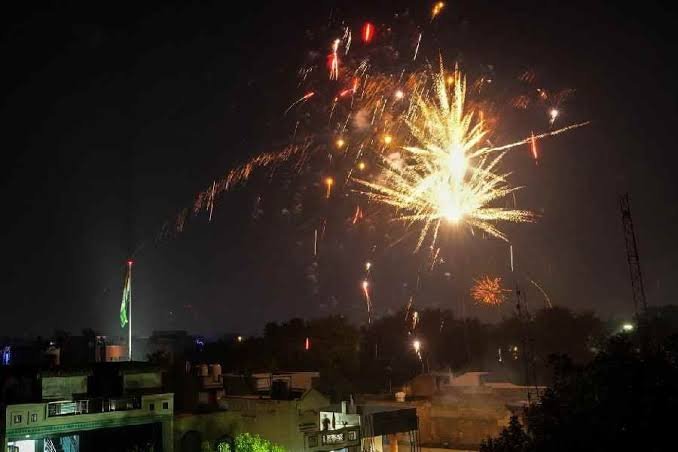
- Air Pollution: Burning releases particulate matter, carbon monoxide, sulphur dioxide and nitrogen oxides, worsening smog, particularly during winter in North India.
- Health Risks: Pollutants can aggravate asthma and other respiratory and cardiovascular conditions. Children, older people and those with existing illnesses are especially vulnerable.
- Noise Pollution and Injuries: Loud explosions disturb sleep and cause distress to noise-sensitive people and animals, while unsafe handling can cause burns and eye injuries.
- Waste Generation: Spent casings, paper and chemical residues contribute to local waste and environmental contamination.
Why is a complete ban difficult?
- Employment: Around five lakh people depend directly or indirectly on the fireworks industry.
- Economic Significance: Annual sales are estimated at approximately ₹1,000 crore, although estimates vary depending on the activities included.
- Regional Dependence: Sivakasi in Tamil Nadu is India’s principal fireworks manufacturing hub, accounting for a major share of domestic production.
- Small Businesses and Informal Workers: Manufacturers, traders and seasonal sellers may struggle to absorb sudden regulatory changes.
- Risk of Illegal Sales: A blanket ban may encourage the sale of conventional crackers through informal markets if enforcement is weak.
Livelihood concerns require a planned transition towards safer products, but economic dependence cannot justify avoidable harm to public health.
How Has the Legal Framework Evolved?
- 2015–2017: Judicial Intervention: The Supreme Court began examining firecracker-related pollution and health concerns in the Arjun Gopal v. Union of India case.
- 2018: Restrictions on Conventional Crackers: The Court established restrictions on the manufacture and sale of conventional crackers, permitting specified products subject to prescribed conditions. It also prohibited barium salts and addressed noise limits and bursting hours.
- 2021: Compliance Concerns: Cases involving conventional crackers sold as green crackers and fake QR codes highlighted weaknesses in product authentication and enforcement.
- 2025: Temporary Relaxation: The Supreme Court permitted approved green crackers in Delhi-NCR for specified dates and hours, subject to conditions on licensed sales and product authenticity.
- 2026: Next-Generation Crackers: In September 2026, Court accepted proposed safeguards for specified next-generation joined green crackers. However, certain chemical-composition issues and the separate question of their sale and use in Delhi-NCR remained under consideration.
How Can Green Crackers Help?
- Cleaner Formulations: Modified chemical compositions can reduce particulate emissions compared with conventional crackers.
- Reduced Use of Selected Chemicals: Some formulations reduce or replace ingredients such as sulphur, aluminium or other specified substances.
- Regulated Noise and Safety: Prescribed noise limits, product testing and safety requirements can reduce associated risks.
- Livelihood Protection: Cleaner alternatives can help the fireworks industry continue operating under stricter environmental standards.
However, green crackers cannot eliminate pollution. Their effectiveness depends on the formulation, actual compliance, weather conditions and the total number of crackers used.
Challenges and Way Forward
| Challenges | Way Forward |
| Greenwashing and Fake Products: Conventional crackers may be sold under green labels. | Strengthen QR-code verification, product testing, traceability and surprise inspections. |
| Weak Enforcement: Monitoring large markets and informal sellers is difficult. | Improve coordination among pollution control boards, police, licensing authorities and local administrations. |
| Residual Pollution: Green crackers still emit pollutants. | Promote lower-emission products alongside reduced usage and public awareness. |
| Livelihood Concerns: Sudden restrictions can affect workers and small manufacturers. | Provide transition support, skill development and incentives for cleaner production. |
| Limited Public Awareness: Consumers may confuse green crackers with pollution-free products. | Clearly communicate their limitations and encourage responsible celebrations. |
| Inter-State Coordination: Crackers can move across state borders, weakening local restrictions. | Establish consistent standards, coordinated enforcement and effective supply-chain monitoring. |
| Difficulty in Verifying Compliance: Chemical composition & emission claims require reliable testing. | Strengthen independent laboratory testing and accountability for manufacturers and sellers. |
Conclusion
Green crackers represent a middle path between a complete prohibition and unrestricted use of conventional fireworks. However, technological improvements alone cannot solve the problem. A balanced approach should combine scientifically tested products, strict enforcement, reduced consumption, public awareness and livelihood support. The ultimate objective should be to protect public health and the environment while enabling safer and more responsible cultural celebrations.
Frequently Asked Questions (FAQs)
Q1. What are green crackers?
Green crackers are specially formulated fireworks developed by CSIR-NEERI to reduce particulate emissions compared with conventional crackers. However, they are not pollution-free.
Q2. What are the major types of green crackers?
The three major types are SWAS (Safe Water Releaser), STAR (Safe Thermite Cracker) and SAFAL (Safe Minimal Aluminium).
Q3. Why is a complete ban on firecrackers challenging in India?
Around five lakh people depend directly or indirectly on the fireworks industry, particularly in Sivakasi, Tamil Nadu. Sudden restrictions may affect livelihoods and encourage illegal sales.
Q4. How has the Supreme Court regulated firecrackers in India?
In Arjun Gopal v. Union of India, the Supreme Court introduced restrictions on conventional crackers and permitted specified products subject to conditions, including requirements concerning chemical composition, noise and bursting hours.
Q5. What measures are needed to make green crackers effective?
Key measures include QR-code verification, independent product testing, strict enforcement, reduced cracker use, public awareness and transition support for workers and manufacturers.