Context
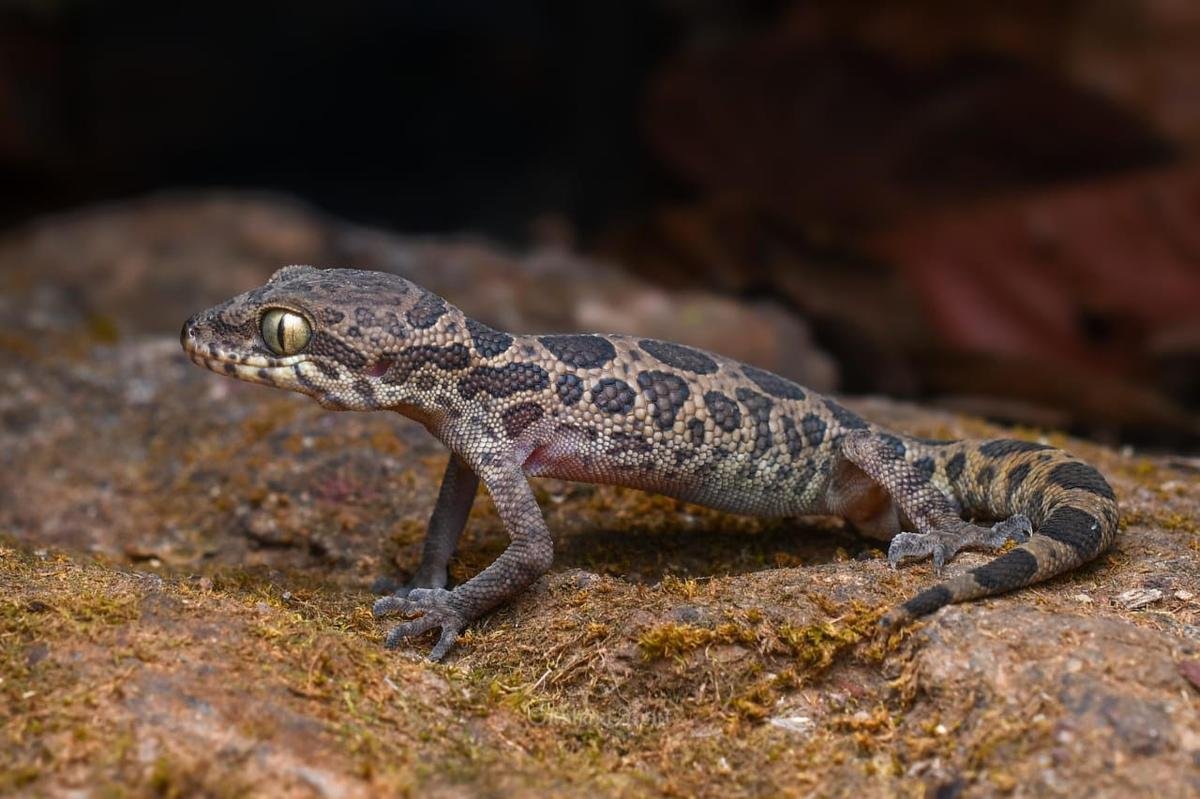
Herpetologists (a zoologist who specializes in the study of reptiles and amphibians) have raised concerns that a bauxite mining project in Odisha threatens the survival of the rare Jeypore ground gecko (Cyrtodactylus jeyporensis).
About Jeypore Ground Gecko
- Type: Reptile endemic to the Eastern Ghats region of India.
- Other Names: Jeypore Indian gecko and Patinghe Indian gecko.
- Scientific Description: First described in 1878 by British naturalist Richard Henry Beddome.
- Appearance: A nocturnal gecko, approximately 3.6 inches long, with a relatively large head and yellow-orange body.
Habitat and Distribution
- Habitat: Semi-evergreen forests.
- Distribution: Restricted to high-elevation forests, at approximately 900–1,400 metres, in the northern Eastern Ghats of southern Odisha and northern Andhra Pradesh.
Threats
- Mining and Quarrying: Habitat disturbance and destruction due to bauxite mining and quarrying.
- Habitat Degradation: Loss of forest cover and fragmentation of its limited habitat.
- Forest Fires: Damage to its forest ecosystem.
- Tourism: Human disturbance in its restricted habitat.
Conservation Status
- IUCN Red List: Endangered (EN).
- CITES: Appendix II.
Frequently Asked Questions (FAQs)
Q1. What is the Jeypore Ground Gecko?
The Jeypore Ground Gecko (Cyrtodactylus jeyporensis) is a rare, nocturnal reptile endemic to the Eastern Ghats of India, also known as the Jeypore Indian gecko.
Q2. Where is the Jeypore Ground Gecko found?
It inhabits semi-evergreen forests at elevations of approximately 900–1,400 metres in southern Odisha and northern Andhra Pradesh.
Q3. What are the major threats to the Jeypore Ground Gecko?
Major threats include bauxite mining, quarrying, habitat fragmentation, forest fires and tourism-related disturbance.
Q4. What is the conservation status of the Jeypore Ground Gecko?
It is classified as Endangered (EN) on the IUCN Red List and listed under Appendix II of CITES.