Context
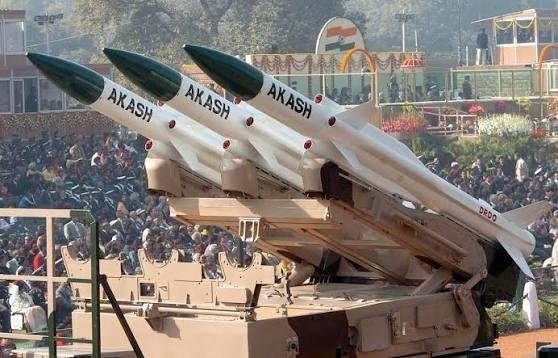
Defence Secretary Rajesh Kumar Singh confirmed in October 2026 that India has sold its indigenous Akash surface-to-air missile system to Tajikistan and Turkmenistan, giving India a foothold in Central Asia. The contract values were not disclosed. Armenia was the first foreign customer in 2022, and Singh said production has now stabilised while Indian forces have placed fresh orders.
Background: Akash and India’s Air Defence Layers
- Origin: It was developed by DRDO under the Integrated Guided Missile Development Programme, which also produced Prithvi, Agni, Nag and Trishul.
- Production: Bharat Dynamics Limited makes the missile, and Bharat Electronics Limited helps with radars and related systems.
- Users: It serves with the Indian Air Force and the Indian Army.
- Range and height: It can hit targets from 4.5 to 25 km away and from 100 metres up to 20 km in altitude.
- Size and speed: The missile is 5.87 metres long and weighs about 710 kg, and its ramjet gives it speeds above Mach 2.
- Multi-target ability: A single battery can track and engage several targets at once using the Rajendra radar, and it has built-in protection against jamming.
- Variants: Akash-1S has an indigenous seeker, Akash Prime is tuned for high, cold terrain, and Akash-NG adds an AESA radar and a longer range.
- Place in the grid: Akash is a medium-range layer, below the long-range S-400 and Barak-8 (MR-SAM) and above short-range systems such as QRSAM and shoulder-fired missiles.
Significance of the Akash Missile System
- Air defence cover: Akash protects bases, cities and key assets against fighters, cruise missiles, helicopters and drones.
- Self-reliance: It was designed by DRDO and made in India, which reduces dependence on foreign suppliers.
- Export success: Sales to Armenia, Tajikistan and Turkmenistan show that Indian systems can win customers abroad.
- Strategic outreach: The sales give India an entry into Central Asia, a region long supplied by Russia and China.
- Cost advantage: Officials describe Akash as cost-effective, which appeals to smaller defence budgets.
- Defensive image: Because it is a purely defensive system, it is easier for countries to buy and for India to export.
Challenges for Akash and Defence Exports
- Strong competition: Akash competes with Russian, Chinese, Turkish and Israeli air-defence systems in the global market.
- Russian influence: Tajikistan is a member of the Russia-led CSTO, so Russian reactions and ties can complicate India’s entry.
- Logistics: Central Asia has no sea coast, and supplying equipment depends on difficult air and land routes.
- After-sales support: Spares, training and maintenance over many years are needed to keep customers satisfied.
- Limited transparency: Contract values and performance details were not disclosed, which makes outside evaluation hard.
- Older design limits: Earlier versions rely on command guidance, so upgrades like Akash Prime and Akash-NG must reach buyers.
- Rising drone threat: Systems designed for aircraft must adapt to cheaper drones and swarms.
- Capacity pressure: Production must meet both Indian orders and export demand without delays.
Initiatives Behind Akash and Defence Exports
- Record exports: Defence exports hit Rs 38,424 crore in 2025–26, and India sells to more than 80 countries (Ministry of Defence).
- Export target: The government aims to reach Rs 50,000 crore in exports and Rs 3 lakh crore in production by 2029.
- Atmanirbhar Bharat: Policies on indigenous content and positive indigenisation lists encourage local production.
- BrahMos success: The supersonic cruise missile has found buyers such as the Philippines and acts as a benchmark for other exports.
- Upgrades: DRDO is developing Akash-NG and Akash Prime to keep the system competitive.
Way Forward for Akash and Defence Exports
- Faster upgrades: Speed up Akash-NG and Prime so that buyers get the latest version.
- Counter-drone layer: Pair Akash with low-cost counter-drone systems to deal with small drones.
- Full-life support: Offer training, spares and maintenance packages that give customers confidence.
- Flexible finance: Use lines of credit and long-term payment options to help smaller buyers.
- Wider markets: Target Southeast Asia, Africa and Latin America, where demand for affordable air defence is growing.
- Careful diplomacy: Explain the defensive nature of the system and keep ties balanced in sensitive regions.
- Scale production: Add private partners and suppliers so that exports do not delay Indian orders.
FAQs
Q1. What is the Akash missile system?
Ans: Akash is an Indian short-to-medium-range surface-to-air missile system that defends areas against aircraft, helicopters, cruise missiles and drones. It was developed by DRDO and is produced by Bharat Dynamics Limited.
Q2. What is the Integrated Guided Missile Development Programme?
Ans: It was a DRDO programme started in the 1980s to build India’s own missiles. It produced Prithvi, Agni, Trishul, Nag and Akash.
Q3. What is the range of the Akash missile?
Ans: The system has a range of about 4.5 km to 25 km and can engage targets from 100 metres up to 20 km in altitude, according to the Ministry of Defence.
Q4. What is the CSTO?
Ans: The Collective Security Treaty Organisation is a Russia-led military alliance of former Soviet states. Tajikistan is a member, while Turkmenistan has a policy of neutrality and is not.
Q5. What is a layered air-defence grid?
Ans: It is a system of different weapons, each covering a different range and altitude, such as long-range, medium-range and short-range systems. Layering means that a threat missed by one layer can be caught by another.