Context
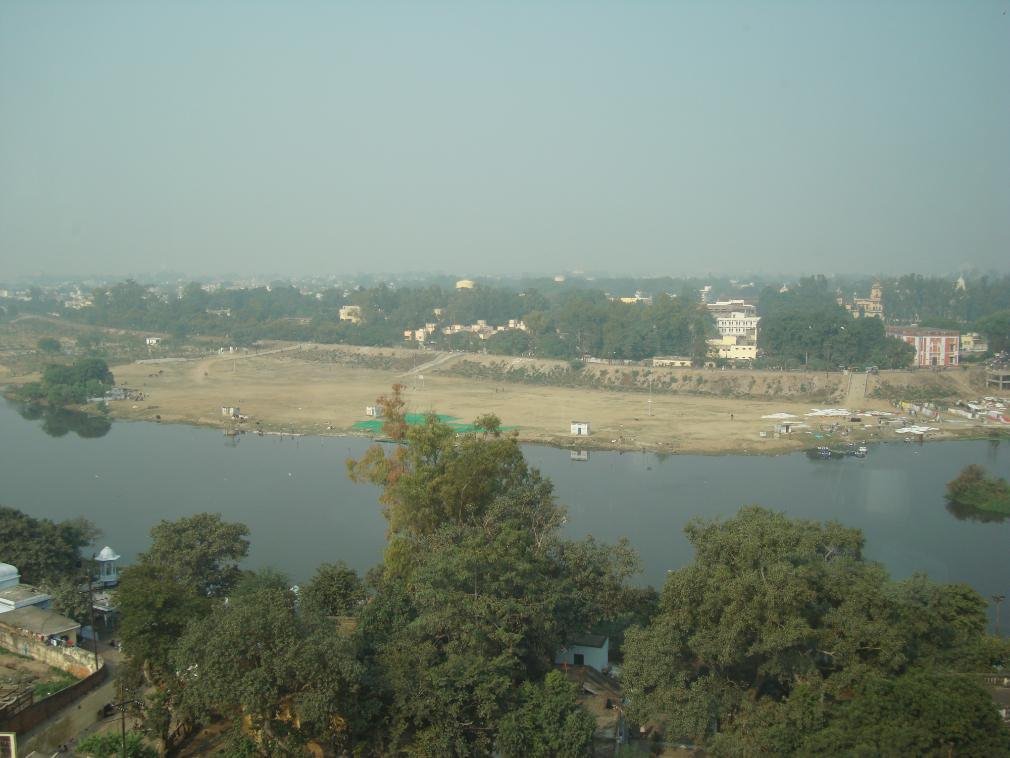
In October 2026, the rising water level of the Gomti River caused a flood-like situation in several low-lying areas of Lucknow, Uttar Pradesh. The flooding was mainly caused by heavy rainfall in the river’s upper catchment areas. The rainwater took several days to flow downstream to Lucknow.
About Gomti River
- Other Names: Gomati or Gumti.
- Type: Perennial, groundwater-fed river.
- Location: Flows entirely through Uttar Pradesh.
- River Basin: Forms part of the Ganga River basin.
- Significance: It is an important source of water for agriculture, urban water supply and other human activities.
- Major Tributaries: Important tributaries and streams joining the Gomti include Sai River, Kathina River, Sarayan (Saryan) River, Behta River, Kalyani River and Reth River. The Sai is one of the major tributaries of the Gomti.
- Flow Characteristics: The Gomti is generally a slow-flowing river, with its flow increasing considerably during the monsoon. Its groundwater-fed nature helps sustain the river beyond the rainy season. Heavy rainfall in upstream districts can cause flooding downstream, even when rainfall in Lucknow itself has stopped.
- Course of the River
- Origin: Gomath Tal, also known as Fulhar Jheel, near Madho Tanda in Pilibhit district, Uttar Pradesh.
- Course: Flows through districts including Shahjahanpur, Lakhimpur Kheri, Sitapur, Lucknow, Sultanpur and Jaunpur.
- Length: Approximately 940–960 km.
- Confluence: Joins the Ganga River near Kaithi, in the Varanasi–Ghazipur region of Uttar Pradesh.
Geological Features
- Alluvial Basin: The Gomti basin is underlain by thick alluvial deposits of the Quaternary Period.
- Younger Alluvium: Found mainly along the present river channel and floodplains.
- Older Alluvium: Occurs on relatively elevated land and often contains kankar nodules at greater depths.
- Composition: These deposits contain sand, silt, clay, gravel and kankar (calcareous nodules).
Frequently Asked Questions (FAQs)
Q1. Where does the Gomti River originate, and where does it join the Ganga?
The Gomti originates at Gomath Tal (Fulhar Jheel) near Madho Tanda in Pilibhit district, Uttar Pradesh. It joins the Ganga near Kaithi in the Varanasi–Ghazipur region.
Q2. What are the major tributaries of the Gomti River?
Its major tributaries include the Sai, Kathina, Sarayan, Behta, Kalyani and Reth rivers. The Sai is one of its major tributaries.
Q3. What are the key features of the Gomti River?
The Gomti is a perennial, groundwater-fed river that flows entirely through Uttar Pradesh. It is approximately 940–960 km long and forms part of the Ganga River basin.