Context
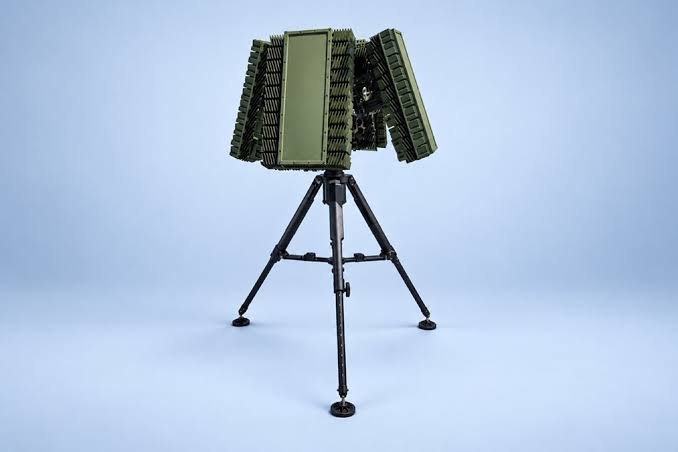
In October 2026, the Ministry of Defence signed a contract worth about ₹770 crore with Bharat Electronics Limited (BEL) to procure Improved Low Level Light Weight Radars for the Indian Army. The system is intended to strengthen surveillance against fighter aircraft, mini/micro drones and other low-flying aerial threats.
What is LLLR-I?
- LLLR-I is a lightweight, ground-based air-surveillance radar designed to detect, track and prioritise aerial targets.
- It is suited for monitoring low-altitude and low radar cross-section targets, including small drones.
- Its lightweight and transportable design allows operation in plains, deserts and high-altitude areas.
- It can be connected with other air-defence systems, helping convert surveillance data into a faster operational response.
Key Technologies and Working
- AESA technology: It uses an Active Electronically Scanned Array, which steers radar beams electronically instead of rotating the antenna mechanically.
- 360° surveillance: Four fixed phased-array antenna panels together monitor the surrounding airspace continuously.
- Digital beamforming: Electronically controlled beams improve detection and tracking of targets at different positions and elevations.
- GaN amplifiers: Gallium Nitride-based amplifiers support the radar’s solid-state AESA architecture.
- Track While Scan: The radar can continue searching the airspace while simultaneously tracking already detected targets.
Operational Capabilities
- Drone and aircraft detection: It can detect and track fighter-sized targets as well as mini and micro drones.
- Target prioritization: The radar can rank detected threats, helping air-defence units focus on more urgent targets.
- ECCM capability: Electronic Counter-Countermeasures help the radar continue functioning in the presence of electronic interference.
- Weapon-system integration: Target information can be transmitted through wired or wireless links to connected weapon systems.
- Remote operation: A control and display unit allows operators to control radar functions and view the air situation from a distance.
Significance for India
- Counter-UAS capability: Detection of small drones strengthens defence against increasingly common low-altitude aerial threats.
- Mobile air defence: Lightweight deployment allows radar coverage across difficult and varied terrain.
- Networked response: Linking the radar with weapon systems improves the chain from detection, tracking, engagement.
- Electronic resilience: ECCM improves radar survivability in contested electromagnetic environments.
- Defence indigenization: Procurement from BEL strengthens India’s domestic defence-manufacturing ecosystem and associated MSMEs.
FAQs
Q1. What is LLLR-I?
A lightweight ground-based radar for detecting and tracking aerial targets.
Q2. Which company is supplying LLLR-I to the Indian Army?
Bharat Electronics Limited (BEL).
Q3. Which major radar technology does it use?
Active Electronically Scanned Array (AESA) technology.
Q4. Can it detect small drones?
Yes. It can detect and track mini and micro drones along with fighter-sized targets.
Q5. What is Track While Scan?
It allows the radar to track detected targets while continuing to scan the surrounding airspace.