Context
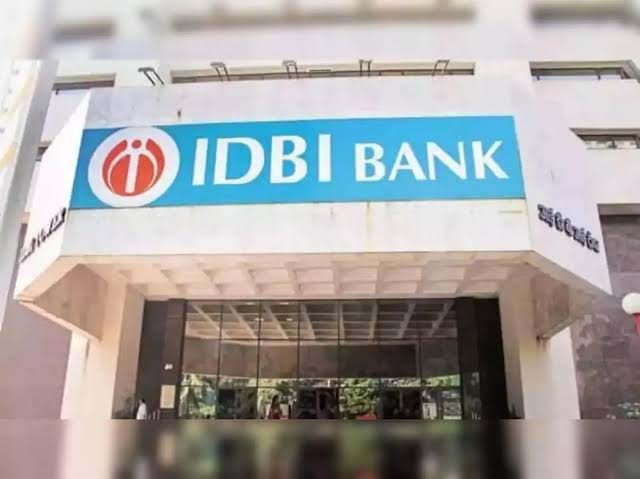
The proposed strategic disinvestment of IDBI Bank marks a major step towards private participation in India’s banking sector, with potential gains in efficiency, credit allocation and capital access.
Key Developments
- On 14 October 2026, the Cabinet Committee on Economic Affairs (CCEA) approved the sale of a 72% stake for ₹52,878 crore to 10955230 Canada Inc., a subsidiary of Fairfax Financial Holdings.
- The stake includes 48% held by the Government of India and 30.24% by LIC. Post-sale, their respective holdings will be 15% and 19%.
- The proposed deal is expected to be the largest FDI in India’s financial sector, subject to completion of the required regulatory process.
Background: From Nationalisation to Disinvestment
- Bank Nationalisation: The nationalisation of 14 major banks in 1969 and six in 1980 expanded public ownership and driven financial inclusion across rural India.
- Structural Challenges: Political interference in credit delivery, inefficient credit allocation, and rising Non-Performing Assets (NPAs) severely impacted public sector banking efficiency.
- Post-1991 Economic Reforms: 1991 liberalisation opened the sector to private bank entry, though structural reforms in factor markets (land, labour, and capital) remain ongoing.
- IDBI Bank Restructuring: Placed under the RBI’s Prompt Corrective Action (PCA) framework in 2017 due to high NPAs and negative Return on Assets (RoA); successfully exited the PCA frame in 2021 following balance sheet cleanup.
- Strategic Disinvestment: Involves the sale of a substantial portion (typically 50% or more) of government shareholding along with the transfer of management control to a strategic private buyer.
Six Principles of Governance
- Consistency: Focuses on seamless execution and policy stability via core structural reforms such as Jan Dhan, Aadhaar, UPI, Direct Benefit Transfer (DBT), GST, and the Insolvency and Bankruptcy Code (IBC).
- Continuity: Retains, streamlines, and scales existing flagship welfare programmes. For example, the Viksit Bharat–Guarantee for Rozgar and Aajeevika Mission (Gramin) Act, 2025 (VB-G RAM G) expands the statutory rural employment guarantee from 100 to 125 days.
- Creativity: Leverages Digital Public Infrastructure (DPI) and real-time monitoring platforms like PRAGATI to transform public service delivery and streamline project execution.
- Consensus-Building: Fosters cooperative federalism through consensus-driven decision-making, exemplified by the GST Council aligning Central and State fiscal policies.
- Commitment: Enhances national economic capacity through fiscal discipline, major infrastructure investment, Production-Linked Incentive (PLI) schemes, and the Semiconductor Mission.
- Calibration: Strategically balances strategic autonomy with proactive international trade, foreign investment, and global economic cooperation amid a shifting geopolitical order.
Significance of IDBI Bank’s Disinvestment
- Improved Operational Efficiency: Transitioning to private ownership strengthens professional management, corporate governance, strict accountability, and overall operational performance.
- Optimized Capital Allocation: Shift toward commercial lending improves credit-risk assessment capabilities and directs capital toward high-productivity growth sectors.
- Reduced Fiscal Burden: Disinvestment proceeds support public balance sheets and curtail recurring sovereign recapitalisation liabilities.
- Foreign Investment Surge: Acts as a major benchmark that boosts global investor confidence, marking the largest Foreign Direct Investment (FDI) inflow into India’s financial services sector.
- Banking Sector Reforms: Sets a operational precedence for public sector bank (PSB) privatisation, redefining the state’s role from a direct commercial operator to a prudential regulator.
Challenges
- Profitability vs Financial Inclusion: Commercial profit motives may reduce the focus on affordable credit and rural banking access in underserved geographies.
- Governance and Regulatory Risks: Shifts toward aggressive private management raise potential concerns regarding risky credit expansion, internal compliance failures, and heightened asset concentration risks.
- Limited Sector-wide Impact: Privately restructuring a single lender may not automatically translate into systemic banking sector reforms across other Public Sector Banks (PSBs).
- Employment and Service Disruptions: Transitional phase risks creating employee job insecurity, workforce union resistance, and temporary operational disruptions during management integration.
Way Forward
- Strengthen Banking Governance: Ensure professional management, transparent decision-making, board autonomy, and institutional accountability across public-sector banks.
- Improve Credit Allocation: Institutionalize prudent commercial lending, enhanced credit-risk assessment, and optimal capital allocation to prevent future NPA cycles.
- Protect Financial Inclusion: Safeguard last-mile access to affordable credit and primary rural banking infrastructure in underserved geographies post-disinvestment.
- Ensure Effective Regulation: Augment RBI prudential supervision to proactively mitigate governance failures, risky credit expansion, and broader systemic financial-stability risks.
- Expand Phased Banking Reforms: Carefully evaluate the empirical outcomes of IDBI Bank’s disinvestment before scaling privatisation to other Public Sector Banks (PSBs).
FAQs
Q1. What is strategic disinvestment?
Ans. It involves transferring a substantial government stake, along with management control, to a strategic investor.
Q2. How can disinvestment benefit the economy?
Ans. It can improve efficiency, attract investment, strengthen capital allocation and generate government revenue.
Q3. Why is financial inclusion a concern in bank privatisation?
Ans. Private banks may prioritise profitability over affordable credit and banking access in underserved areas.