Context
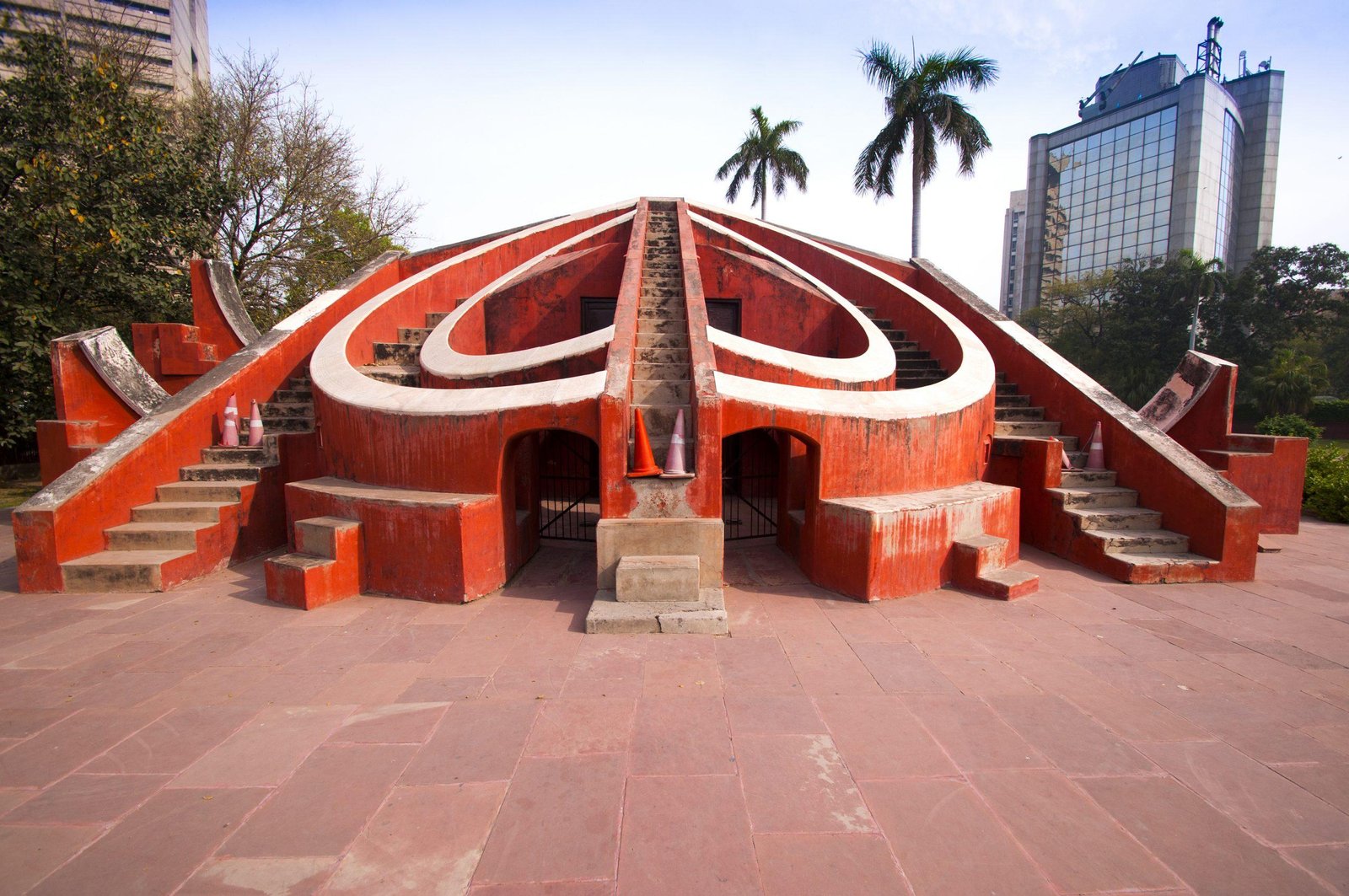
Delhi Police has denotified Jantar Mantar as a designated protest site and identified Ramlila Maidan, Burari Ground and CBD Ground in East Delhi as alternative venues for demonstrations. The development has renewed attention on Jantar Mantar as both an 18th-century astronomical observatory and a modern symbol of public protest.
Jantar Mantar and Sawai Jai Singh II
- Delhi’s Jantar Mantar was built in 1724 by Sawai Jai Singh II, ruler of Amber and founder of Jaipur.
- He established observatories at Delhi, Jaipur, Ujjain, Varanasi and Mathura to improve astronomical observations.
- Major instruments at Delhi include the Samrat Yantra, Jai Prakash Yantra and Misra Yantra, used to measure time and celestial positions.
- Jai Singh also prepared the astronomical tables Zij-i-Muhammad Shahi.
- The Jantar Mantar at Jaipur is a UNESCO World Heritage Site.
Later Mughal Background
- After Aurangzeb’s death in 1707, Mughal central authority weakened while nobles and regional rulers gained influence.
- Jahandar Shah (1712–1713) ruled with his powerful wazir Zulfiqar Khan, reflecting the growing political role of the nobility.
- Under this regime, ijara or revenue farming was encouraged, while jizya was abolished as part of a more conciliatory policy.
- This weakening of imperial authority created greater political space for regional rulers such as Sawai Jai Singh II.
Jantar Mantar as a Protest Site
- From the mid-1990s, Jantar Mantar emerged as a major space for public demonstrations in Delhi.
- Its location near Parliament and central government offices gave protests strong political visibility.
- Major movements associated with the site include the 2011 Anna Hazare anti-corruption agitation and protests after the 2012 Delhi gang-rape case.
- Its 2026 denotification marks an important change in Delhi’s landscape of public protest and democratic expression.
FAQs
Q1. Who built Delhi’s Jantar Mantar?
Sawai Jai Singh II.
Q2. When was Delhi’s Jantar Mantar built?
In 1724.
Q3. What was Zij-i-Muhammad Shahi?
A set of astronomical tables prepared under Sawai Jai Singh II.
Q4. What was ijara?
A system of revenue farming under which collection rights were contracted to intermediaries.
Q5. Which Jantar Mantar is a UNESCO World Heritage Site?
The Jantar Mantar at Jaipur.