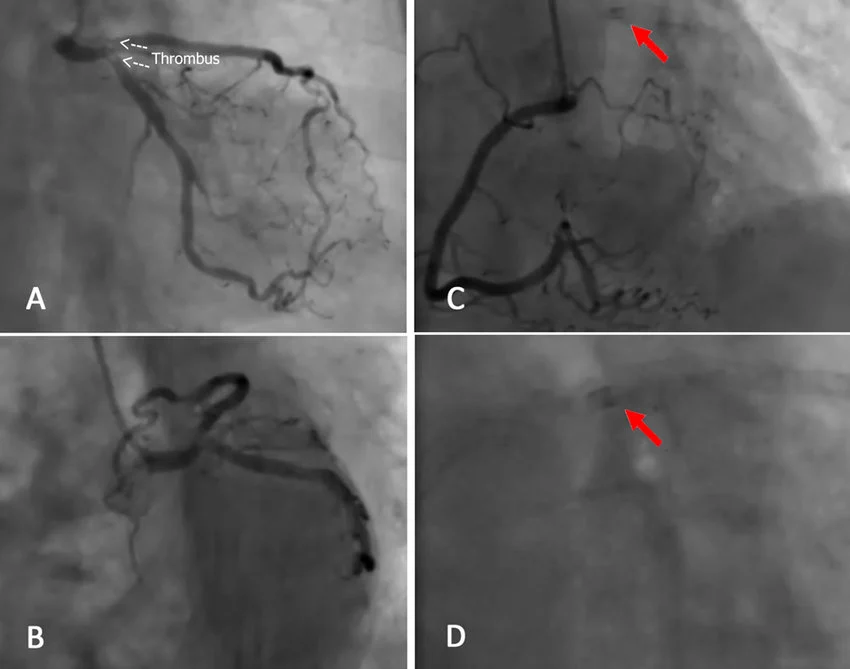
Context
- The recent death of a prominent Indian actor has brought renewed attention to coronary thrombosis, a potentially life-threatening condition involving clot formation in the arteries supplying the heart.
- It is an important cause of acute coronary syndrome and myocardial infarction (heart attack).
What is Coronary Thrombosis?
- Coronary thrombosis occurs when a blood clot forms inside a coronary artery, reducing or blocking blood flow to the heart muscle.
- It is commonly associated with atherosclerosis, in which cholesterol-rich plaque builds up within artery walls.
- If an atherosclerotic plaque ruptures or erodes, platelets and clotting factors become activated, leading to formation of a thrombus.
- A partial or complete blockage can cause myocardial ischemia and, if prolonged, may result in myocardial infarction.
Major Risk Factors
- Smoking: Damages blood vessels and promotes clot formation.
- High cholesterol: Encourages atherosclerotic plaque buildup.
- Hypertension: Damages arterial walls and accelerates atherosclerosis.
- Diabetes: Increases vascular and cardiovascular risk.
- Obesity and physical inactivity: Increase the likelihood of metabolic and coronary disease.
- Age and family history: May further increase susceptibility to coronary artery disease.
Symptoms and Warning Signs
- Chest pain, pressure or discomfort, often described as tightness or heaviness.
- Breathlessness, sweating, nausea or vomiting.
- Dizziness or light-headedness.
- Pain may radiate to the arm, shoulder, jaw, neck or back.
- Some patients, particularly older adults and people with diabetes, may have less obvious symptoms such as unusual fatigue or weakness.
Treatment
- Treatment depends on the type and severity of acute coronary syndrome.
- Antiplatelet medicines and anticoagulants may be used to reduce further clot formation.
- Percutaneous coronary intervention (PCI/angioplasty with stent placement) is commonly used to rapidly restore coronary blood flow.
- Thrombolytic therapy is mainly used in selected ST-elevation myocardial infarction (STEMI) cases when timely PCI is not available.
- Coronary artery bypass grafting (CABG) may be required in patients with extensive or complex coronary artery disease.
Prevention
- Stop smoking and tobacco use to reduce vascular injury and thrombosis risk.
- Control blood pressure, diabetes and cholesterol through regular monitoring and appropriate treatment.
- Statins and other lipid-lowering therapies may be used, particularly in people with established coronary artery disease or after acute coronary syndrome.
- Maintain a healthy body weight, exercise regularly and follow a heart-healthy diet.
- People with multiple cardiovascular risk factors should undergo appropriate medical screening and risk assessment.
FAQs
Q1. What is coronary thrombosis?
It is the formation of a blood clot inside a coronary artery, restricting blood flow to the heart.
Q2. How is it related to a heart attack?
If blood flow is severely reduced or blocked, it can cause myocardial infarction.
Q3. What commonly triggers coronary thrombosis?
Most commonly, rupture or erosion of an atherosclerotic plaque.
Q4. What are the major symptoms?
Common symptoms include chest discomfort, breathlessness, sweating, nausea and dizziness.
Q5. How is coronary thrombosis treated?
Treatment may include antiplatelets, anticoagulation, PCI, selected thrombolysis or CABG, depending on the clinical situation.