Context
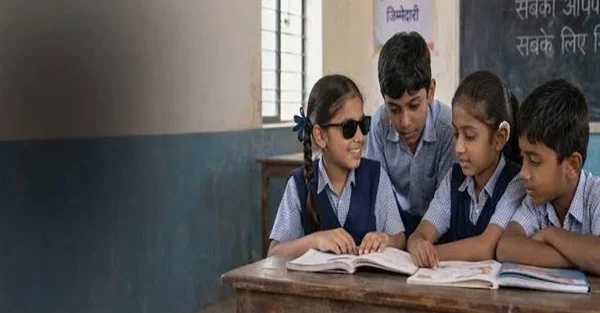
- The Department of School Education & Literacy (DoSEL) recently organised nationwide screening of a 30-minute sensitisation and orientation module on inclusive education through the PRASHAST Portal.
- The initiative aims to strengthen early identification and support for Children with Special Needs (CwSN) in schools.
PRASHAST: Purpose and Screening Process
- PRASHAST — Pre-Assessment Holistic Screening Tool — is a school-based tool for identifying children with probable disability conditions.
- It covers the 21 disability categories recognised under the Rights of Persons with Disabilities Act, 2016.
- It functions as an initial screening and referral mechanism, not as a final medical diagnosis.
- Part I: Regular teachers observe students across classrooms, playgrounds, co-curricular activities and social interactions before recording probable difficulties.
- This helps ensure that low attention, poor performance or lack of interest are not automatically treated as disability.
- Part II: Special educators, counsellors or other designated personnel validate the observations and tentatively identify the possible disability category.
- Where required, the child is referred to competent professionals or authorities for detailed assessment and certification.
- Thus, the process follows: teacher observation → specialised validation → referral → professional assessment.
Inclusive-Education Significance
- Early identification: Helps detect probable disabilities before learning gaps become severe.
- Reduces mislabelling risk: Structured observation helps distinguish probable disability from temporary behavioural, social or environmental difficulties.
- Teacher-led inclusion: Uses teachers’ regular interaction with students to make screening available within schools.
- Targeted support: Identified students can receive appropriate educational accommodations, counselling and specialist support.
- Rights-based approach: It supports the inclusive-education objectives of the RPwD Act, 2016 and NEP 2020.
- PRASHAST therefore shifts schools from a reactive model of identifying disability after academic difficulty to a more preventive and inclusive support system.
FAQs
Q1. What does PRASHAST stand for?
Pre-Assessment Holistic Screening Tool.
Q2. How many disability categories does PRASHAST cover?
It covers 21 disability categories under the RPwD Act, 2016.
Q3. Who conducts the initial screening?
Regular teachers.
Q4. Who validates the initial observations?
Special educators, counsellors or designated school personnel.
Q5. Does PRASHAST itself diagnose disability?
No. It is an initial screening and referral tool; final assessment and certification are done by competent professionals or authorities.