Context
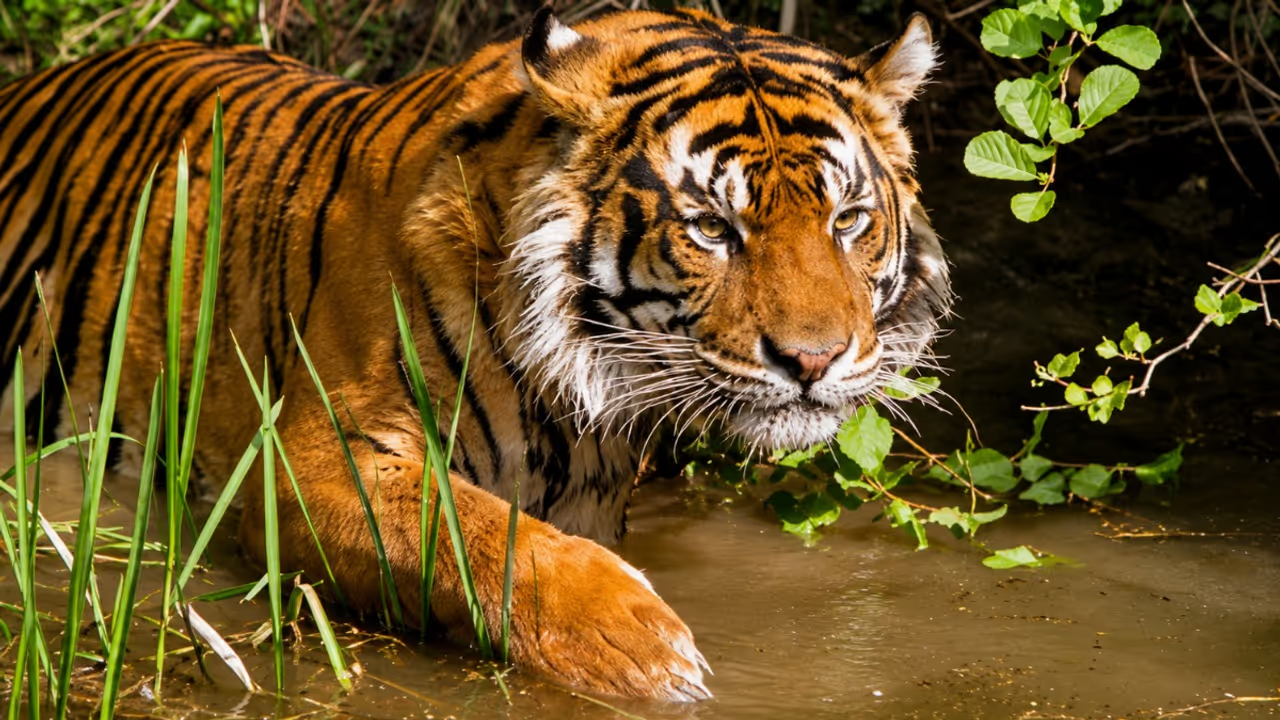
The tiger population in Nameri Tiger Reserve (Assam) has increased from 3 to 12 over a period of three years, indicating improvement in the reserve’s tiger population.
About Nameri Tiger Reserve
- Location: Sonitpur district, Assam; shares its northern boundary with Pakke Tiger Reserve (Arunachal Pradesh).
- Constitution: Includes Nameri National Park (Assam), Sonai-Rupai Wildlife Sanctuary (Assam), Naduar Reserve Forest (Assam) and Balipara Reserve Forest (Assam).
- Establishment: Declared a wildlife sanctuary in 1985, upgraded to a national park in 1998, and designated a tiger reserve in 2000 (Assam’s second after Manas).
- Rivers: Drained mainly by the Jia Bhoroli River (Kameng River) and tributaries such as Diji, Dinai, Doigurung, Nameri, Dikorai and Khari. The Jia Bhoroli is known for Golden Mahseer, called the “Tiger of Indian Rivers.”
- Vegetation: Tropical evergreen, semi-evergreen and moist deciduous forests, with grasslands and cane brakes.
- Flora: Hollong, Nahor, Simul, orchids and medicinal plants.
- Fauna: Royal Bengal Tiger, Asian Elephant, Leopard, Clouded Leopard, dhole (wild dog), Gaur (Indian Bison), Sambar, Barking Deer, and Capped Langur.
- Avifauna: Famous for the rare White-winged Wood Duck (state bird of Assam).
- Unique Feature: It is one of the few national parks in Assam that permits guided foot trekking inside its core zone.
FAQs
Q1. Where is Nameri Tiger Reserve located?
Ans: It is located in Sonitpur district of Assam.
Q2. Which river is an important feature of Nameri Tiger Reserve?
Ans: The Jia Bhoroli River and its tributaries drain the reserve.
Q3. Which fish is the Jia Bhoroli River famous for?
Ans: It is known for the Golden Mahseer, popularly called the “Tiger of Indian Rivers.”