Context
- Rachakonda Fort near Hyderabad is in focus over concerns that prolonged neglect has limited its heritage and tourism potential.
Historical Background
- Rachakonda Fort is located in Rachakonda village, Yadadri Bhuvanagiri district, Telangana.
- It is closely associated with the Recherla Nayaks, who rose after the decline of the Kakatiyas.
- Recherla Singama Nayak is traditionally credited with establishing Rachakonda as an important stronghold in the 14th century.
- The fort later came under Bahmani influence during the 15th century.
- It reflects the changing political landscape of the medieval Deccan.
Architectural Features
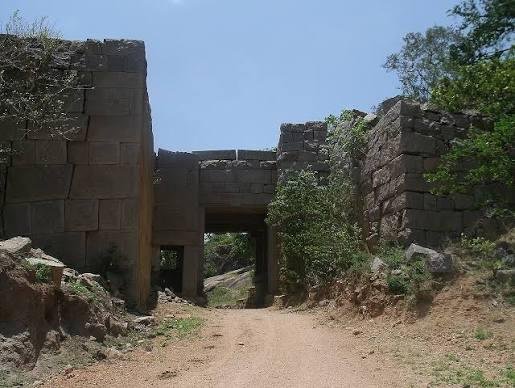
- The fort is built across a rocky hill landscape, using natural terrain for defence.
- It is known for cyclopean masonry, where large irregular stones were fitted without conventional mortar.
- The complex includes fortification walls, gateways, temples, stone structures and water-retaining systems.
- Its religious remains include Shaiva and Vaishnava structures.
- The site therefore combined military, political and religious functions.
Conservation and Tourism Relevance
- Large portions of the fort are now in ruins, with vegetation and inadequate upkeep affecting the remains.
- Its proximity to Hyderabad gives it strong potential for heritage tourism and regional-history education.
- Better conservation could integrate it into a wider Telangana heritage circuit.
- The site also highlights the neglect of lesser-known regional monuments despite their historical value.
- Conservation should combine structural protection, documentation, visitor facilities and local participation.
FAQs
Q1. Where is Rachakonda Fort located?
It is located in Yadadri Bhuvanagiri district, Telangana.
Q2. Which dynasty is associated with Rachakonda Fort?
The Recherla Nayaks.
Q3. Who is traditionally credited with establishing the fort?
Recherla Singama Nayak.
Q4. What is its key architectural feature?
Cyclopean masonry using massive irregular stone blocks.
Q5. Why is the fort important today?
It has significant heritage, archaeological and tourism value.