Context
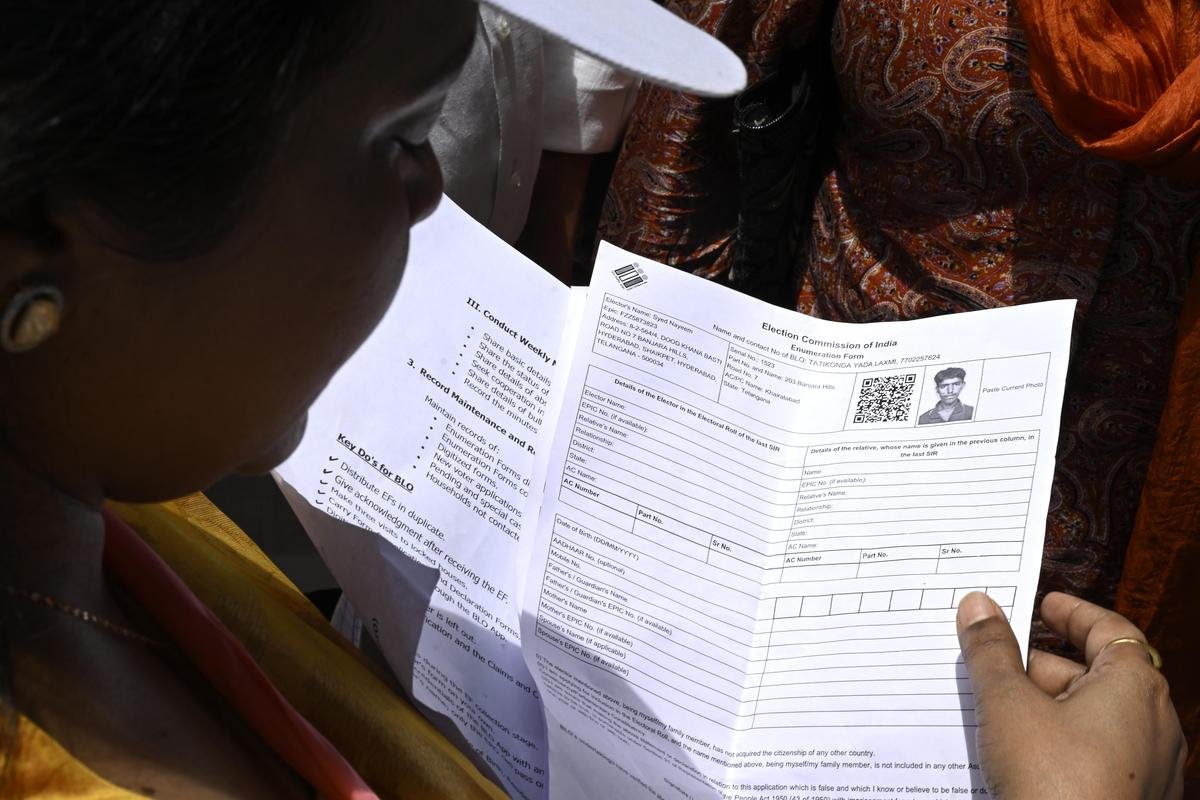
The Election Commission of India (ECI) recently amended Form 6, raising a legal question over whether the ECI can independently modify forms prescribed under the electoral-roll framework or whether such changes require action by the Central Government in consultation with the ECI.
Legal and Constitutional Framework
The electoral-roll system is primarily governed by:
- Representation of the People Act, 1950 (RPA, 1950).
- Registration of Electors Rules, 1960, which prescribe procedures and forms relating to electoral registration.
- Article 324, which vests the ECI with the superintendence, direction and control of elections, including electoral-roll matters.
- Article 326, which provides for elections to the Lok Sabha and State Legislative Assemblies on the basis of adult suffrage.
- The voting age was reduced from 21 years to 18 years through the 61st Constitutional Amendment Act, 1988.
ECI and Central Government: Institutional Issue
The key issue concerning Form 6 is whether the ECI can independently modify a form prescribed under the electoral-roll rules.
Under the framework provided in the source, changes to the prescribed rules are undertaken by the Central Government in consultation with the ECI. The issue therefore involves a distinction between:
- The ECI’s constitutional responsibility for election administration; and
- The statutory framework governing electoral-roll procedures and prescribed forms.
Electoral Registration Officer
The Electoral Registration Officer (ERO) is responsible for dealing with applications and objections relating to electoral rolls at the constituency level.
The ERO considers:
- Applications for inclusion of names;
- Objections concerning electoral-roll entries; and
- Requests for deletion on prescribed grounds.
The prescribed appellate mechanism involves the District Magistrate and the Chief Electoral Officer.
Form 6: Inclusion in Electoral Roll
Form 6 is used to seek inclusion of an eligible person’s name in the electoral roll.
It is primarily relevant for:
- First-time or new voters seeking registration; and
- Persons who have shifted from one constituency to another and seek registration in the new constituency.
Eligibility
An applicant must:
- Be an Indian citizen;
- Be 18 years or above on a qualifying date; and
- Be ordinarily resident in the concerned constituency.
The four qualifying dates are:
- 1st January
- 1st April
- 1st July
- 1st October
A person fulfilling the prescribed conditions on any of these qualifying dates in each calendar year may seek inclusion in the electoral roll.
Mode of Application
Form 6 may be submitted:
- Online through the prescribed electoral-registration platform; or
- Offline through the Electoral Registration Officer (ERO) or Booth Level Officer (BLO).
Related Forms
- Form 6A: Used for registration of an eligible overseas elector.
- Form 6B: Used for the voluntary furnishing of Aadhaar information in connection with the electoral-roll framework.
Form 7: Objection and Deletion
Form 7 provides a mechanism to object to the inclusion of a name in an electoral roll or seek deletion of an existing entry.
Deletion may be sought on grounds including:
- Death of the elector;
- Permanent shifting from the constituency;
- Duplicate entry;
- The person being not an Indian citizen; or
- The person being not ordinarily resident in the constituency.
An objection may be filed by an elector whose name is already included in the electoral roll of the constituency concerned. An individual may also seek deletion of their own name from the electoral roll, for example, after permanently shifting to another constituency.
Thus, when a person permanently shifts from one constituency to another, Form 7 may be used to seek deletion from the previous constituency, while Form 6 may be used to seek inclusion in the new constituency.
Safeguards Against Wrongful Deletion
The electoral-roll framework provides procedural safeguards before an entry is removed.
- The ERO issues notice to the person whose name is proposed to be deleted.
- The concerned person is given an opportunity of hearing.
- Where death is cited as the ground for deletion, an inquiry is conducted before removal.
- Filing Form 7 does not, therefore, result in automatic deletion.
Significance for Electoral Governance
The issue surrounding Form 6 highlights the importance of clearly defined institutional roles in electoral governance. The ECI exercises a constitutionally assigned role in election administration, while electoral-roll procedures operate within a statutory and regulatory framework.
An effective electoral-roll system must balance three objectives:
- Inclusion of eligible citizens;
- Accuracy of electoral records; and
- Procedural safeguards against wrongful exclusion.
Clarity regarding institutional authority is therefore important for ensuring the credibility and orderly functioning of the electoral process.
FAQs
- What is the principal statutory framework governing electoral rolls in India?
The principal framework comprises the Representation of the People Act, 1950 and the Registration of Electors Rules, 1960. - What is the significance of Article 324 in electoral administration?
Article 324 vests the ECI with the superintendence, direction and control of elections, providing the constitutional basis for its role in election administration. - What is the institutional issue concerning Form 6?
The issue is whether the ECI can independently modify a prescribed electoral form or whether such modification must follow the statutory mechanism involving the Central Government in consultation with the ECI. - Who deals with claims and objections relating to electoral rolls?
The Electoral Registration Officer (ERO) deals with applications and objections concerning inclusion and deletion at the constituency level. - What are the eligibility conditions for inclusion through Form 6?
The applicant must be an Indian citizen, must have attained 18 years of age on a qualifying date, and must be ordinarily resident in the concerned constituency. - What are the four qualifying dates for electoral registration?
They are 1 January, 1 April, 1 July and 1 October. - How do Forms 6 and 7 differ?
Form 6 is used to seek inclusion in an electoral roll, while Form 7 is used to object to an entry or seek deletion on prescribed grounds. - What safeguards apply before deletion of an electoral-roll entry?
The procedure includes notice and an opportunity of hearing. Where death is cited as the ground, an inquiry is conducted before the entry is removed.