Context
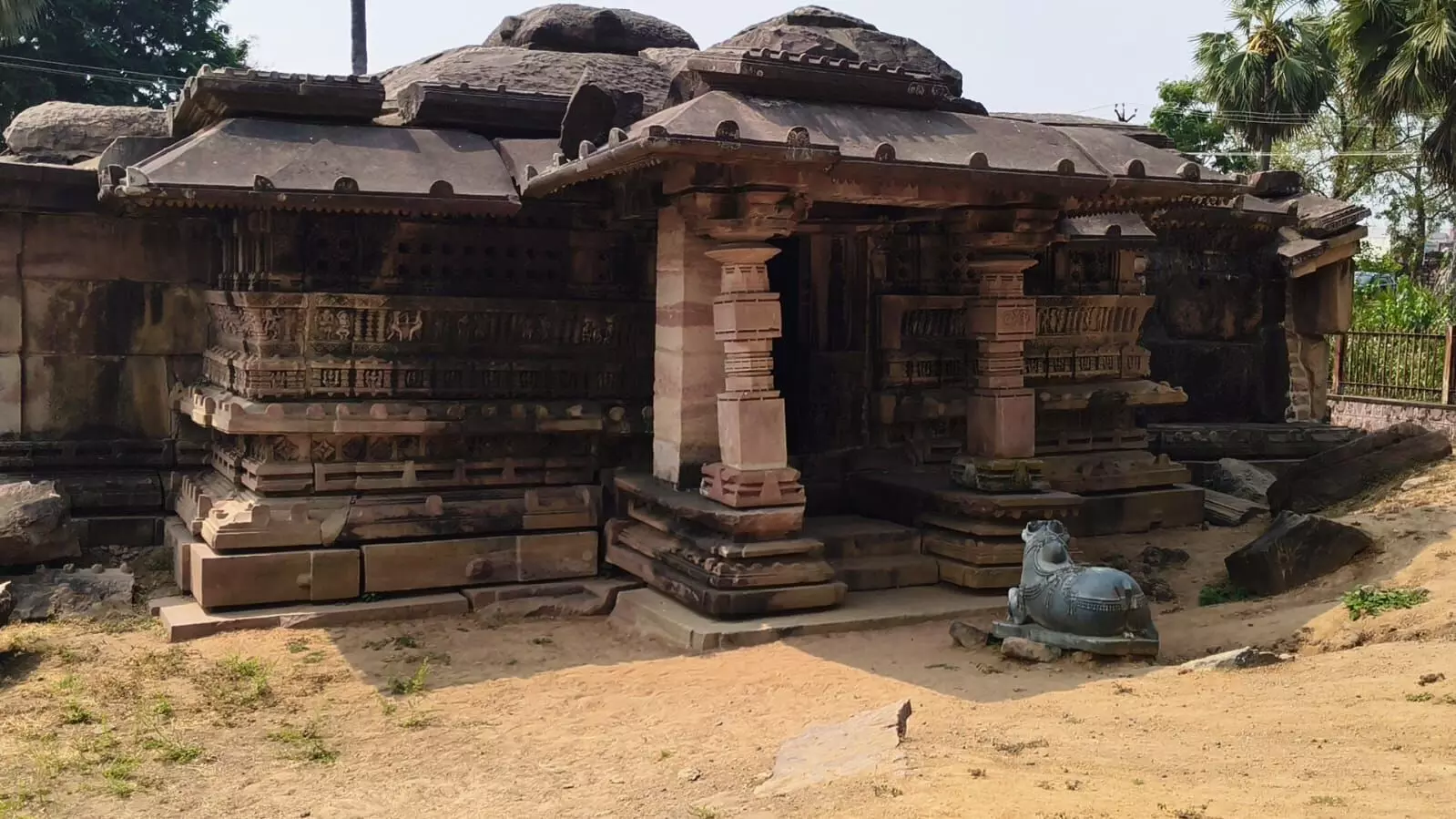
The Archaeological Survey of India (ASI) has recently declared the Gollala Gudi Temple at Palampet, Telangana, a Monument of National Importance.
About Gollala Gudi Temple
- Gollala Gudi is an ancient Shiva temple located at Palampet in Mulugu district, Telangana.
- It belongs to the Kakatiya period, a Telugu dynasty that ruled large parts of the eastern Deccan between the 12th and 14th centuries.
- The temple is located close to the UNESCO World Heritage Site of Ramappa Temple, making it an important part of the region’s Kakatiya architectural heritage.
- Architecture:
- The temple is a Trikutalaya, meaning it has three sanctums.
- The three sanctums are connected to a central pillared hall (mandapa), with the main sanctum containing a Shiva lingam.
- The temple was constructed using carefully fitted stones without binding mortar, reflecting the advanced stone-working skills of the Kakatiya period.
- Its walls and doorways contain detailed carvings, latticework (jali) and decorative motifs.
- Sculptures of Vishnu, Lakshmi, Ganesha and Durga as Mahishasuramardini can also be found on the temple walls.
- Two separate shrines in front of the main temple feature carved dvarapalas, or guardian figures.
- Significance: The temple provides valuable evidence of Kakatiya-era temple design, stone craftsmanship and religious art in the Deccan region.
FAQs
Q1. What is the Gollala Gudi Temple?
An ancient Shiva temple from the Kakatiya period, located at Palampet in Mulugu district, Telangana.
Q2. Which dynasty built the temple?
It belongs to the Kakatiya dynasty (12th–14th centuries), known for its architectural and artistic heritage in the Deccan.
Q3. What is unique about its architecture?
It is a Trikutalaya (three sanctums connected to a central mandapa), built with stone blocks fitted without mortar, featuring carvings, latticework, and decorative motifs.
Q4. Which deities are depicted in the temple?
Apart from the main Shiva lingam, sculptures of Vishnu, Lakshmi, Ganesha, and Durga as Mahishasuramardini adorn the temple walls.
Q5. Why is the temple significant today?
Declared a Monument of National Importance by ASI, it provides valuable evidence of Kakatiya temple design, craftsmanship, and religious art, complementing the nearby UNESCO‑listed Ramappa Temple.