Context
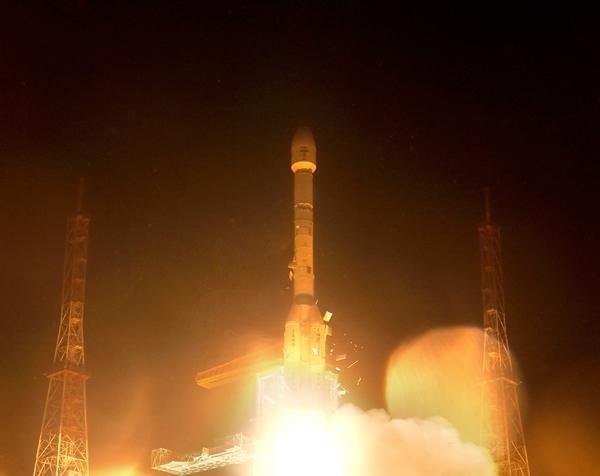
The Indian Space Research Organisation (ISRO) successfully launched the 2,367-kg EOS-05 Earth Observation Satellite using GSLV Mk II-F17 from Sriharikota. Its placement in a geosynchronous orbit gives India a new capability for frequent and near-continuous observation of the country.
About EOS-05
- EOS-05 is an advanced Earth Observation Satellite designed for high-frequency imaging.
- It operates at around 36,000 km altitude with an inclination of about 28°.
- Its orbital period matches Earth’s rotation, making it geosynchronous.
- Since its orbit is inclined rather than circular and equatorial, it is not strictly geostationary.
- Unlike Low Earth Orbit (LEO) satellites that periodically revisit an area, EOS-05 can provide almost continuous observation of the Indian region.
Imaging capabilities of EOS-05
- EOS-05 carries multi-spectral and hyperspectral imaging systems, allowing it to collect more detailed information about the Earth.
- It can support:
- Weather and cloud monitoring
- Cyclone, flood and cloudburst assessment
- Crop and agricultural monitoring
- Earth-resource mapping
- Strategic and near-real-time imagery
- It can image selected areas roughly every 5 minutes and scan the entire country in about 30 minutes. Its assured mission life is 7 years, with the possibility of longer operation.
Why is the EOS-05 mission important for GSLV Mk II?
The successful launch also strengthens confidence in GSLV Mk II, which had faced reliability problems in the past, particularly with its indigenous cryogenic upper stage.
- The latest mission became its 11th successful mission out of 13.
- The cryogenic stage performed successfully and reached an apogee of about 31,026 km, higher than expected. This may help extend the satellite’s operational life.
- EOS-05 was also the heaviest satellite launched by GSLV into GTO/sub-GTO, demonstrating improved launch capability.
Significance of EOS-05 for India
- Multi-sectoral benefits: EOS-05 strengthens border surveillance, agriculture, disaster management, weather monitoring & earth-resource management through frequent satellite imagery.
- Boost to private space industry: The mission reflects growing participation of Indian private companies in satellite manufacturing and related technologies, supported by IN-SPACe through technology transfer, infrastructure access and other support.
- Stronger space ecosystem: Greater private participation allows ISRO to focus on advanced research, deep-space exploration and missions like Gaganyaan, while industry expands manufacturing, launch services and downstream space applications.
It represents a move from periodic satellite observation to persistent, high–frequency monitoring.
Conclusion
EOS-05 strengthens India’s ability to observe and respond to changes on Earth in near real time, while also demonstrating the growing capabilities of GSLV and the private space sector. It marks another step towards building a more integrated and self-reliant Indian space ecosystem.
FAQs
Q1. What is EOS‑05?
An advanced Earth Observation Satellite launched by ISRO using GSLV Mk II‑F17, designed for high‑frequency imaging from geosynchronous orbit.
Q2. How does EOS‑05 differ from LEO satellites?
Unlike Low Earth Orbit satellites that revisit areas periodically, EOS‑05 provides near‑continuous observation of India, imaging selected areas every 5 minutes.
Q3. What are the imaging capabilities of EOS‑05?
It carries multi‑spectral and hyperspectral systems for weather monitoring, disaster assessment, crop/agriculture tracking, earth‑resource mapping, and strategic imagery.
Q4. Why was the EOS‑05 launch important for GSLV Mk II?
It demonstrated reliability of the indigenous cryogenic stage, achieved higher‑than‑expected apogee, and marked the heaviest satellite launched into GTO/sub‑GTO by GSLV Mk II.
Q5. What is the broader significance of EOS‑05 for India?
It strengthens surveillance, agriculture, disaster management, and weather monitoring, while boosting private space industry participation and ISRO’s focus on advanced missions.